CHRONICLES OF DISPLACEMENT
The Background
Lebanon was marked in the recent years by successive episodes of mass displacement. The first followed the war that began on 8 October 2023 and escalated after September 2024. Israeli strikes and evacuation orders led to the displacement of over 1.3 million people from across the country.
After the ceasefire agreement in November 2024, 60,000 Lebanese were unable of returning or prevented from rebuilding their homes in the border zone. On 2 March 2026, following Israel's escalation, a second massive wave of displacement began, reaching a million people within two weeks, a fifth of Lebanon's population; Lebanese communities, alongside Syrians, Palestinians and migrant workers, were affected, often with limited access to shelter and assistance, while response capacities were rapidly overwhelmed.
The Project
The Chronicles of Displacement is an academic and participatory initiative led by the Mobility Rights Unit at USJ's Human Rights programme. It aims to systematically document the displacement episodes in Lebanon from 2023 and onwards, while fostering critical engagement with its multiple challenges.
In its current phase (starting 2 March 2026), the project prioritises real-time documentation and analysis of displacement as it unfolds. This includes structured monitoring of events, the collection of testimonies reflecting lived experiences, and the production of a cumulative, evidence-based record of the crisis. These materials are curated and presented through this platform, including a continuously updated timeline covering daily, weekly and monthly updates.
The project builds on its initial 2023–2024 phase, during which it combined documentation with a series of student-led policy briefs proposing targeted responses to displacement-related challenges with a bottom-up approach.
Across both phases, the project seeks to contribute to a deeper understanding of displacement in Lebanon by:
- Producing empirically grounded, accessible knowledge on evolving displacement patterns.
- Centering the experiences and voices of affected populations.
- Engaging youth and students in research-driven, participatory learning processes.
- Informing future policy thinking through the consolidation of lessons learned across crisis cycles.
The project has been reviewed and approved by the Saint Joseph University Ethical Committee, ensuring adherence to established research ethics standards in the collection and dissemination of data.
Latest Updates
2026 Displacement Timeline
Similarly to the 2023-2024 war, the timeline aims at documenting the current war-induced forced displacement in Lebanon through a comprehensive timeline starting of March 2026. The documentation includes the crisis' daily monitoring and the collection of testimonies from contributors who are directly affected - being displaced themselves or witnessing displacement as volunteers or hosts.
The timeline is being updated weekly.
-
MARCH 2026
2 March 2026 – 8 March 2026
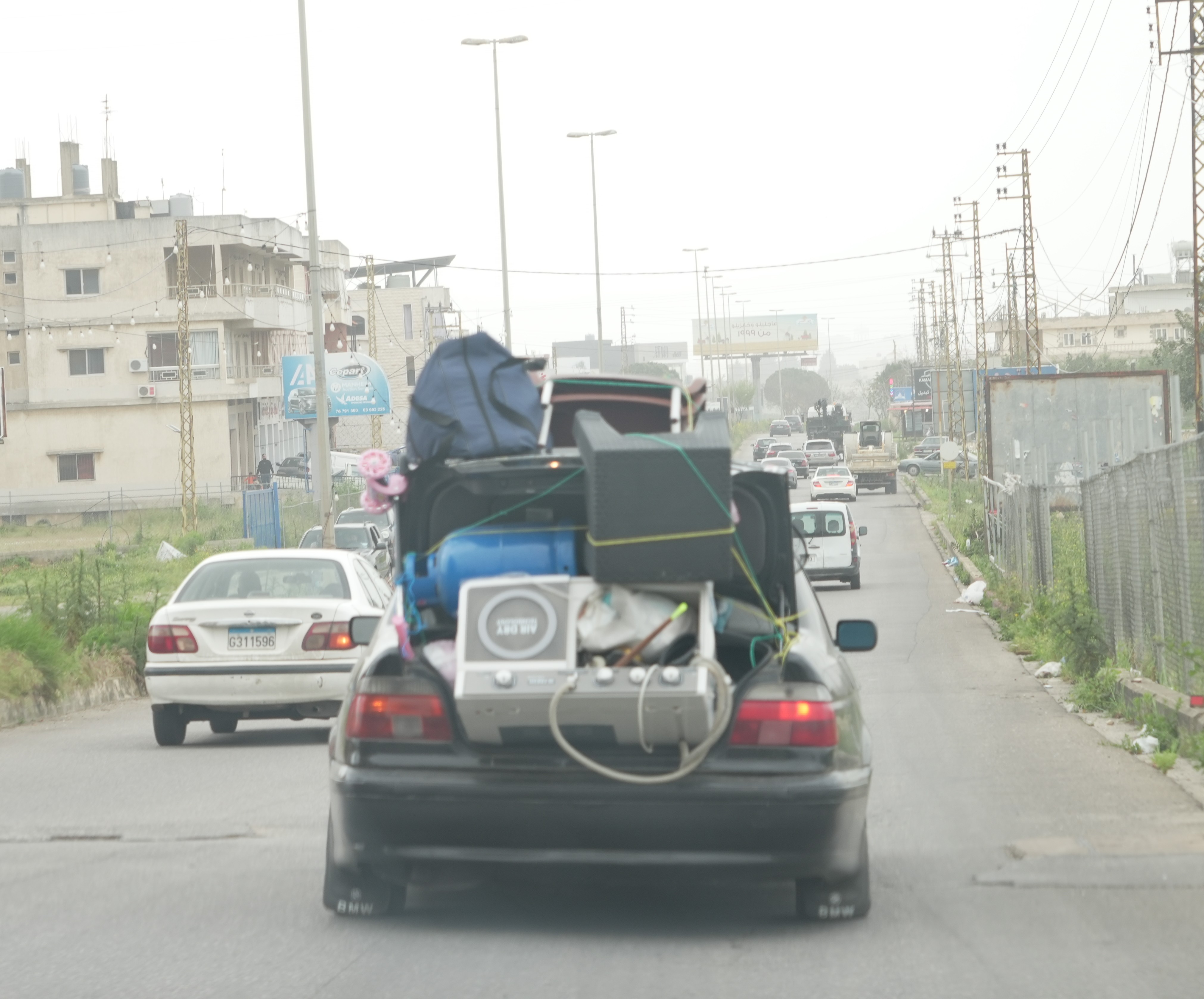
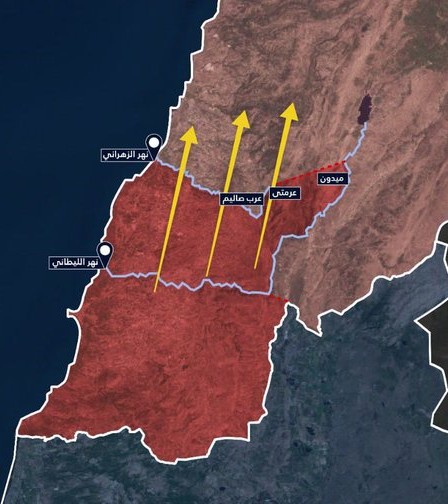
This week was marked by the reignition of the war between Israel and Hezbollah, after the latter’s launch of rockets in retaliation for the assassination of Iran’s Supreme Leader, ending the 27 November 2024 fragile ceasefire which has been unilaterally violated on a daily basis by Israel through strikes. This attack prompted Israel to carry out intense airstrikes across southern and eastern Lebanon, as well as Beirut’s southern suburbs. The violent retaliation triggered mass displacement, with tens of thousands forced to flee their homes in the middle of the night, spending many hours stuck in traffic in their cars – some for more than 24 hours – without food or fuel, while volunteers began distributing water and meals to those trapped. People moved toward collective shelters, public schools, and safer areas, while many slept in cars, on streets, or in public spaces. Within days, the Israeli army ordered the evacuation of dozens of towns in the South, then all the region south of the Litani River, followed on 5 March by all of Beirut’s southern suburbs in an unprecedented move. By 8 March, over 117,000 people were registered in collective shelters, with hundreds of thousands more displaced finding refuge at friends, relatives, rental housing units, or in other informal arrangements. Families fled with minimal belongings, facing overcrowded shelters, poor sanitary conditions, and soaring rents, while humanitarian organizations and local initiatives mobilized to provide food, shelter, and emergency aid. Vulnerable groups, including pregnant women, children, migrant workers, and non-Lebanese residents, were particularly affected, highlighting the urgent need for coordinated relief and protection.
2 March
Al Jazeera reports that Hezbollah launched a barrage of missiles and drones overnight toward an Israeli military site near Haifa, marking its first attack in more than a year, in retaliation for the assassination of Iran’s Supreme Leader, Ayatollah Ali Khamenei, in Israeli airstrikes on Tehran.
Israel responds with intense airstrikes targeting southern and eastern Lebanon, as well as Beirut’s southern suburbs, and issued evacuation warnings for more than 50 villages in the South and the western Bekaa.
Euronews reports that the IDF sent civilians mobile alerts to evacuate and warned them of imminent strikes on specific buildings, heightening fear and psychological stress. Consequently, heavy traffic congestion from fleeing civilians led many to reconsider leaving, with some choosing to stay in their homes despite the ongoing danger and drones overhead.
UNICEF reports that an estimated 29,000 people, including around 9,000 children, have been displaced, adding to the approximately 62,000 internally displaced people already recorded. Lebanese authorities have opened more than 142 shelters across the country, most of them in public schools, with 49 already at full capacity.
The National reports that one displacement case involved a journey from Beirut’s southern suburbs to central Beirut taking about three hours instead of the usual ten minutes, as roads became heavily congested with thousands of residents fleeing the bombardment.
Campspot reports that residents of Beirut’s Shatila Palestinian camp were also forced to displacement following intensified strikes nearby.
Al Jazeera reports that displacement from southern Lebanon caused extreme traffic congestion, with some residents spending up to seven hours traveling to Saida on routes that normally take about 30 minutes, while many headed toward Beirut without knowing where they would stay.
Lebanon’s Disaster Management Unit announces the locations of available shelters in Beirut, the South, Mount Lebanon, and Hasbaya district and shared hotline numbers for citizens seeking help.
AlAraby report highlights the impact of repeated conflict on young children, describing a toddler born at the start of the last Israeli war in September 2024 who has lived through two wars and is now displaced for the second time. The father stressed the need for lasting solutions, noting that the post-ceasefire period was unstable as strikes continued in southern and eastern Lebanon.
Al-Hadath shows long queues of cars waiting to cross at the Masnaa border as people are fleeing the conflict from Lebanon towards Syria. Videos circulating showed that crossings were opened without stamping passports, leading to significant chaos among travellers.
UNICEF mobilizes Rapid Response Teams to collective shelters to assess urgent needs and deliver essential lifesaving services and supplies and began distributing Rapid Response Mechanism (RRM) kits to families on the move in Beirut and to shelters in the South, Nabatieh, and Beirut.
Al-Jadeed reports that a woman gave birth on the road while evacuating from southern Lebanon toward Beirut, as vehicles were stuck in heavy traffic caused by the wave of displacement.
MTV Lebanon reports that residents of Bednayel, Hermel, Sour, Mashghara, and Deir Qanoun En Nahr in specific buildings were warned to immediately evacuate by the IDF, with spokesperson Avichay Adraee stating that Hezbollah military infrastructure in these areas will be targeted.
MTV Lebanon reports that the IDF, through spokesperson Avichay Adraee, issued evacuation warnings to residents of Beirut’s southern suburbs, particularly Haret Hreik and Burj al Barajneh, indicating that specific buildings will be targeted.
Daraj Media reports in a video shared on Instagram that displaced people fled their homes in their pyjamas in a hurry, with sick individuals and children confined into cars. Many ran out of fuel while spending several hours stuck in heavy traffic. Others were forced to sit or sleep on the streets with nowhere to go, as some schools refused to accept displaced people due to fear of being targeted by bombings.
Megaphone News shares a video on Instagram showing a young boy, Ali, who was displaced with a friend from Burj al Barajneh to downtown Beirut after nearby airstrikes, describing that he was eating when the bombing began.
BayteBaytak has been relaunched to connect displaced people with hosts offering apartments, with all listings manually reviewed for authenticity. Displaced people can browse available listings, while only those with housing to offer should submit a listing.
3 March
Disaster Risk Management (DRM) Unit reports that 321 collective shelters have been opened. The total number of internally displaced people is 58,064, representing 12,539 families.
Israeli airstrikes across Lebanon have triggered a new wave of displacement, forcing people to flee their homes and seek shelter in safer areas of the country. Families are sleeping in cars, streets, and damaged schools as available shelters become increasingly overcrowded.
Save the Children reports that approximately 16,000 children, were displaced within three days due to Israeli airstrikes and evacuation orders. Several schools hosting displaced families are in poor condition, with damaged infrastructure and limited facilities, while many families remain unable to access formal shelters.
The Straits Times reports that many displaced are stranded on roads or sleeping in vehicles while attempting to leave affected areas, particularly from the southern suburbs of Beirut and southern Lebanon.
France 24 reports that since the start of renewed fighting between Israel and Hezbollah, Israeli airstrikes on Lebanon have killed 72 people and wounded 437, according to the Lebanese Health Ministry.
The National mentions the sudden evacuation orders led to large-scale scenes of panic and chaotic population movements, with thousands of people moving simultaneously across southern and central Lebanon. Humanitarian coordinators reported traffic jams and gridlock on roads leaving southern Beirut and southern Lebanon, with displaced families unsure where to relocate or which areas would remain safe.
Heavy displacement has been recorded across South Lebanon, the Bekaa Valley, and the southern suburbs of Beirut after Israel issued evacuation warnings to residents of more than 50 villages in the south and intensified airstrikes across these areas.
The escalation of hostilities also triggered increased cross-border movements. UNHCR reports that a growing number of Syrian refugees have begun returning to Syria through border crossings from Lebanon, creating additional humanitarian needs at reception points and along transit routes inside Syrian territory.
Amnesty International issues an urgent call, following joint US-Israel attacks on Iran and Iran’s retaliatory strikes, to protect civilians and respect international humanitarian law.
OCHA declares that more than 60,000 people are sheltered in 330 collective sites, with many others outside the shelters or on the move. Displacement orders have so far been issued by the Israeli military for more than 100 towns and villages in the South and Bekaa.
Daraj Media reports that when the war erupted, many people lost their jobs and homes, and their living situation became precarious or irregular. Additionally, accounts from inside a housing centre show that families of migrant workers are being forced to leave without legal protection or social support. The shelter, which opened in 2024 for similar crises, currently houses 140 people, while dozens wait outside and others are turned away due to overcrowding. The conflict exposes the weakness of a system that links rights to individuals, as organizations struggle to fill the gaps and provide at least minimal protection.
4 March
Disaster Risk Management (DRM) Unit reports that 399 collective shelters have been opened. The total number of internally displaced people is 83,847, representing 18,033 families.
In a new escalation of the displacement crisis, the Israeli army orders the evacuation of the entire region south of the Litani River.
HRW notes that the mass evacuation orders issued by the IDF for all residents south of the Litani River, covering about 8% of Lebanon and affecting hundreds of thousands of people, may constitute a violation of the laws of war.
UNRWA declares the activation of its Emergency Response in Lebanon and opened the first emergency shelter at the Siblin Training Centre in Saida, along with two nearby schools to accommodate displaced persons.
UNRWA reports that displaced families entered Siblin emergency shelter and nearby schools in Saida forcibly, while in Nahr el-Bared Camp in North Lebanon, community members entered by force Mazar and Majedo Schools to open classrooms for displaced families from the South.
UNHCR reports that about 37,000 Syrians and a smaller number of Lebanese crossed into Syria between 2 and 4 March, according to the Lebanese and Syrian governments.
Vatican News reports that although official policy does not exclude non-Lebanese from public shelters, many migrant workers have been denied access. In response, Jesuit Refugee Service (JRS) and local Church communities reopened Church shelters originally established during the 2024 conflict to host migrants and refugees from countries including the Philippines, Ethiopia, Sudan, Eritrea, Yemen, Sierra Leone, and Nigeria.
World Central Kitchen reports that it is providing hot meals, food supplies, and emergency food relief to displaced families across Lebanon, including distributions to families stuck on roads and in collective shelters.
BBC reports a case of a resident in southern Lebanon who refused to leave his home for Beirut despite warnings, saying he would rather die in his home than be forced onto the streets.
Asharq Al-Awsat highlights that severe housing shortage, soaring rents, and refusal by some areas to host displaced people due to fears of attacks and resentment toward Hezbollah left many stranded in cars, or on the streets, exposed to cold and hardship.
MTV Lebanon reports that the IDF, through spokesperson Avichay Adraee, issued evacuation warnings to residents of Beirut’s southern suburbs, particularly in Hadath, indicating that a specific building will be targeted.
A L’Orient Le Jour report showed that in Sidon, displaced families from southern Lebanon set up tents along the waterfront after several days of Israeli bombardment, with many spending the night on the corniche because schools and shelters were full.
Journalist Halima Tabiah shares a video of a displaced woman from Dahyeh staying in Martyrs’ Square, forced to sleep on the pavement with her sister with no access to toilets except a single restaurant that closes at 10 pm. They were also not allowed to enter the mosque. She described how her basic human rights are not being met and expressed feeling homeless in her own country.
Megaphone News publishes a short video report showing a displaced woman in a shelter in Beirut describing the difficult conditions after fleeing her home in the southern suburbs, saying she would not mind sleeping on the ground in her own home if it meant returning, after she and others spent two days on the streets without food, water, or access to bathrooms before reaching the shelter.
5 March
Disaster Risk Management (DRM) Unit reports that 441 collective shelters have been opened. The total number of internally displaced people in collective shelters is 95,773, representing 21,475 families.
A new turning point in the 2026 displacement crisis: in an unprecedented move, in the afternoon, Israeli army Arabic spokesperson issues new forced displacement orders for the entirety of several southern suburbs, namely Burj al-Barajneh, Hadath, Haret Hreik and Chiyah. The declaration causes mass displacement in chaos, panic and important traffic jams. In parallel, Far-right Israeli Finance Minister Bezalel Smotrich threatens to turn the southern suburbs of Lebanon’s capital into another Gaza Strip, “like Khan Younis”.
The L'Orient-Le Jour article shows that the Israel Defense Forces ordered the evacuation of approximately 700,000 residents from several neighbourhoods in Beirut’s southern suburbs. According to the article, the announcement triggered widespread panic and uncertainty across the area. While many residents fled immediately, others remained due to concerns over homelessness, financial constraints, or scepticism regarding the warning. The article further notes that the scale of the evacuation order was unprecedented, as even during the 2024 war such a large-scale order covering entire neighbourhoods had not previously been issued.
This Is Lebanon records that the IDF carried out an evacuation order in the Bekaa region, targeting residents of Dours, Brital, and Majdaloun. Residents were directed west via the Zahle–Baalbek Road.
An-Nahar indicates that the IDF issued an evacuation warning to residents of Beirut’s southern suburbs, instructing them to leave their homes immediately. The warning directed the residents of Burj al-Barajneh and Hadath to move east toward Mount Lebanon via the Beirut–Damascus Road, while residents of Haret Hreik and Chiyah were instructed to head north toward Tripoli along the Beirut–Tripoli highway or east toward Mount Lebanon through the Metn Expressway, with movement southward prohibited due to safety risks. Following the warning, heavy traffic congestion was reported at the entrances to the southern suburbs as residents began evacuating, marking a new wave of displacement toward Beirut and northern areas.
NNA states that the Red Cross evacuated a number of patients from Al Sahel Hospital and Bahman Hospital. The statement added that the operation was carried out due to the current circumstances in the southern suburbs, with patients transferred to hospitals outside Beirut in coordination with the Ministry of Public Health.
JRS reports that migrant workers in Lebanon are facing serious challenges due to the ongoing conflict and repeated displacement. Government shelters often refuse to admit them, leaving them dependent on support from organizations like JRS for shelter, food, and protection. Many cannot stop working because they need to send remittances to their families, adding to their vulnerability. The lack of formal institutional support has left them exposed and reliant on humanitarian assistance.
Asharq Al-Awsat reports that displaced families in Lebanon are facing a severe housing shortage, with surging rents, limited apartment availability, and local restrictions forcing many to sleep in vehicles, on streets, or in public areas while searching for accommodation.
The National reports that hundreds fled Beirut’s southern suburbs on foot following evacuation orders, while overcrowded shelters forced many to stay on pavements, in parks, and other public spaces.
UNRWA set up a second emergency shelter in Nahr el-Bared camp north of Tripoli, using six school buildings for displaced people.
Human Rights Watch declares that “the Israeli military’s call for the immediate evacuation of the entire population of Lebanon south of the Litani River raises serious risks of violations of the laws of war”. The report adds that the “area makes up about eight percent of Lebanon’s territory and is home to hundreds of thousands of people.”
Lebanon’s Minister of Social Affairs Haneen Sayed announces the opening of all public schools and universities as shelters and urged displaced families to head toward the North, Akkar, and the Bekaa where greater capacity is available. She also announced the launch of cash assistance for 50,000 displaced families in cooperation with the World Food Programme (WFP), to be distributed via SMS instructions, along with an online registration link and a WhatsApp channel to share information on available shelters and response updates.
Syria TV reports that Syrian nationals are facing mistreatment and complicated crossing procedures on the Lebanese side of the Jdeidet Yabous border crossing while attempting to return to Syria.
6 March
Disaster Risk Management (DRM) Unit reports that 512 collective shelters have been opened. The total number of internally displaced people in collective shelters is 110,162, representing 26,342 families.
UNHCR reports that families are fleeing with only essential belongings toward areas considered relatively safer, including parts of Mount Lebanon, Beirut, northern districts, and the Bekaa, with many reporting widespread fear and anxiety while on the move.
OCHA reports that large numbers of displaced people remain unregistered formally in collective shelters and unaccounted for, including families sheltering in vehicles or gathering along roadsides.
OCHA highlights that collective shelters are heavily overcrowded, increasing risks of GBV against women and children, with partners distributing dignity kits and awareness materials to vulnerable women and adolescent girl.
Malteser International and the Lebanese Order of Malta provides emergency support to displaced people in temporary shelters by distributing food, toys, and medical care to children and those most in need, noting that many people were fleeing their homes and sleeping in cars or other ad‑hoc locations.
In an Amnesty report, Deputy Regional Director for the MENA declares that “civilians in Lebanon are once again being ordered to flee en masse by a military that has repeatedly shown its willingness to inflict significant civilian harm through unlawful attacks in previous rounds of fighting.” She adds that Israel’s evacuation orders caused panic and terror, and they “does not grant the Israeli military the right to treat these areas as open-fire zones, nor does it absolve Israel of its obligations under international humanitarian law to protect civilians and to take all feasible precautions to minimize harm to civilians, wherever they are.”
BBC News reports highlighted a case of a Lebanese shepherd forced to flee on foot with his flock from Naqoura in the South toward western Bekaa to escape bombardment, with the journey expected to take five days, two of which he had already completed.
As displacement surges across Lebanon, UNHCR is rapidly mobilizing its teams to support families forced to flee, continuing the distribution of relief supplies, and supporting shelter centres.
Preparations began at Beirut’s Camille Chamoun sports city stadium to receive displaced people following its announcement as a shelter. The Banin Charity Association was assigned to manage the shelter, which will open in phases within 48 hours. Displaced families are asked to register via hotlines. In addition to the sports city, all public schools, the Lebanese University, Charles Helou station, and the Olympic pool in Sbaiyeh have been opened as shelters.
Saida Youth Group transforms its Ramadan charity kitchen into a humanitarian relief effort, providing food to displaced families despite limited resources.
According to NRC, 300,000 people have already been displaced, less than 100 hours after Israel launched a wave of airstrikes and evacuation orders in South Lebanon, Beirut, and other areas. NRC Country Director Maureen Philippon declares that “the latest evacuation orders from Israel could yet produce a humanitarian crisis unlike anything we have seen in over two years.”
Al Jazeera reports a noticeable increase in the number of Syrian residents in Lebanon returning to Syria through border crossings, with teams operating to facilitate procedures and provide services. Movement at the crossing briefly paused following an Israeli threat but later resumed, with some travellers reporting smooth processing despite rumours on social media about obstacles to crossing.
Al Jazeera reports that Lebanon’s Minister of Social Affairs, Haneen Sayed, stated the ministry is working to provide shelter for displaced people but severe road congestion is hindering access to shelters and the delivery of aid, adding that the ministry has so far met the needs of about 70% of displaced families while displacement from southern areas continues.
7 March
Disaster Risk Management (DRM) Unit reports that 514 collective shelters have been opened. The total number of internally displaced people in collective shelters is 112,525, representing 26,163 families.
OCHA reports that in addition to the 112,525 people currently taking refuge in collective shelters across the country, many more are presumed displaced outside the shelters. The Ministry is preparing additional collective shelters, with the support of humanitarian partners, amidst new and repeated forced displacement orders by Israel, and growing number of IDPs seeking safe shelters.
OCHA reports that that the evacuations continued, particularly in Tyre, where a new displacement order sparked immediate panic and further departures. The Litani River region for the third time in one-week, Israeli forces issued a comprehensive forced displacement order covering the entire area south of the Litani River. Beirut’s Southern Suburbs witnessed a second wave of mass evacuation notices targeted additional blocks in addition to the area that was threatened on the 4th of March, effectively clearing large parts of the suburbs.
Al Jazeera reports that according to the Lebanese authorities the ongoing violence has resulted in the deaths of over 217 people, injuries to approximately 798 others, highlighting the rapidly growing humanitarian crisis across the country.
Médecins Sans Frontières (MSF) teams across Lebanon have quickly adjusted their operations to meet the rising humanitarian needs caused by the escalation of violence and the mass displacement triggered by Israel’s ongoing airstrikes. Nevertheless, responding to such large-scale needs will require a coordinated and comprehensive effort.
The World Food Programme in partnership with MoSA, launches an emergency cash assistance programme to support families affected by the conflict and displacement. The first phase will assist nearly 183,000 people to meet urgent needs, with a registration platform to be opened for unregistered households. WFP focus on providing hot meals, ready-to-eat rations, and bread. Assistance is being delivered through Lebanon’s Shock-Responsive Social Safety Net in coordination with national authorities, allowing rapid support to conflict-affected households as humanitarian needs continue to rise.
Collective shelters across several governorates, particularly in Beirut, are facing severe overcrowding and often lack adequate sanitation, privacy, and essential supplies, negatively affecting the health, safety, mobility, and dignity of women and girls.
Among those in formal shelters, UN Women identifies 4,000 female-headed households, 1,600 households with persons with disabilities, and 5,200 households headed by an older person, all of whom face acute protection risks.
8 March
Disaster Risk Management (DRM) Unit reports that 538 collective shelters have been opened. The total number of internally displaced people in collective shelters is 117,228, representing 27,775 families. 517,000 people had registered on the ministry-affiliated website
UNICEF shares guidance on what parents should tell their children to do if they get lost or become separated during displacement, aiming to help ensure their safety and assist them in finding support.
The Public Source reports that protesters marched in Beirut’s Hamra district in support of the resistance and in solidarity with families displaced by the war, calling on the Lebanese state to provide shelter and assistance to the hundreds of thousands forced to flee their homes.
UNHCR reports that only about 23% of displaced people in Lebanon are staying in collective shelters, while the majority remain with relatives, in rented apartments, or sheltering in cars and on the streets.
UNRWA announces the opening of emergency shelters for displaced people in parts of Beirut and Southern Lebanon, providing support to Palestinian refugees, as well as Lebanese and Syrian families.
France 24 publishes a report showing Camille Chamoun sports city stadium being prepared to house displaced families, with tents set up to accommodate 2,500–3,000 people, including plans for electricity and sanitary facilities.
Reuters shares a video of a man from southern Lebanon who had recently restored his home after the 2024 clashes, now displaced with his family to Beirut as heavy airstrikes struck the area. They were able to take only the clothes on their backs, marking at least his fourth displacement over the past four decades.
WFP shares a video highlighting a woman displaced in Lebanon, who fled with her family carrying only what they were wearing to get to safety. She and nine others in the same shelter faced extremely difficult conditions, sleeping for the first two days on the ground without pillows or mattresses, unable to shower, and arriving already in a very fragile financial situation.
MTV Lebanon reports that the Internal Security Forces warned about scammers exploiting displaced people by posting fake housing offers on social media and then disappearing after receiving advance payments, urging displaced residents not to send money before verifying the property and landlord.
Annahar reports that the IDF renewed its threat to target the Al‑Qard Al‑Hasan association in Lebanon and issued a new evacuation warning for residents of Beirut’s southern suburbs, instructing them to leave according to predetermined evacuation routes.
Nidaa El-Watan reports that some Christian border villages in southern Lebanon — including Rmeish, Ain Ebel, and nearby towns — chose to remain in their homes despite escalation and evacuation warnings, both receiving displaced people from neighbouring communities and insisting on staying to protect their land and identity.
9 March 2026 – 15 March 2026
Escalating hostilities – marked this week by Israel’s bombing campaign and continued evacuation orders across Lebanon – led to a sharp rise in displacement, reaching over 830,000 people, as continuous airstrikes and repeated evacuation orders forced families to flee multiple times with limited access to organized shelter. Although collective shelters increased, they remained overcrowded and insufficient, pushing many displaced people to stay with relatives or seek refuge in cars, makeshift tents, and public spaces. Harsh weather conditions, including rain and cold, further worsened the situation, with families—among them children and the elderly—sleeping outdoors along streets and seafronts in fragile tents lacking protection and basic services. Humanitarian assistance scaled up during the week, yet needs continued to outpace resources, with shortages in essential items such as water, mattresses, and hygiene supplies. The crisis also started to trigger tensions with host communities, especially in religiously mixed areas, with rising fears and overall political divergence with displaced. At the same time, rising rents and limited housing options deepened the crisis, while vulnerable groups faced heightened risks, highlighting both the scale of displacement and the gaps in the overall response.
9 March
Disaster Risk Management (DRM) Unit reports that 567 collective shelters have been opened, with 667,831 displaced people self-registered overall. The total number of internally displaced people in collective shelters is 119,700 individuals, representing 31,400 families.
UNICEF reports that approximately 200,000 children. The source also adds that at least 83 children have been killed and 254 injured since 2 March amid escalating hostilities, with an average of more than 10 children killed each day.
According to United Nations Office for the Coordination of Humanitarian Affairs, the majority of displaced individuals remain outside formal sites, staying with relatives, host communities, or sleeping in vehicles and public spaces such as the Beirut waterfront. The report also indicates a critical shortage of mattresses, blankets, and cleaning supplies. Many children and elderly persons are sleeping on bare floors. It also reported many people, including the elderly, those with disabilities, and individuals with limited mobility, remain in hard-to-reach or high-risk areas, facing difficulties accessing evacuation or aid.
The International Rescue Committee further reports severe overcrowding conditions, including cases in Beirut where seven families were living in a single 20-square-meter locker room at a stadium, while that in several school-based shelters as many as 23 people share a single toilet, creating serious privacy and hygiene risks, particularly for women and girls.
The New Arab reports that nearly 700,000 people have been displaced across Lebanon due to escalating Israeli strikes and evacuation orders, forcing families to flee from southern regions toward safer areas. At the same time, some Syrian refugees in Lebanon have begun returning to Syria, as border crossings reopened and conditions in Lebanon deteriorated due to the intensifying conflict.
L’Orient le Jour source denies rumours that the Internal Security Forces (ISF) were deployed to remove tents of displaced people at Ramlet al-Bayda. A security source said the ISF is only encouraging displaced families to move to official shelters, including the Camille Chamoun Sports City Stadium. Meanwhile, more than 500,000 people have been registered as displaced since March 2, with about 117,000 currently staying in government shelters.
UNRWA reports that it activated its emergency response in Lebanon on 4 March 2026 following the escalation of hostilities. The agency has opened emergency shelters and is providing assistance to displaced people, while warning that the humanitarian situation is rapidly deteriorating as thousands are forced to flee and require urgent support.
The UNFPA situation report states that the escalation of hostilities between 2 and 9 March 2026 has caused hundreds of casualties and displaced more than 667,000 people across Lebanon. UNFPA is responding by deploying mobile health teams, supporting health facilities, and providing reproductive health services, protection support, and dignity kits for women and girls in shelters.
10 March
Disaster Risk Management (DRM) Unit reports that 580 collective shelters have been opened, with 759,300 displaced people self-registered overall. The total number of internally displaced people in collective shelters is 122,600, representing 31,500 families.
UNHCR reported that, according to Syrian authorities, more than 78,000 Syrians and over 7,700 Lebanese have crossed from Lebanon into Syria since the escalation began, including Syrian refugees who had already planned to return in the coming months and others who returned urgently due to the current escalation.
Samir Al-Safah, Director General of the Makhzoumi Foundation, told Al Jazeera that the first section of Sports City has been prepared and is currently hosting around 500 displaced people, while work continues to prepare additional spaces and improve basic services including water, electricity, and tents.
UNHCR delivered around 168,000 emergency relief items to more than 63,000 displaced people in 270 collective shelters, providing essential supplies such as mattresses, blankets, sleeping mats, sleeping bags, solar lamps, and jerry cans.
War Child reports that about one in every ten children in Lebanon has been displaced due to the conflict, facing risks like family separation, disrupted education, trauma, and vulnerability to exploitation and violence. The organization is managing shelters, and providing daily meals, drinking water, and essential hygiene items, having distributed over 4,700 cold meals so far.
CNN reports that Lebanon’s displacement crisis is heightening communal tensions, with officials and aid organizations warning that ethnic and religious strife could escalate rapidly.
Al Jazeera reports that the IDF issued evacuation warnings for residents in southern Lebanon including Arnon, Yahmar, eastern and western Zuqtar, Tyre, and Sidon, as well as Beirut’s southern suburbs—Haret Hreik, Ghobeiry, Laylaki, Hadath, Burj al-Barajneh, Tahwitat al-Ghadir, and Chiyah—urging them to leave immediately.
Asharq Al-Aawsat reports that the last residents of the Alma al-Shaab, a Christian village near the Israeli border, fled after days of defying an Israeli evacuation warning, with convoys of vehicles seen leaving the area carrying women, children, and the elderly.
Public Works Studio calls on the government to urgently respond to Lebanon’s escalating displacement crisis by opening empty public and private spaces for shelter, controlling rent increases, and implementing at least ten immediate measures to ensure housing for displaced families and prevent further humanitarian strain.
Manateq reports that dozens of Palestinian refugees from the Burj al‑Shamali Palestinian refugee camp near Tyre were displaced to Saida due to Israeli warnings and airstrikes, with many forced to sleep on sidewalks and public squares seeking safety from the raids and ongoing threats.
Lebanon’s Interior Minister Ahmad Al-Hajjar tells Red TV that Beirut hosts the largest number of displaced people, as many wish to stay close to their homes, making it difficult for the city to accommodate everyone. He adds that transportation is being provided for displaced families willing to move to Mount Lebanon and northern areas.
Megaphone News reports that volunteer kitchens across Lebanon have resumed operating to support displaced people in shelters, providing meals despite limited resources and growing humanitarian needs.
Annahar reports that a false evacuation warning led to the precautionary evacuation of the Holiday Suites Hotel and the Jounieh municipality building after a fake call from an international number triggered a brief security alert and road closure.
Megaphone News reports that dozens of displaced families from Aitaroun, Yaroun, and Bint Jbeil who had taken shelter in the border town of Rmeish were forced to leave after Israeli threats warning the village could be targeted if they remained there.
Yassour Page highlights the animal care initiative launched by Kassem Haydar in southern Lebanon, who chose to stay in the area despite bombings and evacuation warnings to look after and feed animals abandoned by their fleeing owners.
11 March
Disaster Risk Management (DRM) Unit reports that 590 collective shelters have been opened, with 816,700 displaced people self-registered overall. The total number of internally displaced people in collective shelters is 125,800 individuals, representing 31,900 families. Humanitarian assistance provided includes 585,694 hot and cold meals, 42,742 ready to eat meals, 32,967 hygiene kits, 1,218 baby kits, 351,310 litters of drinking water, as well as 118,662 mattresses and 137,258 blankets.
The escalation has also triggered cross-border movements toward Syria, as Syrian authorities reported that over 78,000 Syrians and more than 7,700 Lebanese have entered Syrian territory from Lebanon since the start of the escalation. Many of those crossing are Syrian refugees who had previously been living in Lebanon but decided to return due to the deteriorating security situation.
Lebanese authorities have taken measures to manage the growing number of displaced persons. During a ministerial meeting officials discussed securing diesel fuel and ensuring access to food, water, and other services. Government officials also reported that 39 reception centers are currently operating, with more than 100 additional sites prepared to open if displacement increases further.
An Israeli strike hit the Ramlet al-Baida seafront in Beirut while displaced families were sheltering there, killing at least 12 people and injuring 28. Witnesses described scenes of chaos and casualties as families who had fled Dahieh searched for their children after the blasts. The attack occurred without prior warning, as hundreds of thousands of people remain displaced across Lebanon and many struggle to find safe shelter.
Daraj posts an article describes the worsening housing crisis for displaced people. Many families struggle to find housing due to dramatically increased rents and exploitative rental conditions, with landlords demanding up to $1,500 per month and advance payments of 3–6 months. As a result, some displaced families were forced to stay in schools converted into collective shelters or sleep in cars or on roadsides.
L’Orient le Jour article reports that Christian villages in southern Lebanon have increasingly come under Israeli bombardment during the escalation. In the town of Qlayaa, an Israeli shelling killed a priest, Pierre el-Raï, and injured several others, shocking residents and highlighting the growing danger facing communities that had previously tried to remain in their homes. Some villages had resisted leaving, such as Alma el-Chaab, were eventually evacuated with the supervision of UN peacekeepers. Residents fear that this conflict may be different from previous wars, expressing uncertainty about whether they will be able to return to their homes after the fighting ends.
12 March
Disaster Risk Management (DRM) Unit reports that 596 collective shelters have been opened, with 822,600 displaced people self-registered overall. The total number of internally displaced people in collective shelters is 128,200 individuals, representing 33,200 families. Humanitarian assistance provided includes 630,097 hot and cold meals, 64,994 ready to eat meals, 36,524 hygiene kits, 1,279 baby kits, 382,960 litters of drinking water, as well as 133,746 mattresses and 168,27 blankets.
The Israeli army extends evacuation orders to areas north of the Litani River, south of the Zahrani River. This unprecedented move covers major Lebanese cities, including Nabatieh, and dozens of additional towns and villages.
UNICEF indicates that about 285,600 children are displaced, adding that displacement figures are rising faster than registration systems can track, mentioning the Risk of Further Displacement as airstrikes continues. Places that had recently received displaced families, including Haret Saida and Tyre, were suddenly given evacuation orders, forcing many to flee again. Some families were left without shelter and had to sleep in open areas.
Massive Displacement have been reported by UN News, where thousands of families remain in affected areas despite evacuation orders. Many cannot leave because of safety concerns, lack of transport, or fear of losing their homes and livelihoods. And with Israeli military evacuation orders now cover more than 25% of Lebanese territory, forcing residents from the south, the Bekaa, and Beirut’s southern suburbs to move repeatedly.
France announced that it would triple its humanitarian aid to Lebanon, delivering approximately 60 tons of supplies, including hygiene kits, lighting equipment, and a mobile health centre to assist affected communities.
Mercy Corps provides a harrowing look at Syrian and Palestinian refugees. These groups are often the "last in line" for official government shelters. Many Syrian families are fleeing Informal Tent Settlements in the Bekaa Valley that are now within strike zones, moving toward the North only to find themselves without legal protection or a place to sleep.
The New Arab reports how mass displacement has severely disrupted Lebanon’s housing market and increased social tensions. As hundreds of thousands of people fled the south and Dahiyeh, demand for housing in safer areas such as Mount Lebanon, Beirut, and the North sharply increased, leading many landlords to raise rents significantly, sometimes three or four times higher than before the conflict. This has left many displaced families unable to afford housing and feeling exploited, creating a situation where some become effectively homeless despite previously being financially stable.
At the same time, the same source adds ,overcrowded shelters pushed many families to seek refuge in public spaces like squares and the Beirut waterfront, where complaints from residents in wealthier areas have sometimes led authorities to remove them without offering alternatives. Many displaced people have therefore been forced to live in cars, unfinished buildings, or other informal spaces.
An article published by L’Orient le Jour describes an Israeli attack on Ramlet al‑Baida beach in Beirut, where many displaced Lebanese families had gathered after fleeing other conflict zones. Witnesses recount horrific scenes during the strikes, with civilians caught in the bombardment and forced to flee once again despite having hoped the beach would be a safer place.
13 March
Disaster Risk Management (DRM) Unit reports that 612 collective shelters have been opened, with 830,441 displaced people self-registered overall. The total number of internally displaced people in collective shelters is 130,624 individuals, representing 33,712 families.
NRC reports that conditions are extremely crowded and lacking basic facilities, with one school shelter hosting up to 15 people per classroom, one toilet shared by 23 people, no showers or cooking gas, and limited water. The organization is providing essentials like pillows, blankets, mattresses, and cleaning items, though needs are already exceeding current aid capacity.
UNHCR reports that approximately 90% of collective shelters in Lebanon are full, with many displaced families are staying with relatives or in cars and public spaces because they still haven’t found a safe shelter. At Rafic Hariri High School in Zokak el‑Blat, about 1,600 people are living in cramped classrooms and tents on the school grounds.
MSF highlights that mass displacements are worsening vulnerabilities, particularly for people who have remained displaced since 2023. In one shelter near Saida, families who have been there for three years are living in extremely crowded conditions, with some rooms housing up to 30 people, illustrating the severe strain on space and resources. The article also presents the testimony of Khadijah, a 56 year old women who fled her southern border village since 2023 and who refused to be identified as a displaced, asking that “why do you call me [such] when I am in my own country?”
UN Lebanon highlights that woman are playing a central role in helping displaced families cope, organizing evacuations, and supporting children dealing with trauma amid the ongoing crisis.
Lebanon’s Interior Minister, Ahmad AlHajjar, reports that the country is facing a real crisis from the large influx of displaced people into Beirut, putting heavy strain on infrastructure and shelter capacity, with authorities exploring the opening of additional sites and calling for unity to avoid escalating tensions.
Annahar reports that the IDF issued an evacuation warning to residents of Abbasiya in the southern city of Tyre, Lebanon.
Arabi reports that an informal “survival economy” has emerged in streets and shelters, with individual initiatives, small donations, and volunteer networks via social media providing essential support like food, clothing, and medicine. Some citizens are also opening their homes to displaced families from targeted areas. While these efforts help in the short term, volunteers stress that they are only temporary solutions and cannot replace long-term housing or reconstruction efforts.
UN Secretary-General António Guterres, during his visit to Beirut and the launch of a Flash Humanitarian Appeal, emphasized solidarity with the people of Lebanon, announcing an urgent $308.3 million appeal to support those affected by the crisis.
Al-Akhbar reports that many residents of the southern suburbs and southern Lebanon are choosing to stay in their homes despite the bombardment. Previous experiences of displacement and rising rent costs make staying a daily matter of dignity for many.
Sifrmag reports that around 700,000 children in Lebanon cannot attend school because many institutions are either in unsafe areas or repurposed as shelters. This interruption not only disrupts education but also threatens long-term social and economic stability, worsening inequalities in the absence of government action.
Megaphone News reports that the Vice-President of the Supreme Islamic Shia Council, Sheikh Ali al-Khatib, justified not opening the council’s offices to receive displaced persons by emphasizing that this duty falls to the state, and that the council is merely an administrative centre.
Annahar reports that displaced people in downtown Beirut were asked by the municipality to evacuate Martyrs’ Square and remove their tents. Elderly, kids and sick residents, who had stayed there to remain close to their homes, were left uncertain about where to go.
Megaphone News reports that Israeli warplanes dropped leaflets over Beirut urging people to contact Israeli military intelligence and coordinate with them against Hezbollah, including QR codes linking to contact channels. Activists and local groups warned people not to scan the codes due to safety concerns.
The priest of Al-Hajja emphasizes to LebTalks that the town’s residents are determined to stay to protect their land and homes, after the IDF issued evacuation warning
Manateq shares a video of Em Bassam who fled to the Rashidieh Palestinian refugee camp from the southern town of Al-Mansouri near Tyre with only the clothes she was wearing, sharing the horrors of displacement and her worry for her missing son.
France 24 reports that displaced people in Lebanon are breaking their Ramadan fast on sidewalks in cold weather after being forced to leave their homes due to Israeli threats.
Manateq reports that a displaced man from Nabatieh started a small initiative in a shelter in Saida, offering haircuts to other displaced people for a symbolic fee, or for free for those unable to pay.
AlAfdal TV shares a story of a Sudanese family describing their displacement journey after fleeing southern Lebanon and walking on foot to Beirut, recounting the hardships they faced along the way.
A Christian family hosts their displaced Muslim friends in their home, reflecting solidarity between communities despite the ongoing displacement crisis in Lebanon.
Syria talks shares a video showing Syrian families displaced from Beirut southern suburbs, now living in tents on the streets, with around 100 families lacking access to bathrooms and describing fear and uncertainty about their situation.
Annahar shares a video of a woman who evacuated her home with all 40 of her cats, treating them as family she couldn’t leave behind.
Banin Association is providing free transportation for displaced families who wish to reach shelters in Tripoli. Those unable to access transport can go to Martyrs’ Square in Beirut, as many people are still sleeping in tents with rain approaching and Beirut shelters already at full capacity.
Basmeh and Zeitouneh teams distribute 374 ready-to-eat food parcels to displaced families in the Saida area, specifically at the municipality of Bqosta, as part of their ongoing emergency response to the displacement crisis in Lebanon.
14 March
Disaster Risk Management (DRM) Unit reports that 619 collective shelters have been opened, with 831,882 displaced people self-registered overall. The total number of internally displaced people in collective shelters is 132,419 individuals, representing 33,902 families. Humanitarian assistance provided includes 811,677 hot and cold meals, 65,154 ready to eat meals, 37,687 hygiene kits, 1,309 baby kits, 385,140 litters of drinking water, as well as 133,784 mattresses and 171,483 blankets.
Asharq News reports that some property owners are raising rental prices to discourage new tenants out of fear their buildings could become targets, while hotels have tightened identity checks for guests after Israeli strikes targeted two hotel rooms.
LBCI reports that 66 collective shelters have been opened across Zahle and West Bekaa hosting around 3,000 displaced people from affected areas like Baalbek and Hermel, including about 1,383 families.
The Beirut municipality president denies reports claiming he proposed deporting displaced people by ship, stating that his comments were taken out of context and misrepresented. He explained that the discussion had focused on the lack of international support and funding to address the large-scale displacement.
Al-Hadath Lebanon posts a video showing hundreds of displaced families sleeping in tents along Beirut’s seafront as heavy rain and strong winds hit. With no proper shelter, medicine, or assistance beyond limited food aid, many remain exposed to the storm while their tents are torn by the wind.
RFI reports that volunteers are preparing large quantities of food for displaced families at a former petrol station turned by Nation Station into a community kitchen In the Geitawi neighborhood in Beirut. Volunteers say shelters are already full and humanitarian needs exceed available support, with NGOs struggling to respond to the scale of the crisis.
This is Beirut reports that in the Bekaa town of Majdal Anjar, the municipality requires the names of new tenants to be screened by the Internal Security Forces. A resident who hosted a displaced family without informing the municipality was reported by a neighbour and fined 100 million Lebanese pounds (around $1,100). Similar restrictions on renting to displaced people have emerged in other areas, sometimes accompanied by pressure or intimidation.
France 24 reports that displaced people forced to leave their homes due to Israeli threats are breaking their Ramadan fast on sidewalks in harsh cold, relying on volunteers who bring them food for iftar.
Some municipalities have begun mapping and registering displaced people within their jurisdictions. For example, the Zahleh municipality is compiling regular tables tracking the number of displaced persons, recording 5,679 individuals from 1,618 families, with breakdowns by type of accommodation such as public shelters (schools), rented housing units, hotels, and guesthouses.
Annahar reports that Lebanese social media influencers have launched an initiative to provide aid directly to people affected by the war, moving from online campaigns to on-the-ground support.
The Australian Embassy, in partnership with Access Kitchen and UN Women Lebanon, is providing hot iftar meals to displaced families living in collective shelters during Ramadan.
The Lebanese Ministry of Social Affairs is circulating a self-registration link to collect personal information about displaced people and their families. The data is mainly used for emergency response planning and aid coordination.
The Association of Southern Border Towns reports complaints from displaced people in shelters about poor treatment, including restrictions on visits, leaving, receiving aid, or cooking, as well as inadequate water, electricity, toilets, and cleaning supplies, raising the risk of disease outbreaks. The association urged the Ministry of Social Affairs to send inspectors to all shelters to monitor services and treatment of displaced people.
KPN Lebanon reports that price exploitation by some merchants in worsening the hardships of displaced people. Basic items like mattresses and blankets have sharply increased in price, and even low-quality items have become essential. In some shelters, mattresses and blankets are distributed, but the amounts are insufficient for large families, leaving many without adequate bedding.
Lebanon 24 reports that alongside the rise of social media initiatives supporting displaced people, scams have emerged targeting these campaigns, often via mobile money transfer apps. Frauds contact initiative organizers on WhatsApp, falsely claiming they transferred money by mistake and asking for part to be returned. These attempts aim to trick organizers into sending their own funds, highlighting the need to verify any transfers before responding.
Manateq reports that in the town of Lebaa, Sidon district, Father Jihad Francis leads a municipal relief team supporting displaced families who arrived at the start of the war. Over 250 families have taken refuge in schools and private homes, and Father Francis is calling for assistance with the relief efforts.
The Nation News reports that at least 11,000 pregnant women have been affected by the attacks in Lebanon, with 4,000 expected to give birth in the next three months. Many have been displaced, lost access to essential health services, and are forced to give birth in unsafe conditions, including by the roadside.
Minister of Social Affairs Haneen Sayed receives a delegation from the municipalities of Rmeish, Dible, Ain Ebel, Al-Qouzah, and Alma al-Shaab visited to assess the conditions and needs of families remaining in the area, and to coordinate relief efforts and humanitarian convoys to the border villages.
Minister of Tourism Laura El Khazen Lahoud visits the “Matbakh El Kell” initiative at Souk El Tayeb, highlighting support for programs providing hot meals to displaced people. She emphasized the importance of national solidarity and initiatives that aid both affected families and local producers, linking humanitarian relief with economic support.
15 March
Disaster Risk Management (DRM) Unit reports that 620 collective shelters have been opened, with 831,002 displaced people self-registered overall. The total number of internally displaced people in collective shelters is 130,715 individuals, representing 32,901 families. Humanitarian assistance provided includes 849,176 hot and cold meals, 69,228 ready to eat meals, 42,697 hygiene kits, 1,912 baby kits, 501,924 litters of drinking water, as well as 150,154 mattresses and 179,447 blankets.
Annahar highlights that the humanitarian situation is deteriorating as many families are sheltering in makeshift tents in public spaces and parks after losing their homes to airstrikes, facing harsh cold, food shortages, and limited access to medicine. Overcrowded conditions, lack of heating and lighting, and difficulties obtaining clean water and basic health services are worsening daily life, especially with heavy rain.
Lebanon 24 reports that displaced families in shelters are facing repeated displacement and harsh conditions. Women in overcrowded centres rely on mutual support to cope despite difficult living situations. Some displaced people have developed health problems in shelters, while others lost their jobs after businesses closed due to the war. Many also report severe psychological stress caused by constant insecurity and drones flying overhead.
Al Jazeera shares a video showing the humanitarian conditions for displaced people from Qob Elias in the Bekaa, as waves of displacement rise across Lebanon. Families in a school shelter are heating themselves by burning papers found on-site, while urgently needing mattresses, blankets, food, medicine, and other basic supplies.
Al Jazeera reports that Syrian authorities denied any large-scale displacement of Lebanese people into Syria during the current war. Officials stated that around 500 Lebanese enter Syria daily as part of normal cross-border movement for family, tourism, or work purposes, with border crossings continuing to operate regularly under standard procedures.
Beirut Today reports that families displaced from South Lebanon have taken refuge in the Lebanese National Theatre in Tripoli, which has been reopened as an informal shelter. However, the site faces major challenges, including shortages of food, heating, and medical support, as it lacks official recognition and sufficient resources.
Al Jazeera reports that displaced families in Saida are turning their cars into makeshift shelters, covering them with tarps to protect themselves from the rain after failing to find space in local schools. Additionally, Megaphone News shows families sleeping in vehicles along the Saida corniche and hanging laundry on sidewalks as shelters operate above capacity. Around 12,148 displaced people are currently in shelters in Sidon, while nearly 30,000 others are displaced across the city and its surroundings.
Legal Agenda showcases how a displaced man from Haddath transformed his truck into what he described as a “seven-star hotel,” using it as shelter after failing to find adequate accommodation. The case reflects the limited preparedness of the government’s initial response, as many families who fled on 2 March struggled to find organized shelter or guidance.
Megaphone News reports that a Filipino restaurant “Tres Marias” in Dora has shifted its operations into a humanitarian initiative supporting migrant workers and displaced families by preparing 150 - 300 hot meals every day. The effort also provides a safe space and assists displaced migrant workers with shelter and essential items such as mattresses, blankets, and hygiene supplies.
LBCI shows displaced families in Beirut, particularly along the waterfront, in Raouche and alRamlet alBayda, are sheltering in fragile tents exposed to rain and cold. Many children, including infants, face severe health risks and lack basic protection, warmth, and proper shelter.
A man from Jabal al-Batm in the Tyre district was displaced along with his goats to Baysariyeh in the Sidon district.
After fleeing airstrikes in South Lebanon in the middle of the night, Zahraa from Sudan and her children left on a motorcycle at 1 a.m. and reached Beirut the next day at 4 p.m., seeking safety at JRS church. JRS reports that they continue to provide shelter and support to displaced families like theirs.
LBCI shows Sri Lankan migrant workers spending their day off distributing food to displaced people sleeping on the streets.
The Lebanese Progressive Socialist Party launches a solidarity initiative in Aley to support schools and centres sheltering displaced families, emphasizing that “Lebanon is one people, and we all feel the suffering in the South.”
After being displaced from Beirut’s southern suburbs, Rino, a Bangladeshi national, decides to volunteer at one of the city’s largest kitchens preparing Iftar meals for displaced families.
Nidaa al-Watan reports that tensions rose in Shebaa as rumours of a full Lebanese army withdrawal prompted some residents to think about leaving. Mayor Adam Farhat explained that only a forward position near the Shebaa Farms had been pulled back, while troops remain stationed throughout the town and a complete withdrawal has been halted.
16 March 2026 – 22 March 2026
This week, the displacement crisis in Lebanon reached new records, approaching 1.2 million people by the end of the week, driven by continued airstrikes and repeated evacuation orders across southern Lebanon, the Bekaa, and Beirut. In the midst of this, a strong storm swept across the country, bringing heavy rain, strong winds, and cold temperatures, further worsening conditions for displaced people living in tents on the streets and in overcrowded shelters with little or no heating. Although the number of collective shelters expanded to more than 640 sites, only a small share of displaced families could be accommodated, leaving most to rely on rented housing, host community initiatives, or precarious conditions such as tents, cars, and public spaces, often exposed to harsh weather. Humanitarian assistance scaled up through state institutions, municipalities, UN agencies, NGOs, and volunteers, providing large quantities of food, water, and relief items. Yet overcrowded shelters, gaps in sanitation, and limited accessibility for vulnerable groups have revealed major shortcomings. The mass displacement also created broader social pressures, including rising rental prices, discrimination in housing, and growing tensions with host communities – many of which were based on sectarian or political divergences. As the week progressed, the crisis increasingly affected essential services and social cohesion. Education disruptions, health system strain, security incidents in abandoned areas from where displaced fled, and emerging political debates over new shelter sites reflected the widening impact of the ongoing displacement crisis.
16 March
The displacement crisis passes the threshold of 1 million displaced. The Disaster Risk Management (DRM) Unit reports that 622 collective shelters have been opened, with 1,049,328 displaced people self-registered overall. The total number of internally displaced people in collective shelters is 132,742 individuals, constituted of 33,622 families. Humanitarian assistance provided includes 1,224,632 hot and cold meals, 74,112 ready to eat meals, 50,264 hygiene kits, 2,014 baby kits, 521,321 litters of drinking water, as well as 170,943 mattresses and 195,310 blankets.
Save the Children describes families fleeing the escalation with only little belongings, as children carried their pets and favorite toys while leaving home behind. Inside overcrowded shelters, families sleep on the floor with almost no privacy, sometimes sharing a single toilet among 50 people and relying on very limited cooking facilities. Many sites also lack carpets, heaters and sufficient blankets despite the cold weather.
According to the country director of the IRC, many people no longer have a safe place to stay. She explains that some families remain in their apartments during the day, but once airstrikes begin at night, they drive to other parts of Beirut, sleeping in their cars, on the streets, or in temporary tents.
The IDF – through its spokesperson in Arabic, Avichay Adraee – issues again evacuation orders for Beirut’s southern suburbs, including Haret Hreik, Ghobeiry, Laylaki, Hadath, Burj Al-Barajneh, Tahwitat Al-Ghadir, and Chiyah.
France 24 reports that several municipalities, including Jounieh, towns across Mount Lebanon, and neighborhoods in eastern Beirut, have introduced stricter rental measures affecting displaced families. Landlords are now required to report tenants, register them using personal identification documents, and comply with increased security checks, adding new administrative barriers for those seeking housing.
OCHA reports that the UN and partners, including WFP, UNHCR, and UNICEF, have delivered humanitarian assistance across collective shelters. More than 800,000 hot meals have been distributed alongside mattresses, blankets, hygiene kits, and clean water reaching nearly 700,000 people, while UNHCR alone has provided over 182,000 relief items to displaced populations in more than 375 shelters.
Reuters reports that Israel stated that displaced Lebanese civilians would not be permitted to return to their homes until security conditions are ensured for Israeli communities near the border, as Israeli forces continue advancing into additional areas of southern Lebanon.
UNICEF reports that around 350,000 children are among the displaced population in Lebanon.
A doctor fled southern Lebanon with his family but was unable to secure accommodation, as hotels and landlords refused to host displaced people out of fear of potential Israeli targeting, or asked for high rental prices. As a result, he had to separate from his family, sending them to stay with his son in a small room, while he remained in Saida, living at the hospital where he works.
Legal Agenda highlights the situation of persons with disabilities living in displacement shelters in Lebanon, where most facilities remain poorly adapted to their needs. Many shelters lack basic accessibility measures such as ramps, elevators, or adapted bathrooms. Displaced persons with disabilities also face social exclusion, limited access to essential services, and heightened risks, especially for women and girls. The article stresses that humanitarian responses still fall short of inclusive protection standards and calls for more accessible shelter planning and better coordination to protect their rights and dignity.
Abaad reports that the conflict increases the risk of gender-based violence (GBV), especially in overcrowded shelters where sexual violence and exploitation become more likely, highlighting the need for gender-sensitive crisis management to ensure safer spaces for all.
UN Women shares that women-led community kitchens under the Union of Tyre Municipalities and their Disaster Risk Reduction Unit are preparing up to 4,000 meals daily for affected families. In coordination with the UN Food Security Sector, WFP and World Vision Lebanon provide food supplies, while UN Women supports income opportunities for the women operating the kitchens.
The Zahleh municipality is compiling regular tables tracking the number of displaced persons, recording 5,737 individuals from 1,875 families by now, with breakdowns by type of accommodation such as public shelters (schools), rented housing units, hotels, and guesthouses.
The Supreme Islamic Shiite Council announces it will open its centre in Hazmieh to host displaced people following a request from Ain El-Tineh.
Al-Jadeed shows displaced people sleeping on the ground along Saida’s seafront, with one man saying they have nowhere to go and lack the financial means to afford shelter or even food. The man described spending the night in the rain without any protection, adding that no assistance has been provided by the authorities.
Daraj Media documents displaced families forced to remain in street tents during heavy rainfall, as harsh living conditions push some to make difficult choices. Those unable to access shelters returned to their homes in threatened/targeted areas, some of whom were later killed in renewed bombardments, raising concerns that returning is becoming a last resort for some families. As one displaced man said, “Honestly, we are thinking of going back despite the bombing and death there. It feels easier than living like this.”
Lovin Beirut reports that Lebanon is introducing free internet access to support students in continuing their education during the war. Mobile telecom providers Alfa and Touch are offering special plans that include 20GB of free data, available Monday to Friday from 7:30 a.m. to 2:00 p.m., exclusively for accessing educational platforms such as Microsoft Teams, targeting students who are displaced or unable to attend school safely.
This Is Lebanon highlights growing concerns over the risk of disease outbreaks in collective shelters, where overcrowding, poor hygiene conditions and shortages of basic sanitation supplies create a dangerous environment. Limited awareness of personal and public hygiene among some displaced communities further increases the risk of infections spreading, posing serious challenges for health and shelter management teams. The situation recalls previous displacement periods when diseases spread inside several shelters.
Raseef reports that members of the Malagasy community in Lebanon are distributing water, dates, and traditional sweets to displaced families living in tents in Beirut, in a gesture of solidarity with those affected by the war.
LBCI reports that the Papal Nuncio concluded his tour in the Bint Jbeil district, visiting Debel, Rmeish, and Ain Ebel, delivering aid to the residents who have remained despite the conflict.
Displaced people staying at Ras Beirut Public Mixed High School complained about the aid distribution process. They declared that assistance is not being distributed fairly, with most going first to affiliates and supporters of certain groups, while those unaffiliated receive only a small portion of the remaining aid.
Reports from Al‑Akhbar say cases of food poisoning were recorded among displaced people in the West Bekaa after a meal distributed at the Ghazza Middle School led to several being hospitalized. MP Qabalan accused some relief groups and the authorities, including the Disaster Risk Management (DRM), of failing to properly monitor food safety for displaced families.
Clergy at Saints Peter and Paul Monastery in Qattine are providing displaced families from southern Lebanon with food, shelter, and a place to pray, as thousands remain unable to return home due to ongoing Israeli airstrikes.
Manateq reports that more than 240 Lebanese families have sought refuge at the Rashidieh Palestinian refugee camp near Tyre. Most are displaced from surrounding towns and villages who are searching for safety. The camp’s residents have welcomed them, providing as many essential services as possible.
France 24 reports how volunteers—both Lebanese and foreign—are preparing over 1,500 daily meals to distribute them to displaced families across the country.
17 March
With more than 1 million people displaced and with most of them outside formal shelters, the Disaster Risk Management Unit reports that 631 collective shelters have been opened. The total number of internally displaced people in collective shelters is 133,414 individuals, representing 33,697 families. Humanitarian assistance provided includes 1,224,632 hot and cold meals, 74,112 ready to eat meals, 55,099 hygiene kits, 2,304 baby kits, 595,410 litters of drinking water, as well as 172,112 mattresses and 196,054 blankets.
Many displaced families remain unable to access official shelters or adequate housing, forcing them to stay in tents, unfinished buildings, or open public spaces where they are exposed to harsh weather conditions. With formal shelters already full or overstretched, large numbers continue to live in unstable and unsafe accommodation.
Annahar reports that a school in Beirut’s Jnah area, previously used to host displaced families, was evacuated after an alleged Israeli threat targeting a nearby building opposite the Council for the South, adding further uncertainty for those already displaced.
NNA report that the IDF issued an urgent warning to residents of the city of Tyre and nearby Palestinian camps and surroundings, including areas such as Shabriha, Hammadieh (Tyre), Jal al-Bahr, and Zoqoq al-Mafdi, calling on them to evacuate immediately en masse.
Hours before the evacuation alert, El-Siyasa reported that the Tyre municipality estimated that around 16,000 displaced people were living in the city and nearby areas. Of these, 921 families (about 3,626 individuals) were in official shelters, while 2,831 families stayed in other neighbourhoods. Additionally, 4,811 local families continue to live in Tyre and surrounding villages despite the ongoing hostilities.
Following an Israeli evacuation warning, Palestinian camps around Tyre experienced mass displacement, with many residents leaving their homes in fear of potential strikes.
In the border area of Bint Jbeil, some residents have stayed despite the conflict. Around 10,000 people remain in the three main Christian towns: 1,400 in Ain Ebel, 6,500 in Rmeish, and 1,800 in Debel, while in Kawzah, no one stayed.
Aley remains on high alert as authorities prepare for possible Israeli airstrikes, increasing security and monitoring the influx of displaced families from heavily bombed areas in South Lebanon and Beirut.
MTV publishes an article highlighting a rise in organized theft targeting homes and properties in depopulated towns, particularly in areas affected by displacement and evacuation, reflecting growing security gaps. A similar case was reported by 961Today, where a car was stolen in the town of Taybeh in the Bekaa, with the incident linked to the broader context of instability, displacement, and weakened security conditions. Together, these reports point to an increase in opportunistic crime in areas impacted by conflict and population movements.
A displaced mother, forced to leave her home due to the conflict, sent her children to Tripoli for safety and now works by selling tissues in the streets. Her situation highlights the vulnerability of displaced families, where adults must take on informal work to cover basic needs while ensuring the safety of their children amid ongoing instability.
Local citizens are contributing their time and skills to support displaced families in shelters or host communities. For example, Daniel Zaiter from Saida is offering free haircuts to displaced families on the Beirut Corniche.
18 March
The Disaster Risk Management (DRM) Unit reports that 633 collective shelters have been opened. The total number of internally displaced people in collective shelters is 133,492 individuals, representing 33,977 families. Humanitarian assistance provided includes 1,224,632 hot and cold meals, 74,112 ready to eat meals, 59,862 hygiene kits, 2,663 baby kits, 641,208 litters of drinking water, as well as 175,602 mattresses and 209,393 blankets.
The IDF – through its spokesperson Avichay Adraee – reissued evacuation orders for all residents south of the Zahrani River.
NNA reports that the Internal Security Forces detained an individual who took advantage of displaced families by setting up fake online listings for rental apartments and scamming people through fraudulent schemes.
According to Annahar, a plane carrying humanitarian aid provided by UNICEF and the World Health Organization landed in Beirut with aid to be distributed by the Ministry of Public Health.
NNA reports that the daily ministerial meeting at the Grand Serail focused on addressing the needs of displaced families, coordinating shelter and relief efforts, and assessing what support is required to ensure proper aid delivery. Prime Minister Salam highlighted the importance of ministers visiting displacement centres, particularly during Eid al-Fitr, to make sure assistance reaches the displaced and to observe their needs first-hand.
President Joseph Aoun, while chairing a security meeting attended by the Ministers of Defence, Interior and Municipalities (MoIM), as well as the heads of the security agencies, stressed the need to secure additional shelters for those forcibly displaced from their towns and villages and to provide adequate protection for these centres. He also emphasized the importance of guaranteeing the dignity of every citizen and resident within the framework of the existing laws.
Lebanon 24 reports that Lebanon’s Minister of Social Affairs said that the government and UN agencies are coordinating the organisation of food convoys to support families remaining in southern Lebanon, and that a tracking dashboard for monitoring aid distribution will be launched soon.
In a session of the Parliamentary Health Committee, its chair, MP Bilal Abdallah, called once again on international organizations and friendly countries to “speed up the delivery of medical and humanitarian aid,” noting that “needs are growing daily with over one million displaced people currently on the ground.”
Sahat visited the Burj al-Barajneh Palestinian Camp in Beirut days after the IDF issued evacuation orders to the camp. They spoke with residents who chose to stay despite the orders, highlighting their struggle to maintain dignity and honour, as they have nowhere to go amid cold, rain, and ongoing fear. Many explained that those who evacuated faced harsher conditions and were often rejected from displacement centres because of their Palestinian origins.
Megaphone News reports that women peacebuilders are taking active roles on the front lines, providing psychosocial support to women and children in shelters and helping displaced families manage daily challenges across various regions. They work directly on the ground to address humanitarian needs and promote social cohesion within communities. They also indicated that there is still little assistance specifically dedicated to women, who remain among the most affected.
“Where are we supposed to go? There’s nowhere for us,” says Ibrahim Al-Sayed, who refuses to leave Tyre despite Israeli threats to the city, after having already been displaced five times. Originally from Beit Lif, he is currently displaced in Tyre and chooses to stay rather than face yet another forced displacement.
This is Lebanon reports that residents in Tyre’s Christian community fear permanent displacement and the loss of their private properties, warning against attempts to seize unoccupied homes. They say that protection from the state remains limited compared to promises so far, raising concerns over their future and the lack of effective intervention. It is also noteworthy to mention that the city’s Christian neighbourhood was explicitly excluded from Israel’s evacuation order.
Lebanon Debate reports serious abuses inside some displacement shelters in Beirut, where aid is being withheld, controlled, and distributed in a humiliating and unequal way.
Megaphone News highlights the story of Shoma Akter, a Bangladeshi migrant worker, describing her repeated displacement with her daughter “Fatouma” from the South to Dahiyeh and then to Beirut. Fatouma experienced the 2024 war while she was still in her mother’s womb and is now living through another displacement episode in an open square in Beirut.
Nabd reports that the Polish Embassy in Lebanon shared photos of its diplomats volunteering alongside humanitarian organizations to help prepare meals for displaced people in Beirut.
A plane carrying EU-funded humanitarian assistance arrives to Beirut, delivering 3.2 tons of emergency medical supplies to support frontline hospitals. Additional aid flights are expected to continue for as long as the crisis persists.
Naqd Media shows a displaced mother from southern Lebanon with her four children who are living in a rain-soaked tent, separated from their father who remained behind. She described searching for shelter but finding no available space, as collective shelters are full, leaving them with wet tents and mattresses exposed to the harsh weather.
Manateq highlights that displacement has made fasting significantly harder for many families, replacing the usual sense of comfort and joy with hardship inside overcrowded shelters. For those forced to leave their homes, even basic daily routines feel unfamiliar and difficult. As the conflict continues without a clear end, their suffering deepens and the hope of returning home remains uncertain. Hussein Atwi, displaced from Shaqra to a school in Beirut, captured this feeling, saying: “We are not used to fasting outside our home.”
AlAkhbar News reports that Israeli attacks on Nabatieh and surrounding towns have intensified, reportedly to pressure residents who refused evacuation warnings, as seen in areas like Zefta and Deir al-Zahrani. Despite the escalation, some families remain unwilling or unable to leave, with one woman expressing: “Where would we go? Dying here is better than being displaced elsewhere.” At the same time, people from towns such as Aytaroun and Taybeh have been displaced to Deir al-Zahrani, facing once again evacuation threats.
Megaphone News reports that an airstrike targeted a building in Bashoura – downtown Beirut – that had previously received evacuation threats and was hit twice, near a school shelter located about 75 meters away hosting around 850–875 people, including 225–275 young children. One displaced person interviewed in the shelter school shared that the sea became for her a symbol of displacement, as she was forced to flee there twice following evacuation orders.
19 March
A strong storm hits Lebanon, bringing a noticeable drop in temperatures. Scattered rain intensified throughout the day, accompanied by thunderstorms and strong winds. These conditions leave displaced families even more vulnerable, especially those staying in tents, on the streets, or in cold shelters without heating.
With more than 1 million people displaced and with most of them outside formal shelters, the Disaster Risk Management Unit reports that 636 collective shelters have been opened. The total number of internally displaced people in collective shelters is 134,439 individuals, representing 33,766 families. Humanitarian assistance provided includes 1,277,708 hot and cold meals, 74,882 ready to eat meals, 68,789 hygiene kits, 2,927 baby kits, 715,639 litters of drinking water, as well as 181,543 mattresses and 235,512 blankets.
Lebanese Health Minister Firas Al‑Abyad extends condolences to Arab counterparts over the humanitarian impact of recent conflicts, highlighting the severe strain on hospitals and medical services. The article notes that over 20% of Lebanon’s population is now internally displaced, underscoring the scale of the crisis and the urgent need for regional support.
The European Council has called for immediate de-escalation, while providing support for Lebanon.
French Foreign Minister visits the country to express support and solidarity with Lebanon. He visited a shelter in Ain el-Remmaneh and met with displaced families. He also announced that France would increase its humanitarian aid to Lebanon to €17 million, highlighting growing international efforts to respond to the needs of civilians caught in the conflict.
Amel Association International is expanding its reach across Lebanon, providing mobile clinics, primary healthcare, and psychosocial support to displaced and vulnerable communities. The organization is also distributing essential supplies, including medicines and hygiene kits, with particular attention to those most affected, such as women, children, and marginalized groups.
Heavy rain forces many displaced families into makeshift shelters and vehicles, leaving them exposed to strong winds and worsening conditions, adding to already dire circumstances.
One mother from southern Lebanon struggles to care for her four children, aged 11, 9, 7, and 3, while their shelter floods and their belongings get soaked. Even when authorities direct her to temporary accommodation, registering and accessing support remains challenging. Families like hers illustrate the daily hardships and uncertainty that many displaced people endure.
Across Lebanon, women bear the main burden of care in displacement, looking after children, the elderly, and managing daily life under difficult conditions. They also provide essential psychological and emotional support, helping families cope with stress and trauma. Many are involved in local peacebuilding networks, strengthening solidarity and responding to growing humanitarian needs.
Some displaced people say the assistance they receive does not fully meet their needs, revealing gaps in the humanitarian response. Vulnerable populations are increasingly exposed to fraud and extortion, with authorities warning about fake actors requesting money or offering false services. These challenges show how insufficient or uneven support can push people toward unsafe coping strategies, exposing them to financial loss and insecurity, and underline the urgent need for stronger oversight and protection within the humanitarian response.
20 March
First day of Eid al-Fitr arrives amid widespread displacement and hardship, with many families unable to feel any sense of joy and celebration.
The storm intensified this day, with heavy rain and strong winds reaching up to 70 km/h, further deteriorating displaced people’s conditions.
The Disaster Risk Management (DRM) Unit reports that 644 collective shelters have been opened. The total number of internally displaced people in collective shelters is 134,616 individuals, representing 33,949 families. Humanitarian assistance provided includes 1,231,125 hot and cold meals, 74,308 ready to eat meals, 69,013 hygiene kits, 2,968 baby kits, 722,669 litters of drinking water, as well as 181,877 mattresses and 236,135 blankets.
NNA reports that the Minister of Public Health visited two displacement shelters in Jbeil to assess the situation of displaced people and the challenges they face, where officials highlighted shortages in medicines and limited resources. He noted that additional contributions are expected to support these centres and strengthen their capacity to meet the needs of displaced people, especially in areas facing increased pressure due to rising displacement.
El-Nashra reports that the Minister of Labor, Mohammad Haidar, visited several displacement shelters and schools in Beirut, in order to assess their living conditions and basic needs. He noted some delays in meeting certain essential needs, while emphasizing that the visit aimed to identify gaps and improve service delivery. He affirmed that efforts are ongoing to respond quickly to the needs of displaced families. He also stressed on the importance of ensuring their eventual return to their homes, while taking note of minor needs that will be addressed as soon as possible.
NNA reports that the Minister of Social Affairs, Haneen Sayed, visited the Kuwaiti School serving as a displacement shelter in Saida to assess the conditions of displaced families and the services provided. During the visit, she reviewed relief efforts and available support and listened to residents’ needs, while local officials highlighted that the city is exceeding its capacity and requires additional support. She reaffirmed the state’s commitment to supporting shelters and addressing gaps to ensure basic needs are met.
Annahar reports that displaced families in the Tayouneh area near Horsh Beirut are increasingly setting up tents, reflecting the deepening displacement crisis and growing humanitarian strain. They are living in very difficult conditions with limited basic services, while many prefer to stay in Beirut close to their homes in affected areas rather than relocate to distant shelters, which they see as an added layer of displacement and hardship.
Al-Akhbar reports that the Ghobeiri municipality was displaced from the threatened southern suburbs but continued to provide support to displaced populations, including those who chose to remain in their homes in surrounding areas instead of relocating. The municipality has been delivering basic services and covering areas lacking official support despite severe resource shortages, lack of coordination, and limited assistance from the state or organizations. It is currently assisting around 2,300 displaced families living in homes on the outskirts of Ghobeiri, with numbers continuing to rise.
“We used to wait for Eid to celebrate with our children, today we just hope to get through the day safely.” This reflects how displacement and war have stripped Eid al-Fitr of its meaning for many displaced families from the South, particularly those now in Beirut and Saida. Celebrations have diminished as survival takes priority, with many unable to return to their homes, turning the holiday into a period marked by uncertainty rather than joy.
This Eid is especially harsh for displaced families living in the streets. As Reuters highlights, displaced families tried to protect themselves from heavy rain while living in fragile tents set up just a few meters away from the Mohammad Al Amin Mosque, where Eid prayers were being held. Some families raised their tents on wooden planks to avoid flooding. Meanwhile, inside a nearby school that has been turned into a shelter, volunteers organized activities such as music performances and food distribution to ease the difficult conditions faced by children. Despite these efforts, many adults remained overwhelmed by grief and hardship, describing Eid as having lost its meaning amid ongoing displacement, loss, and the inability to meet basic needs or live a normal life.
Info Migrants highlights how children are often the most vulnerable. Thousands are experiencing the loss of homes and safety, and have been forced to leave behind everything familiar, including their homes, friends, toys, and even pets, which deepens the emotional toll and creates an urgent need for psychosocial support. According to the UN Refugee Assistance Coordinator, Leana Budyshva, “The most effective approach is to encourage them to play. Through this, we can restore to children a sense of normal life.”
Al-Sifr reports that displaced pregnant and breastfeeding women in Lebanon face severe health risks amid limited access to care and lack of targeted state support. Out of 133,492 displaced people in official shelters, 54% are women, including 565 pregnant women and 800 breastfeeding mothers, while around 95% of pregnant women remain outside shelters in already overcrowded areas with limited healthcare access. Many are forced to give birth outside medical facilities or reach hospitals too late, increasing the risk of complications and maternal and new-born deaths. The absence of effective government policies leaves them largely dependent on humanitarian aid.
The “Sufra” initiative was launched, providing daily hot meals to displaced people in shelters through a cooperation between the public and private sectors. The idea began when a restaurant owner proposed using his restaurant to cook for displaced families instead of closing it, leading to a platform that connects donors inside and outside Lebanon directly with participating restaurants. The initiative also aims to support the struggling hospitality sector, which has seen a major decline, and currently includes around 14 restaurants preparing and delivering meals, alongside contributions from humanitarian organizations.
An MSF staff member described returning to her home in South Beirut without knowing if it was still standing, finding the area heavily damaged and largely abandoned. Most MSF staff in Lebanon are themselves displaced yet continue to provide essential healthcare, distribute aid, and support hospitals and health centres.
L’Orient Le Jour reports that as the war intensifies in Lebanon, a growing mental health crisis is emerging alongside displacement, with increasing levels of anxiety, isolation, and trauma driving more people to seek help. In Beirut, a national mental health hotline operated by volunteers has seen a sharp rise in calls, particularly from displaced and homeless individuals, while teams also provide support within shelters. Despite ongoing stigma and social barriers around mental health, seeking help remains an important yet difficult step, with volunteers offering confidential support and referrals to specialized care.
Lebanon debate reports that an altercation broke out in Saida’s Martyrs’ Square between several displaced Syrian individuals, escalating into a physical confrontation with sticks and causing tension in the area. Security forces quickly intervened to disperse the clash and arrest those involved. No serious injuries were reported, while investigations were launched to determine the circumstances and take legal action.
Poly Blog Lebanon shows displaced people in downtown Beirut that have set up makeshift tents, reflecting clear pain, fear, and exhaustion. Despite assurances that shelters are available, many prefer to remain there for different reasons, including reported conflicts in school shelters and concerns over safety and overcrowding. One woman said, “we are in a bad mood, if we stay in shelters we will kill each other,” while another added that he plans to take his tent to Khiyam when back there, stating that no one will help them reconstruct their homes.
Raseef highlights that despite the danger, Abbas Saif al-Din carries out voluntary rescue work without payment, repeatedly entering Beirut’s southern suburbs to retrieve pets and belongings left behind by displaced residents who do not dare to do so.
Naqd Media presents a family from the southern town of Tebnine whose members are now living confined in the corner of a room at the Dekwaneh technical institute. They recall the sudden panic and fear as the attacks began, leaving them with no time to collect their belongings, forcing the children to leave everything behind. Only the youngest girl managed to take her teddy bear with her, refusing to leave it as they fled.
Despite the ongoing war and the harsh conditions of displacement, a moment of joy was seen among displaced children at Jamil Rawas Official Secondary School for Boys in Beirut during a drawing activity organized by UNESCO. Attended by the Minister of Youth and Sports, the event allows the government to assess the needs of displaced families and reaffirm its support. For a while, the children escaped the harsh realities of war, expressing themselves freely through their drawings,
A displaced man from Nabatieh, who had started his own hoodies brand, manages to retrieve the remaining stock he left behind in his hometown and distributes it to displaced families in Biel – Downtown Beirut, turning his business into a way of supporting others affected by the same crisis.
The National Theatre opens its doors to displaced families of different nationalities, including Lebanese, Syrian, Palestinian, French, African families, as well as domestic workers from Ethiopia and Bangladesh. The initiative included artistic and recreational activities for children aimed at easing the psychological impact of displacement, such as theatre workshops, handicrafts, and drawing sessions for children and youth, helping reduce stress and provide emotional relief.
Megaphone News reports that in the first day of Eid al-Fitr in displacement shelters in Saida, civil and scouting associations organized activities for children aimed at easing the psychological burden of displacement and helping them briefly forget the reality of war. One child expressed a wish to return to his village during Eid, reflecting the emotional weight of displacement. The Muslim Scout Association is also holding two weekly activities to support children psychologically, help improve their mood, and gradually ease their stress so they can regain a sense of normal life.
For many children in Lebanon, war is not just a memory but an everyday reality that has profoundly reshaped their lives. Displacement, the loss of family members, and repeated exposure to violence have left deep psychological scars, with some children saying the conflict has “aged” them beyond their years. Forced out of their homes and routines, they face interrupted education, grief, and a constant sense of uncertainty, as their childhoods are effectively put on hold. Experts warn that this accumulation of trauma puts an entire generation at risk of long-term mental health consequences, highlighting the profound human cost of the ongoing crisis.
21 March
More than 1.2 million people are now displaced, with most of them living outside formal shelters. The Disaster Risk Management Unit reports that 644 collective shelters have been opened. The total number of internally displaced people in collective shelters is 134,236 individuals, representing 33,117 families. Humanitarian assistance provided includes 1,231,125 hot and cold meals, 74,308 ready to eat meals, 70,063 hygiene kits, 3,021 baby kits, 724,905 litters of drinking water, as well as 181,890 mattresses and 236,173 blankets. The number of displaced people in collective shelters has fallen since yesterday. While no official explanation has been given, it is likely that some have returned to their own homes or secured alternative housing through private arrangements.
Al-Mayadeen reports that entire towns in southern Lebanon, including al-Bayyada, Ayta al-Shaab, Arnoun, and Kfar Kila, have faced heavy bombardment, forcing many families to flee in search of safety. Hospitals and medical staff have also been targeted, with dozens of healthcare workers killed and several hospitals closing, leaving the displaced and injured with little access to care. The situation reflects the severe humanitarian impact of the conflict, as communities are uprooted and essential services collapse under continuous attacks.
Local municipal sources report that most displacement shelters are functioning without major incidents, with authorities and local guards maintaining order alongside shelter management. Municipalities, MPs, and community leaders coordinate behind the scenes the delivery of basic necessities, while local NGOs in villages supply food and support. Despite rising displacement, conditions in the shelters are notably better than during previous waves, reflecting both organizational preparedness and active community involvement. This highlights the central role of municipal efforts and civil society in providing displaced families with safer and more adequate shelter.
Amid escalating hostilities, Palestinian refugee camps in Lebanon are experiencing a fresh wave of displacement, forcing families to flee once more. Many have sought refuge in UNRWA-run shelters, highlighting urgent needs and lack of safe alternatives. Yet the numbers remain limited compared to the wider displacement crisis, indicating that many Palestinians either cannot access formal shelters or rely on informal networks. The situation underscores the repeated vulnerability of Palestinian refugees, who face displacement with few protections or assistance options.
The United Nations warns that civilians in Lebanon are paying a heavy price as violence drives both deaths and mass displacement across the country, with evacuation orders and intensified strikes forcing hundreds of thousands out of their homes.
UNICEF officials highlight the severe impact on children, who now constitute a large proportion of the displaced population and are living in overcrowded shelters with limited services, disrupting their education and wellbeing. Aid agencies are calling for greater humanitarian access and the protection of civilian infrastructure to meet urgent needs for shelter, water, and other essential services amid the rapidly increasing displacement.
Al-Akhbar highlights the worsening situation of Palestinian refugees in southern Lebanon, where families fleeing violence often have nowhere to turn except the camps they once tried to leave. With homes lost or uninhabitable and alternatives either unaffordable or unavailable, many are forced back into overcrowded and precarious conditions.
Similarly, displaced Lebanese families, particularly those fleeing bombardment in areas like Dahyeh are refusing to move far from their homes despite the ongoing danger. Many choose to stay in nearby schools, streets, or temporary shelters, returning frequently to check on their houses, belongings, and neighborhoods.
This same feeling of exhaustion and attachment appears in a report by France 24 on residents of Alma el-Chaab, where families say they are tired of being forced to flee again and again. They escape danger, only to face uncertainty in new places, yet they still hold on to the hope of returning home.
Lebanon’s Tourism Minister visited two school shelters to assess the humanitarian conditions facing displaced families. She said that a comprehensive report would be prepared for the Cabinet to improve coordination across ministries and ensure that basic services – especially health and food support – are delivered equitably and swiftly to displaced populations. This visit’s goal is to show the government efforts to monitor shelter conditions and better address the needs of IDPs during the ongoing crisis.
An Al-Jazeera article highlights how education remains a critical concern amid Lebanon’s displacement crisis. In Beirut, a local school has become a crucial lifeline for children uprooted by the conflict. For hundreds of students, the classrooms transformed into temporary learning spaces offer a rare sense of normalcy amid daily uncertainty. Families who fled violence find hope in these lessons, knowing their children can continue learning despite overcrowded shelters and scarce resources. The initiative reflects both the resilience of displaced families and the ongoing struggle to sustain education during crisis.
22 March
The Disaster Risk Management (DRM) Unit reports that 644 collective shelters have been opened by now. The total number of internally displaced people in collective shelters is 134,377 individuals, representing 34,974 families. Humanitarian assistance provided includes 1,598,097 hot and cold meals, 76,706 ready to eat meals, 71,589 hygiene kits, 3,109 baby kits, 790,389 litters of drinking water, as well as 182,119 mattresses and 236,622 blankets.
Today is marked by growing tensions and vehement debates around the relocation of some displaced families to an area adjacent to the Beirut port. The controversy surrounds a decision allowing the owner of Azadea Group to convert the Fish Market in Karantina—which was destroyed and has remained inaccessible to local fishermen—into a temporary camp for displaced families. The warehouse is being divided to accommodate around 200 families, with work almost complete. Residents of the surrounding area opposed the plan, raising practical concerns about whether the site will be vacated after the war and the risk that it could gradually be turned into permanent concrete housing, effectively creating a new residential area.
In response to these developments, the head of the Maronite General Council, Michel Matta, raises concerns over this proposed displacement shelter, warning of potential social and security impacts on surrounding neighbourhoods. While affirming the right of displaced people to shelter and protection, he called for a balanced national approach that takes local sensitivities into account and avoids creating tensions, while maintaining support for the dignity and basic rights of displaced populations.
Other local stakeholders have also voiced objections. The Syndicate of Public Truck Owners at the Port of Beirut rejects plans to use land adjacent to the port to shelter displaced people, citing serious safety, logistical, and security risks. They warned that hosting large numbers of displaced families in a sensitive area with a high traffic flux could endanger civilians, disrupt port operations, and create broader instability, calling instead for alternative shelter locations that ensure both the safety of displaced populations and the proper functioning of public infrastructure.
In contrast, MP Amin Sherri argues that the debate surrounding the project is political rather than humanitarian, emphasizing that managing displacement sites is a state responsibility and calling for a national, non-political approach to ensure both the protection of displaced families and public order.
Amidst these debates, the Disaster Risk Management Unit denies circulating claims about the site, explaining that it is only being prepared as a precautionary measure with no immediate use decided yet. It stressed that the location is outside the Port of Beirut, does not interfere with its operations, and is placed under the supervision of the army and security forces, while calling for a more measured and responsible public discussion.
NNA reports that a meeting was held at the Baalbek Municipalities Union centre to follow up on displacement-related matters, bringing together local municipal representatives and political actors. During the meeting, it was announced that Baalbek-Hermel and the Bekaa region would be included in the services of the Council for the South in relation to displacement, with plans to finalize beneficiary lists in coordination with municipalities and local authorities.
In Akkar, 11,813 displaced individuals from 3,093 families have been recorded, including 1,262 individuals (337 families) in collective shelters and 10,551 individuals (2,756 families) within host communities. 20 out of 22 shelters are already at full capacity, highlighting significant pressure on hosting capabilities in the region.
LBCI reports that the Israeli plan to destroy key bridges over the Litani River continues today with the bombing of the Qasmieh Bridge, which has effectively cut off southern Lebanon from the rest of the country, restricting movement and access. This has further impacted displaced populations by complicating mobility and access to services, as part of efforts to block transport routes along the front lines.
Al-Akhbar highlights that displacement has led to sharp increases in rental prices alongside discriminatory practices, with some landlords and brokers selecting tenants based on sectarian affiliation, further marginalizing displaced individuals. In one case, a woman was denied renting an apartment after revealing her name – Zeinab – which revealed her Shi’a origin. Once she called again using a different sectarian-neutral name, she could rent out the apartment. In another case, a woman was told that the municipality of Bsaba denied Muslims accessing the housing market. She was then offered an alternative apartment in Antelias at an inflated price with strict payment conditions.
“Any car you see behind is a small home where families are sleeping for the night.” This is how India Today describes the situation of displaced families, where many are forced to live in open spaces or improvised shelters with limited access to basic needs despite ongoing humanitarian assistance.
L’Orient Le Jour reports that authorities in the southern village of Kaoukaba have asked displaced families to leave within 24 hours due to security concerns following external threats. Officials acknowledged the humanitarian impact of the decision but stated that it was made in coordination with relevant authorities and that alternative shelter would be provided for the affected families.
Yasour Page reports that displaced families in Saida, including children with disabilities, were prevented from entering an education center after security forces were deployed. The facility was reportedly being converted for remote learning. Many of these families remain without shelter, with some forced to sleep in cars or on the streets, appealing urgently for humanitarian assistance and safe accommodation.
After being displaced once again, Mustafa Ramadan was found by Megaphone in Biel where he is now sleeping in his car. He had previously lived through the 2024 war in his home in Haret Hreik, staying despite heavy damage and fear after being refused shelter in Zalka. After repairing and settling back in his home for a short period, he is now displaced again, leaving “without even having time to put on his shoes”. Mustafa now suffers from back and kidney pain and has difficulties walking normally. While food assistance is available, he struggles with the lack of toilets, water, and basic services, often returning to his home in the southern suburbs just to shower. His experience highlights the ongoing challenges faced by elderly people in Lebanon navigating repeated displacement with limited support.
23 March – 31 March 2026
This week, displacement in Lebanon continued to expand rapidly, with estimates exceeding 1.1 million displaced persons, although exact figures remain uncertain due to inconsistent and outdated data reporting. The number of collective shelters has increased, yet many are overcrowded or at full capacity, pushing families into informal arrangements, tents, cars, and public spaces. Humanitarian assistance including food, water, hygiene kits and medical supplies has been scaled up by national and international actors. However, significant gaps persist, particularly in shelter conditions, healthcare access, and service provision, exacerbated by limited state capacity and coordination challenges. Opening shelters quickly became a delicate challenge, as the choice of location often sparked tensions between the host communities and the displaced, shaping daily interactions and fueling local unease. Tensions between host communities and displaced populations remain high, as security incidents in and around shelters, coupled with fears of attacks in perceived safe areas, have left residents anxious amid the influx of those fleeing the dangers of war. The crisis is also placing growing strain on infrastructure and essential services, including electricity, water, and housing, while rising prices further worsen already fragile living conditions.
23 March
The exact number of refugees and IDPs is difficult to determine, as figures differ between sources and are constantly changing. Moreover, the Disaster Risk Management (DRM) unit of the Lebanese Prime Ministry has not released updated data on self-registered IDPs since 16 March.
Although consistent and regularly updated figures on IDPs are currently lacking, a statement by Lebanon’s Minister of Social Affairs, Hanine El Sayed, on X indicated that the number of registered displaced persons has reached 1,162,237, highlighting the magnitude of the crisis.
The Disaster Risk Management Unit reports that 645 collective shelters have been opened. The total number of internally displaced people in collective shelters is 133,678 individuals, representing 33,117 families. Humanitarian assistance provided includes 1,785,857 hot and cold meals, 78,556 ready to eat meals, 70,063 hygiene kits, 3,172 baby kits, 797,108 litters of drinking water, as well as 182,284 mattresses and 236,701 blankets.
Following an Israeli strike in Hazmieh that targeted a residential apartment, the municipality confirmed it had previously welcomed displaced families but warned that recent security developments may force it to adopt restrictive measures. The mayor stressed that while displaced persons are considered part of the community, ensuring local security has become a priority, especially as the expansion of strikes beyond southern areas increases pressure on host communities. This incident also sparked tensions among local residents, who voiced their anger against the displaced community.
A report made by This is Lebanon warns that repeated evacuation orders may render the return of displaced populations nearly impossible.
Fears have raised around Karantina potentially becoming a permanent shelter, which would be seen by some as leading to a demographic shift in the areas. Such reports highlight growing sectarian fears among the host communities, especially in Christian areas.
Environment Minister Tamara El Zein conducts a field visit to IDP shelters in Sidon and Haret Saida, where she assessed living conditions and response mechanisms. While commending local authorities’ efforts, she identified significant gaps in resources and support due to limited state capacity and insufficient international assistance, emphasizing the need for enhanced coordination and preparedness, warning of continued displacement amid uncertainty over the conflict’s trajectory.
A widely circulated video shows a clash and gunfire among displaced persons inside Hariri School in Aramoun after midnight. Residents have called the security forces asking them to arrest the perpetrators. Similarly, in Sharon, Aley District, local residents discovered and seized a cache of weapons, reportedly in the possession of some displaced persons. The seized items included assault rifles, sniper rifles, night‑vision devices, large quantities of ammunition, and explosive materials, all of which were handed over to the competent security authorities. While these videos by themselves did not trigger a major incident, they raised concerns about insecurity and contributed to growing tensions between IDPs and host communities.
The UN, through OCHA, reports that humanitarian assistance in Lebanon is being scaled up in coordination with the Government. UN agencies and partners have provided collective sites across all governorates with mattresses, blankets, sleeping mats, hygiene kits, nearly 600,000 litres of clean water, and over 485,000 litres of fuel. Despite these efforts, displacement continues to surge.
Children living in displacement shelters across Lebanon are experiencing conditions that deprive them of the basic aspects of a normal childhood, with their daily lives and hopes largely defined by the conflict and the desire to return home rather than playing, learning, or growing in safe environments. These harsh circumstances have altered their routines and dreams far beyond what would be expected for their age, as shelter support and services struggle to meet their needs despite efforts by organizations to provide psychosocial support, education, and recreational activities.
Israeli Finance Minister Bezalel Smotrich publicly called for the annexation of southern Lebanon, advocating for Israel to extend its borders up to the Litani River amid intensifying military operations. For Lebanese IDPs originally from southern Lebanon, these developments exacerbate an already dire humanitarian situation. Families who fled from southern Lebanon are now even more uncertain about return, as political statements and military attacks make their areas of origin unsafe and at risk of annexation. At the same time, the threat of annexation and continued strikes put extra pressure on the communities that are hosting them, increasing tensions and the urgent need for protection, shelter, and humanitarian support.
24 March
The Disaster Risk Management (DRM) Unit reports that 657 collective shelters have been opened. The total number of internally displaced people in collective shelters is 134,921 individuals. Humanitarian assistance provided includes 1,802,256 hot and cold meals, 78,612 ready to eat meals, 73,362 hygiene kits, 3,172 baby kits, 800,321 litters of drinking water, as well as 182,301 mattresses and 236,751 blankets. The DRM did not publish the number of displaced families for this day.
MP Bilal Abdallah, along with a delegation of local officials, held meetings with the Council for the South and the Higher Relief Committee to discuss support for displacement shelters in the Iqlim al-Kharoub region. The discussions focused on strengthening assistance, improving living and health conditions in shelters and enhancing coordination between relevant actors to better respond to the growing needs of displaced families.
In Akkar, 12,670 displaced individuals from 3,345 families have been recorded, including 1,295 individuals (345 families) in collective shelters and 11,375 individuals (3,000 families) within host communities. A total of 22 shelters have been opened in the governorate, 20 of which have already reached full capacity, while hotlines have been introduced to facilitate communication with displaced people.
After widespread local concerns and rejection from community figures over plans to use the Karantina warehouse near the Port of Beirut as a displacement shelter, Prime Minister Nawaf Salam issued a decision assigning the area for the storage of humanitarian aid instead of housing displaced families.
The Minister of Interior, Ahmad Al-Hajjar, states that displacement has been heavily concentrated in Beirut, Mount Lebanon, and several southern areas including Sidon, Tyre, and Jezzine. He stresses that state institutions and security agencies, including the Lebanese Armed Forces and other security branches, are actively following the displacement situation to ensure service provision and ease the crisis, while coordination with municipalities continues to maintain order and prevent any form of self-security arrangements.
NNA reports that President Joseph Aoun held a series of meetings at Baabda Palace with members of parliament to discuss the worsening displacement situation across Lebanon amid ongoing Israeli attacks. The discussions focused on families forced to leave their homes and their displacement to safer areas, as well as the state’s efforts to provide shelter and basic needs to help displaced people maintain basic living conditions and dignity.
Several Iraqi families in Lebanon are currently displaced and unable to return home due to ongoing security conditions. These families were forced to leave southern Lebanon and are now staying in shelters established by the Iraqi embassy in Beirut. Many are struggling with the high cost of return travel, which can reach around 300 dollars via Jordan. Additionally, no evacuation measures have been taken by the Iraqi authorities so far, leaving around 15 young people stranded, while some families have been forced to live in tents due to the lack of adequate housing.
In Sahel Alma, tensions flared after debris from an intercepted missile landed in the town, forcing local residents to expel displaced families. One resident made it clear they no longer want to be living with them. In the wake of the incident, some angry locals went further, taking it upon themselves to personally check the identities of the displaced. In contrast, another citizen emphasized that, however great their own suffering may be, it pales in comparison to that of those who have been forced to leave their homes.
UNHCR spokesperson Dalal Harb warns that around 18% of the Lebanese population is currently displaced, describing the situation as a major humanitarian crisis that could worsen if the escalation continues. She said aid is being delivered through municipalities and local authorities to people still in their homes in southern areas, while explaining that some displaced families refuse to move to shelters outside Beirut due to work obligations or the need to stay close to family and social networks. She also stressed that assistance efforts extend beyond Lebanese displaced people to include Syrian and other refugees, with coordination for Palestinians through UNRWA and for migrant workers through the International Organization for Migration.
The municipality of Mansourieh calls on residents to stay vigilant and protect their property. They emphasized carefully checking anyone renting or entering homes and not leaving properties unattended. Homeowners are reminded that reporting tenants is their responsibility during this period, and citizens should alert the municipality or security forces if they notice anything suspicious.
The IDF – through its spokesperson in Arabic, Avichay Adraee – issues again evacuation orders for residents in southern Lebanon, including Bir al-Sanasel, Deir Kifa, Kfardounin, Shahabiya (Tayr Zebna), al-Sultaneya, Deir Antar, al-Qantara, al-Ghandouriyeh and Burj Qalaouiyeh. As a result, mass displacement movements were reported toward Saida and Beirut.
“I fled with nothing and I have nowhere to go. I had hopes I almost beat cancer. Now, I spend nights in a tent in a park, and I don’t know where I’ll find my next dose of medication or how I’ll continue my treatment,” says a 56-year-old displaced man suffering from leukaemia to MSF. Ongoing ground attacks and repeated airstrikes on civilian infrastructure, including bridges in southern Lebanon, are isolating cities and villages south of the Litani River. Dr Tejshri Shah, MSF General Director visiting Lebanon, warns that civilians who remain—whether by choice or because they cannot leave—face severe risks and calls for the protection of both people and healthcare facilities to ensure access to essential services continues.
IOM reports that according to DTM Syria, over 130,000 people crossed into the Syrian Arab Republic between 2 and 18 March. The majority are Syrians (95%), while Lebanese nationals make up around 5% of those crossing.
Megaphone met Wael and his family living in three tents facing the Beirut seafront after Israeli attacks forced them to flee their hometown of Khiam. With nowhere else to go, daily life now happens between tents and a parked car. Clothes are washed by hand and left to dry on windshield wipers, while phones are charged inside the car when possible, leaving relatives sometimes unable to reach them. The lack of toilets is their biggest struggle, and during heavy rain their tents flooded, and the tarps were blown away by the wind. Once a construction contractor, Wael lost his job and says renting a home is impossible, with prices ranging between 1,000 and 1,500 dollars and landlords demanding several months in advance. Still, he holds on to hope, saying, “These tents, I will take them back to Khiam on the last day.”
With over a million people forcibly displaced, the city’s empty buildings and public spaces remain largely off-limits. Around Beirut, various measures have restricted public and private spaces for displaced people. Barriers were set up near Al-Amin Square, fences surrounded a small building in Ain Al-Mrayseh, and a public park in Al-Sanayeh area was closed off. Security authorities have focused on protecting private properties, while in Dahyeh, during one night of mass threats, the army forcibly evacuated displaced families from the streets, directing them into designated shelter buildings. Public Studio Works emphasizes that balancing the protection of property with the urgent needs of those who have lost their homes and safety is crucial.
Rumors circulates that the head of Ras Nahash municipality had received a call from abroad ordering the evacuation of the Ghassan Saad complex, where displaced families live. The mayor of Batroun, Marcellino Hark, later denied the claim, confirming no such call was made and the building remains occupied.
A Syrian man shares that 14 years ago, he and his family fled the war in Syria for Lebanon, leaving behind their clothes and belongings. Now, history repeats itself as they are forced to flee the war in Lebanon back to Syria in the same way.
Since the first day of the war, Nejmeh Club’s football field has opened its doors to displaced families. About 42 families, totaling 178 people, have settled there, using converted spaces such as changing rooms designated for players, the gym, a lecture hall, and six offices. The club’s management has provided essentials including water, electricity, mattresses, and pillows. Children can play on the field, and a planned initiative with the players will host displaced kids from various schools to play.
Jbeil municipality issues new measures to manage displaced people and ensure public safety amid recent security threats, including targeted attacks in some areas. Property owners wishing to host or rent to displaced individuals must notify the municipality in advance and provide required information. The municipal police will increase patrols to enforce these rules, and residents are urged to report any displaced persons or outsiders nearby to support timely safety measures.
Around 12,200 displaced pregnant women are currently affected by the crisis, with an estimated 1,350 expected to give birth during March alone. Many face serious challenges, including poor nutrition and limited healthcare services inside shelters, increasing the risk of pregnancy and childbirth complications. Nearly 60 percent of pregnant women are unable to access prenatal care due to damage to health facilities and ongoing attacks, raising concerns that more women may be forced to give birth in homes or tents as access to hospitals becomes increasingly difficult.
25 March
The Disaster Risk Management Unit reports that 660 collective shelters have been opened. The total number of internally displaced people in collective shelters is 134,601 individuals, representing 34,269 families. Humanitarian assistance provided includes 2,001,549 hot and cold meals, 78,705 ready to eat meals, 73,405 hygiene kits, 3,172 baby kits, 802,064 litters of drinking water, as well as 182,429 mattresses and 236,811 blankets.
Some observers have noted inaccuracies in the official DRM counts, particularly regarding the number of IDPs and their distribution in shelters. For example, on 23 March, DRM data showed a decline in the total number of IDPs registered in collective shelters, while simultaneously reporting an increase in the number of families hosted in these shelters. This discrepancy highlights the logistical and administrative challenges the government faces in accurately monitoring displacement and ensuring effective shelter management.
The situation report from UNRWA notes continued displacement of civilians within Lebanon as a result of ongoing hostilities, contributing to a large number of people fleeing their homes in search of safety. A significant proportion of affected families remain displaced, with many staying in collective shelters or with host communities as they lack secure places to return. Humanitarian actors continue to support these populations with essential services such as health, shelter, water, sanitation, and protection, though access challenges remain due to insecurity. The update highlights the urgent need to expand assistance and ensure safe access for humanitarian aid to reach all displaced groups.
OCHA reported in its Flash Update #11 the growing scale of humanitarian needs as escalation of hostilities continued across Lebanon. The ongoing violence has led to increased displacement, disruption of services, and heightened protection risks for civilians, including threats to safety, access to basic needs, and overall, well‑being. Humanitarian partners continue to monitor the situation and coordinate response efforts to address urgent needs in health, shelter, water and sanitation, and protection, though access challenges persist due to insecurity. The update underscores the urgent requirement for expanded support and safe access for humanitarian operations as the crisis deepens.
MTV conveys concerns about the possibility of Lebanon facing a total electricity blackout amid ongoing challenges in the energy sector. It highlights fears of declining power supply and rising costs, reflecting broader instability in basic service provision. Such disruptions could significantly affect displaced populations, particularly those in collective shelters, by limiting access to lighting, water systems, and essential services especially. Overall, the situation risks worsening living conditions for vulnerable groups, including IDPs, who rely heavily on already strained infrastructure.
Al- Akhbar stated that international agencies have raised concerns about Lebanon’s handling of displacement, noting weaknesses in aid distribution, food security, and shelter management. Senior officials were criticized for poor oversight and delays in providing assistance. The report highlighted inconsistent food provision and shelter conditions, threatening the health and safety of displaced populations. Overall, it calls for stronger accountability and better protection measures for vulnerable groups.
A video posted by Al-Jadeed on X reports a scandal involving a major catering restaurant contracted by the DRM to provide food for displaced people in shelters. Inspections revealed that the food was stored and handled in unsanitary conditions, posing serious health risks due to potential bacterial contamination. This situation directly threatens the health and safety of IDPs, who are already in vulnerable conditions. The case raises concerns about oversight, accountability, and the safety of humanitarian aid services.
For many children displaced by conflict in Lebanon, daily life has been disrupted, schools are closed, routines are lost and uncertainty has become the norm. In response, ADRA steps in to provide safe learning spaces, educational support, and psychosocial care, helping children cope with trauma and regain a sense of normalcy. Through these efforts, children are not only able to continue their education but also begin to rebuild a feeling of safety and stability. During crisis, such interventions offer a pathway toward resilience and hope for displaced young lives.
Across Lebanon, displaced families continue to flee their homes, settling in unfamiliar communities already under pressure. Their presence is reshaping local dynamics, sometimes creating tension between host populations and newcomers. As displacement grows, it is not only a humanitarian crisis but also a challenge to social stability. The situation reflects how deeply the crisis is affecting both displaced people and the communities receiving them.
IOM warn that thousands of people are once again on the move, crossing from Lebanon into Syria in search of stability and familiarity. In just a few weeks, more than 130,000 individuals have made this journey, often carrying little with them but uncertainty about what lies ahead. At the same time, large numbers remain displaced within Lebanon, navigating life between shelters, host communities, and temporary arrangements. These movements show how displacement is no longer a single event, but a continuous process, where people are forced to adapt repeatedly to changing conditions.
26 March
The Disaster Risk Management (DRM) Unit reports that 657 collective shelters have been opened. The total number of internally displaced people in collective shelters is 136,262 individuals, representing 34,973 families. Humanitarian assistance provided includes 2,192,090 hot and cold meals, 78,612 ready to eat meals, 78,705 hygiene kits, 3,825 baby kits, 932,930 litters of drinking water, as well as 182,459 mattresses and 236,811 blankets.
NNA reports that MP Ihab Matr visits Health Minister Rakan Nasreddin at the ministry to review the latest developments and the ministry’s ongoing efforts. The discussion highlighted the monitoring of shelters, ensuring that residents receive healthcare and essential services, and the provision of protective supplies and health surveillance to maintain their safety.
In Akkar, a total of 3,445 displaced families, amounting to 13,036 individuals, have been recorded across the governorate. Of these, 351 families (1,295 individuals) are staying in official collective shelters, while 3,094 families (11,741 individuals) are residing within host communities across various towns. A total of 22 shelters have been opened in the governorate, with 19 already at full capacity.
Caritas Lebanon announces that it will organize a humanitarian aid convoy to several border villages in southern Lebanon, to support families who have chosen to remain despite the ongoing conflict. The convoy will reach the villages of Qlaiaa, Deir Mimas, Abu Qumha, Kaukaba, Rashaya Al-Fakhar, Kfeir, Hasbaya, Al-Mari, Jdeideh Marjeyoun, Ibl Al-Saqi and Borj Al-Moulouk. Essential assistance will be distributed, including food, drinking water, medical supplies, fuel, and other basic necessities to meet the most urgent needs of residents.
The Egyptian Foreign Minister, Badr Abdel Aati, accompanied by Egypt’s Ambassador to Lebanon Alaa Moussa, visits displacement shelters hosting many children and elderly. During the visit, Abdel Aati emphasized Egypt’s full solidarity with displaced families, affirming that Egypt will not abandon them. He noted that clear instructions have been issued to respond to any humanitarian requests from Lebanese authorities.
In a related development, the High Relief Committee announces that it received a shipment of humanitarian aid from the Arab Republic of Egypt at the Port of Beirut. The cargo includes food, relief, and medical supplies, consisting of 53 containers with an estimated total weight of 800 tons.
Ahlouna Association, under its “Relieve Lebanon” campaign, reports its assistance to displaced families from southern Lebanon in Sidon and surrounding areas since the start of the Israeli attacks. The association provided aid to 1,382 displaced individuals across three shelters in coordination with the Sidon municipality and the South Governorate Disaster Risk Management Unit. Assistance included 17,829 hot meals, food packages for 139 families, medical supplies for 19 patients, clothing for 1,630 people, holiday gifts for 247 children, and temporary shelters for 24 rooms. Additionally, water heaters were installed in a mosque in Saida to improve living conditions for residents.
Civil defense team in Tyre reports receiving Israeli threats via phone calls, instructing residents of the towns of Ma’aroub, Tireflisseh, Borj Al-Shimali, and Deir Kifa to evacuate their homes and move north of the Litani River.
The Disaster Risk Management Unit shares a link allowing the public to track the flow of aid provided to Lebanon under the 2026 Humanitarian Flash Appeal, using the United Nations’ financial tracking platform.
Around 47,110 children are currently staying in collective shelters, with 361 public schools, 74 private schools and 46 vocational training centers repurposed to accommodate displaced families. 630 displaced children, including Lebanese and non-Lebanese students as well as children with disabilities, are accessing non-formal education programs in Beirut and Mount Lebanon.
Lebanon 24 reports that the Minister of Environment, Dr. Tamara Al-Zein, met with environmental associations to discuss conditions in shelters and host areas for displaced families. She noted that the crisis is putting increasing pressure on infrastructure and generating more waste, creating environmental challenges. Efforts are underway with associations to provide both humanitarian aid and environmental services in shelters across Lebanon, seeking funding to address these needs alongside relief support.
Annahar reports that journalist Aline Simaan chose to stay despite ongoing conflict in Qlaiaa, southern Lebanon, turning her kitchen into both a newsroom and a support space for her community. Alongside her husband, she provided warm meals to other journalists and displaced residents, helping sustain people’s resilience while documenting the conflict firsthand.
Save the Children warns that nearly one in five children in Lebanon has been forced to flee their homes within a single month due to the ongoing escalation. Many children arrived at shelters carrying only a few personal belongings, reflecting the sudden nature of displacement and the loss of stability in their lives. The organization reported growing signs of exhaustion and psychological distress among displaced children. In response, child-friendly activities have been established in several shelters to provide emotional support and a sense of normalcy.
Anera reports that a significant number of residents in Palestinian refugee camps such as Al Bass, Rashidieh, and Burj Al-Shamali have chosen to stay despite evacuation warnings, highlighting hesitation among some families to leave their homes amid the ongoing situation.
“People are living under constant threat, with no clear sense of safety or what comes next,” said Magda Rossmann, IRC Country Director for Lebanon. Reports indicate a sharp increase in mental health needs, with calls to national mental health hotlines doubling during the first ten days of the escalation. According to the National Mental Health Program, more than half of callers reported severe emotional distress, while others required urgent referrals for specialized or emergency support. Displaced populations, including children, refugees, migrant workers, and persons with disabilities, face heightened risks as support systems are disrupted and access to care remains limited.
UNHCR, in cooperation with the European Union and the Governments of Ireland and Italy, announces the arrival of a humanitarian airbridge flight carrying emergency relief supplies to assist the increasing number of forcibly displaced families across Lebanon. The aid, which includes more than 36,900 essential items such as kitchen sets, blankets, and jerry cans, will be distributed through shelters and response centers to support families affected by the conflict.
Along Beirut’s waterfront, displaced families turn pavements into temporary homes. Euronews described families living in crowded spaces with little access to clean water, sanitation, or regular assistance, improvising kitchens and sleeping areas with whatever materials were available. “Even if the war stops, where would we go back to?” one displaced resident asked, capturing the uncertainty shared by many who no longer know whether their homes remain standing. As living conditions deteriorate, residents warned of rising health risks, noting that most support has come from local initiatives rather than official state assistance.
Annahar reports that Walid Jumblatt, former leader of the Progressive Socialist Party, coordinated with Turkish authorities through President Recep Erdoğan’s office and obtained approval for Turkey to send prefabricated homes to provide proper shelter for families displaced from southern Lebanon.
At the Lebanese University’s faculty of letters and human sciences in Saida, displaced couple Hassan and Mariam celebrate their engagement, finding a moment of joy amid the ongoing crisis.
MTV reports that the Lebanese army and security forces have begun implementing a wide security plan across greater Beirut, with a heavy presence particularly near displacement centers. During these operations, weapons were confiscated.
The Government of the Republic of Korea announced it will provide USD 2 million in emergency humanitarian aid to Lebanon, supporting the country’s urgent needs amid the ongoing crisis.
In response to Lebanon’s growing mental health needs, Embrace is working in collective shelters across Mount Lebanon and Beirut. Teams provide children and adolescents with safe spaces to express their feelings through conversation, art, and play, offering many displaced youths their only moments of emotional relief and security.
In Bourj Hammoud, migrant workers received essential supplies to help them cover basic needs. Supported by Caritas Austria, the Amel Association continues to assist these vulnerable communities, ensuring they have access to vital aid during the ongoing crisis.
Red Tv Lebanon highlights that displaced families are struggling to stay warm amid cold, rainy storms, with many burning woods and even plastic. The tents that serve as their shelters are struggling against the weather, with wind and rain causing leaks and water to fill the interiors, leaving families to cope in increasingly harsh and unsafe conditions.
27 March
The Disaster Risk Management Unit reports that 663 collective shelters have been opened. The total number of internally displaced people in collective shelters is 136,358 individuals, representing 35,092 families. Humanitarian assistance provided includes 2,192,090 hot and cold meals, 78,705 ready-to-eat meals, 86,149 hygiene kits, 4,618 baby kits, 969,725 litters of drinking water, as well as 182,505 mattresses and 236,892 blankets.
In Akkar, 13,525 displaced individuals from 3,590 families have been recorded, including 1,310 individuals (356 families) in collective shelters and 12,215 individuals (3,234 families) within host communities. A total of 22 shelters has been opened in the governorate, 19 of which have already reached full capacity, while hotlines have been introduced to facilitate communication with displaced people.
UNHCR warns that around 150,000 people in Lebanon have become isolated after key bridges were destroyed, cutting off access to essential services and aid. Amid escalating conflict, hundreds of thousands more are displaced, with children and families living in constant fear, shelters overcrowded, and basic needs like food, water, and healthcare critically strained. The agency is calling for urgent international support to prevent a full-blown humanitarian catastrophe.
Two ICRC trucks made their way south along a damaged road to deliver essential medical supplies to hospitals operating under challenging conditions, thus serving those who decided to stay. The ICRC provided oxygen and other critical materials to three hospitals, supporting medical staff who are working under pressure to maintain lifesaving services. These deliveries are a key part of sustaining healthcare operations amid the ongoing strain on Lebanon’s infrastructure and healthcare system.
Al-Akhbar reports that a new wave of price hikes is quietly taking shape, expected to push many goods up by 10% to 15%, and even up to 20% for some food items. Similarly, MTV highlights that the cost of bread continues to fluctuate, directly affecting households already struggling under economic strain. Each price adjustment adds to the uncertainty of everyday survival, turning even basic necessities into a source of stress. These rising prices and unstable food markets hit the internally displaced particularly hard, as many already live in precarious conditions with limited income, rising costs for essentials like bread and basic goods increase their vulnerability, making daily survival even more uncertain.
On the healthcare side, another MTV reported from the Head of the Lebanese Pharmacists’ Syndicate who confirmed that there is no nationwide medicine shortage, with imported stocks covering around three months and local production about eight months. Temporary shortages in some areas were due to distribution and security challenges, not supply gaps, and authorities are working to secure distribution and prevent hoarding.
As reported by Al-Nahar, the government is racing to respond to a growing displacement crisis, with Social Affairs Minister Hanin El-Sayed confirming that new shelter centers are being prepared outside Beirut as the capital reaches capacity. Many displaced families, however, still prefer to remain near the city despite overcrowding, complicating relocation efforts.
In South Lebanon, a report by Lebanon24 reveals how several border villages received direct messages stating that residents could remain safely in their homes but only if displaced people currently sheltering there were to leave. This condition places communities in a difficult position, where safety becomes tied to excluding others, raising concerns about social cohesion and the reshaping of local demographics.
At the same time, Asharq Al-Awsat describes how the Lebanese army and security forces are carefully redeploying across the south, reducing their presence in exposed frontline areas under intensified Israeli strikes. Rather than a full withdrawal, this approach shows a very cautious strategy of forces to stay alongside civilians but withdraw as danger increases, seeking to avoid direct confrontation while continuing to provide protection for those who remained.
Al-Nahar reports that the Vatican’s envoy, Archbishop Paolo Borgia, moved through the border villages of South Lebanon, from Kawkaba to Marjayoun and Qlayaa, meeting residents who chose to stay. Amid destruction and uncertainty, his presence sought to reassure communities.
Ain El-Remmaneh has recently witnessed worrying incidents, with videos circulating showing some young men stopping passersby and cars to check their identities. This has raised concerns among residents, sparked questions about public safety and freedom of movement, and is also increasing tensions between the displaced and the local population.
According to Al Markazia, the General Security Directorate says that on 24 March 2026, police arrested several young people at a residential shelter in Ain al‑Mreisseh after finding them using illegal drugs inside the facility. Those detained include both Lebanese and Syrian youths including some minors and were referred, along with the seized drugs, to the central narcotics unit for further investigation under judicial supervision. Authorities also urged residents, especially displaced persons, to report any suspicious activity they witness. This situation is particularly alarming because many residents of the shelter are already struggling, especially children. The presence and movement of illegal drugs within the facility not only endangers their well-being but also undermines the perceived safety of the shelter itself.
In southern Lebanon and particularly Tyre, the destruction of bridges by Israeli strikes is compounding the danger, threatening access to essential supplies for those who remain under bombardment. Voices of exhaustion mark the experiences of those repeatedly displaced, as many can no longer recall how many times they have been forced to flee.
Across Beirut, displaced families have set up tents along the sidewalks and started to sell vegetables, coffee, and hookah, trying to pass the time and earn a livelihood in the midst of upheaval. This reflects the economic hardships the displaced are facing and how they are trying to find a way to provide for their families, especially in the difficult times they are currently living in. In the southern suburbs, some residents, refused to leave without rescuing cats and domestic animals left behind, face impossible choices between survival and attachment to their homes. Alternatively, individuals like Hassan Eid, displaced from the town of Maarakeh, move between shelters in Chhim, Burj, and Baasir, distributing goods to families who have fled their homes under fire, many arriving with nothing, some without even shoes.
28 March
The Disaster Risk Management (DRM) Unit reports that 657 collective shelters have been opened. The total number of internally displaced people in collective shelters is 136,148 individuals, representing 35,115. Humanitarian assistance provided includes 2,366,154 hot and cold meals, 78,612 ready to eat meals, 78,769 hygiene kits, 4,618 baby kits, 970,385 litters of drinking water, as well as 182,653 mattresses and 236,961 blankets.
The Disaster Risk Management Unit in Saida launches a structured aid distribution program for displaced families living in residential homes across the city. Assistance began with 200 families during the first phase, with further rounds scheduled to gradually reach all registered beneficiaries. In total, 2,728 displaced families, comprising 14,188 individuals hosted within the community, are expected to receive support through the ongoing program.
The IDF set fire to several homes in the town of Adshit Al Qaser in Marjeyoun district. The incident leaves displaced families without homes to return to, further prolonging their displacement.
As part of ongoing humanitarian efforts in Jezzine and Zahrani districts, former minister Hector Hajjar, through the Al Sahra Al Khasba Association and in coordination with the Papal Mission, oversaw the distribution of food parcels to displaced families and residents in Jezzine over two days. The initiative is expected to continue next week, expanding to additional villages.
France 24 reports that many displaced children are struggling to keep up with their studies as schools have been turned into shelters or closed. Teenager Ahmad Melhem, displaced from Beirut’s southern suburbs, follows recorded lessons on a tablet inside a classroom now shared with other families, with mattresses, blankets, and a small makeshift kitchen filling the space. Internet access is limited, and the noise of families and children makes concentration difficult, forcing him to watch lessons later.
“I wish we could return to our homes and that the displacement would stop,” says nine-year-old Fatima, one of the many children uprooted by the recent war in Lebanon. While UNICEF provides essential services on the ground, the children’s greatest need remains an end to the ongoing violence.
AlJazeera reports that the hardships of displacement extend beyond losing homes, reaching deep into struggles for basic medical care. Thousands are unable to get essential treatment as the fragile health system buckles under extreme pressure. Among them, Saeed Youssef Faris, a person with a disability displaced from Maroun al-Ras, struggles to obtain his necessary medication, highlighting the broader crisis faced by displaced patients with disabilities.
Lawyer Maya Sabbagh criticizes the removal of tents in Choueifat, saying they were meant to protect displaced families from staying exposed. Security forces carried out the removal, and a judicial source explained it followed the law since the landowner had not obtained the required permit from the Mount Lebanon Governor.
Megaphone News highlights that Helem and MOSAIC have established a shelter for displaced LGBTQ+ individuals, a group often left out of the state’s emergency response. One shelter is already operational and fully occupied by eight people, while efforts are underway to open two additional shelters to meet growing needs.
L’Orient Today reports that Tyre continues to welcome displaced families in schools, cultural centers, clubs, and hotels, while some restaurants remain open and the port operates with the fishermen. Among these spaces, the Lebanese National Tiro Theater, revived by artist Qassem Istanbouli, has become a refuge for Ethiopian, Bangladeshi, Syrian, and Somali families.
In the middle of displacement in Saida, Zainab and Khalil turned their wedding into a symbol of hope. They chose to celebrate inside a shelter instead of canceling it, sharing the day with other displaced families and volunteers. The event became a moment of collective joy, showing that life and happiness can persist even amid war and hardship.
"Where can we go? We have nowhere else," families in southern Lebanon’s frontline Christian villages insist. Despite the constant danger and risks, they refuse to abandon the homes and land they built.
MSF Lebanon reports that an abandoned hospital in Ramlet al-Bayda, Beirut, has become a shelter for over 400 displaced individuals. Families are now living in spaces not meant for habitation, with little to no access to clean water, raising the risk of disease—particularly among children and the elderly. With collective shelters completely full and alternative sites located far from Beirut, the MSF Media Director for Digital Content and Editorial highlighted that access to life’s most basic necessities, such as water and hygiene, has become a daily challenge. Overcrowding is severe, and the building’s infrastructure was never designed to accommodate this number of people. MSF teams are working to close the gap by distributing clean water, improving sanitation services, and providing hygiene kits, noting that “water is the line between health and illness.”
29 March
The Disaster Risk Management Unit reports that 663 collective shelters have been opened. The total number of internally displaced people in collective shelters is 136,147 individuals, representing 35,170 families. Humanitarian assistance provided includes 2,366,154 hot and cold meals, 78,769 ready-to-eat meals, 87,230 hygiene kits, 4,618 baby kits, 970,385 litters of drinking water, as well as 182,713 mattresses and 237,006 blankets.
This time again the DRM reported a decrease of IDPs in collective shelters and a rise in the number of internally displaced families in collective shelters.
Amid ongoing displacement, a school in Jdeideh and Sed El Bouchrieh has been converted into a shelter for Russian, Ukrainian, and Romanian women married to Lebanese men, along with their children. Having fled insecure border areas, these women requested a separate shelter, citing differences in habits and ways of living. This arrangement highlights that displacement experiences are not uniform, and that social and cultural factors can shape how affected populations seek support.
As heavy rains, strong winds, and snow sweep again across Lebanon, internally displaced families in informal settlements face heightened risks from flooding and damaged shelters to disrupted access to basic services.
Thousands of displaced families in Lebanon are unable to secure shelter as housing options shrink and rents surge beyond affordability. Many are left sleeping in cars, on the streets, or in overcrowded spaces, highlighting the severity of the housing shortage. The situation underscores how displacement is rapidly turning into a crisis of access to basic living conditions.
The ongoing war in Lebanon has slammed school doors shut for hundreds of thousands of students, with many schools repurposed as shelters for displaced families and classroom walls replaced by mattresses and blankets. Children like 17‑year‑old Ahmad struggle to follow lessons on tablets without internet or quiet space, determined not to lose their education despite displacement, overcrowded conditions, and interruptions to learning opportunities—which risks an entire generation falling behind. UNICEF warns that nearly half a million students are out of school, and disruptions to education today could have lasting effects on children’s futures.
In Lebanon, Catholic communities celebrated Palm Sunday with prayers and gatherings even as the looming threat of war and ongoing conflict overshadowed the celebrations, illustrating how deeply daily life and spiritual practices are affected by insecurity and violence. Worshippers in churches across the country showed resilience and solidarity, reflecting broader fears and hardships shared by civilians amid heightened tension and instability.
In southern Lebanon, Christian villagers living on the front lines of the conflict are making the difficult choice to stay, despite the constant risks to their safety. For these residents, leaving would mean more than just fleeing danger. It could mean losing their homes and the land that has been in their families for generations. The report highlights the deep attachment to place and the difficult trade-offs communities face when survival and heritage collide.
In the midst of widespread displacement and humanitarian need in Lebanon, the Sursock Museum sparked controversy after appealing for funds to protect its art collection. The message, quickly withdrawn, was criticized as out of touch with the reality of families struggling to find shelter. The incident ignited a broader debate over priorities in times of crisis—between responding to urgent human needs and preserving cultural heritage.
In a moment that blends hardship with solidarity, a team from MTV visited displaced families, to share a small gesture of support, they distributed traditional maamoul to those forced from their homes.
The Lebanese Ministry of Telecommunications is actively working to maintain networks and address faults across the country, including in areas with high numbers of displaced families. As some families chose to stay in their villages despite the risks, fearing that communication services outage will cut them off from essential services, communication, and access to aid. This underscores how connectivity and infrastructure are crucial for both IDPs and residents, shaping their decisions to stay put or move.
At the same time, in towns like Dibl, residents are facing severe disruptions to access basic supplies such as food, fuel, and water, highlighting how cut-offs in essential goods and services amplify vulnerabilities. Just as connectivity influences displacement decisions, limited access to markets and aid shapes whether families stay or are forced to move, reinforcing the critical link between infrastructure, services, and humanitarian needs.
30 March
The Disaster Risk Management (DRM) Unit reports that 669 collective shelters have been opened. The total number of internally displaced people in collective shelters is 136,156 individuals, representing 35,178 families. Humanitarian assistance provided includes 2,924,413 hot and cold meals, 78,801 ready to eat meals, 91,625 hygiene kits, 4,807 baby kits, 1,098,211 litters of drinking water, as well as 182,702 mattresses and 237,005 blankets.
Prime Minister Nawaf Salam chairs the daily ministerial meeting at the Grand Serail to discuss the growing displacement crisis. He warned that current aid remains insufficient to meet rising needs, as displacement increases alongside economic pressure and online incitement. Salam confirmed that fuel assistance will be delivered under strict monitoring to prevent misuse. The Minister of Social Affairs Hanin El Sayed called for greater international support to address humanitarian needs.
Interior Minister Ahmad Al-Hajjar is looking into a case of suspected diesel fraud at a shelter in the Beqaa. He stresses that essential supplies must reach displaced families transparently and fairly. Preliminary findings show irregularities in the amounts delivered, and several people have been detained as investigations continue, including testing the diesel to ensure its quality.
Parliament Speaker Nabih Berri met with MP Osama Saad to discuss the displacement crisis and the urgent need to provide basic support for displaced families. They also emphasized improving coordination between authorities to help these families cope with the ongoing challenges.
In Saida, the Youth and Sports Committee has been organizing weekly sports and recreational activities for children and youth in the city’s displacement centers. These programs aim to support their mental and social well-being, combining physical exercises, games, and team-building activities to bring joy and strengthen cooperation among displaced children.
UNHCR, together with the European Union and the Governments of Ireland and Italy, receives the fifth humanitarian airbridge flight carrying urgently needed relief supplies to Lebanon. The aid will support the growing number of displaced families, with items distributed through shelters and response centers to help those affected by the conflict.
Caritas Lebanon sends a humanitarian convoy to several towns in southern Lebanon, including Tyre, Addoussiyeh, Al-Hajjeh, Kfarwa, and Al-Aishiya. The convoy, led by Papal Nuncio Archbishop Paolo Borgia and accompanied by a delegation from the Maronite League, delivered essential supplies to families determined to stay in their villages despite the crisis, helping them meet urgent needs and continue living on their land.
In Naqoura, the IDF set fire to several homes, leaving displaced families with no possibility of returning and prolonging their uncertainty.
For the second time in less than two years, Basmala grabbed whatever clothes and documents she could carry, rushing to safety without a second thought. This time, she headed straight to the UNRWA emergency shelter in Nahr el-Bared Camp, where she and other displaced families received immediate support. Thousands of Lebanese, Syrian, and Palestinian refugees find refuge in these shelters, getting protection, basic aid, and psychosocial support. Basmala’s daughter, “Malak”, now a toddler, still senses the fear around her, showing how repeated displacement has become a hard reality for many families across Lebanon.
The Israeli evacuation orders in southern Lebanon raise serious legal concerns, as they are broad, repetitive, and not limited to immediate danger zones. This transforms what should be a temporary protective measure into a tool pressuring entire communities into displacement, with little guarantee of return. Under international humanitarian law, civilian evacuations must be necessary for urgent military reasons and temporary. Additionally, shelters must be secured, and residents must be allowed to return once operations end. Current evidence shows these standards are not being met, with bombardments targeting the evacuated areas themselves and statements about “buffer zones” suggesting the goal may be long-term demographic change rather than civilian protection.
Around 1.6 million Lebanese are forcibly displaced due to the ongoing Israeli attacks, including 370,000 children. Most live in tents or overcrowded shelters, which suffer from poor conditions, limited privacy, weak sanitation, and shortages of food and medical supplies. Some displaced people even choose to live in tents outside shelters because conditions inside are so harsh. International funding covers less than a third of the actual needs, and around 85 percent of displaced families rely on their own resources rather than UN or government support.
The IDF – through its spokesperson in Arabic, Avichay Adraee – issues evacuation orders for the Beqaa, including villages of Zillaya, Libbaya, Yohmor (West Beqaa), Sohmor (West Beqaa), Qalya, and Dallafa. As a result, residents from these villages began fleeing toward the north of Qaraoun. Many residents had already left their homes since the early days of the Israeli attacks on Lebanon.
The Head of Beirut municipality visits several displacement centers to check on the conditions and needs of displaced families, reflecting the municipality’s efforts to fill part of the gap in managing the crisis.
President Joseph Aoun states: “It is our duty to serve the Lebanese people and our displaced people, especially in light of the difficult circumstances.”
UN Women highlights that over 620,000 women and girls have been displaced by the latest conflict in Lebanon, spanning Lebanese, Syrian, Palestinian, and migrant communities. Around 85 per cent are living outside formal shelters, often in overcrowded apartments or informal settlements, struggling to access food, healthcare, and hygiene supplies. Many women skip meals to feed their children, elderly women lack essential medication, and some pregnant women are forced to give birth in unsafe conditions. Despite these challenges, women remain at the forefront of humanitarian efforts, supporting displaced families and helping communities survive amid the crisis.
In Tyre, displaced families are seeking safety in schools converted into temporary shelters as fighting continues to escalate. 50-year-old Mustafa Ibrahim al-Sayyed fled Beit Lif with his family, describing life in the shelters as difficult and uncertain, with children unable to leave due to insecurity. Deputy Head of Tyre Municipality, Alwan Sharafeddine, reported that 20,000 to 25,000 people have been displaced across the governorate, with about 4,000 in formal shelters and the rest staying with host families or in their own homes.
In Beirut, a displaced pregnant woman at a university went into labor without realizing it. Amid the fear of displacement, she faced the challenges of childbirth with only her mother by her side for support. The moment highlighted not just the struggle of giving birth under such conditions, but also the emotional toll of displacement and the uncertainties of becoming a mother in the midst of crisis.
“Who supports displaced families living in private homes?” Over 700,000 people have avoided formal shelters, staying instead in private apartments or with host families. Thousands of families have opened their homes, sharing resources despite already struggling with high costs of living, while official aid systems largely overlook them. Hosting an extra family can double monthly expenses, yet most households cannot meet basic needs. At the same time, reports indicate that some shelters have surplus aid while families in homes face shortages, highlighting the urgent need to redirect support. Without action, prolonged displacement risks worsening social tensions and threatening community stability.
As displacement continues, the Saida municipality launches an emergency initiative to support families temporarily living in the streets and public squares. With official shelters at full capacity, municipal officials Maajid Abdel Jawad and Wael Qasab oversaw the distribution of shower vouchers to ensure basic hygiene and public health for those without shelter. The initiative is a temporary measure while logistical efforts continue to secure alternative accommodation for displaced families.
Lawyer Maya Al-Sabbagh reports that after shelters for displaced families in Choueifat were destroyed, she appealed to Parliament speaker Nabih Berri for urgent intervention. In response, he quickly arranged for two plots of land in Bir Hassan to be used for temporary shelters, providing new safe spaces for displaced families. Al-Sabbagh thanked him for the prompt action in resolving the issue.
Prices for food, fuel, vegetables, and other essentials have risen again, while salaries, transport allowances, and the minimum wage remain unchanged. This further worsens conditions for displaced families and low-income households struggling to cover basic needs.
“Truck of Love” is a mobile relief initiative launched by social media creators to support families displaced by the ongoing conflict. The project brings essential supplies, including food, clothing, medicine, and other basic necessities, directly to people most in need.
31 March
The Disaster Risk Management Unit reports that 669 collective shelters have been opened. The total number of internally displaced people in collective shelters is 136,201 individuals, representing 35,419 families. Humanitarian assistance provided includes 2,924,413 hot and cold meals, 78,801 ready to eat meals, 99,120 hygiene kits, 5,381 baby kits, 1,132,492 litters of drinking water, as well as 182,776 mattresses and 237,119 blankets.
Legal Agenda follows the previous polemic about opening a new shelter in Quarantina, a topic that had been sensitive in recent weeks, which quickly spiralled into fear-mongering and sectarian anxieties. What should have been a practical debate on protection turned into a fraught clash of narratives, with some actors amplifying concerns to serve broader divisions.
Anadolu Agency reports that Israeli airstrikes hit Mansourieh, a predominantly Christian district northeast of Beirut, marking the first time this area has been targeted since the escalation began. This attack reflects the widening of the conflict beyond traditional frontlines, signaling that no area of Beirut is now immune and heightening fear among civilians across religious and geographic lines.
Nabd recounts how residents of frontline southern villages refuse to abandon their homes despite escalating threats. As occupation lines approach the Litani and evacuations increase, families in places like Rmeish choose to stay, holding onto their land. Their quiet defiance reflects a deep attachment to home and community, even in the face of uncertainty.
LBCI reports the growing alarm among residents of southern villages like Dibl, Ain Ebel, and Rmeish, who urged the Lebanese President and Interior Minister to prevent the withdrawal of the army and security forces. As it will force around 500 people including military personnel, security forces, and their families to leave their homes. The appeal came after the army redeployed south of the Litani River, leaving villagers anxious but determined to stay.
Fathers, mothers, and elders alike express a deep attachment to their homes and lands, refusing to abandon the places where generations of their families have lived. Father Najib Al-Amil reflects this determination, showing that leaving is not an option for them, even amid escalating tensions and uncertainty.
El Nashra highlights the mounting pressure in Chouf, where over 130,000 displaced people from southern Lebanon have crowded areas already struggling to provide services and space. The report follows MP Bilal Abdullah calling on authorities to redirect the influx to other regions before local institutions collapse under the growing needs.
In Baalbak, families fleeing violence have taken shelter in a local church. The video shows people supporting one another, sharing what little they have amid uncertainty. Amid chaos outside, the church provides a small space where families can feel some safety, and where fear is met with care and hardship with quiet determination.
The UNHCR reports that over 200,000 people crossed from Lebanon into Syria in March amid the current escalation of hostilities, marking a sharp rise in cross‑border displacement. The majority, about 180,000, are Syrians, including refugees who had previously fled to Lebanon and are now forced to flee again, while more than 28,000 Lebanese have also crossed the border seeking safety. Many arrivals carry very few possessions, and UNHCR is providing emergency aid at border points and in destination areas.
A Syrian influencer delivers an urgent humanitarian appeal on behalf of displaced Syrians living in makeshift tents in Beirut, enduring harsh conditions with minimal access to basic needs. While some humanitarian actors provide limited aid, she called out the absence of coordinated support from official Syrian entities. The message calls on institutions, organizations, and influencers to take responsibility and respond with dignity and compassion to this overlooked crisis.
Fatima Al Zahraa,
30 years old, Neuropsychology Graduate, Clinical Psychology Student, Psychosocial support Facilitator, Displaced from Nabatiyeh.
[Original text in Arabic, English translation below]
الحرب تعود، ونحن نحاول الصمود…
…لا شك في أن نهار الأحد ١ اذار كان نهاراً سوداوياً و لكن لم يكن من المتوقع حصول هذه الأحداث كلها بهذه السرعة.
الأحد ١-آذار-٢٠٢٦ اليوم الحادي عشر من شهر رمضان المبارك، ككل يوم من أيام شهر رمضان اتصل بي أبي عند الساعة العاشرة صباحاً لكي أتجهز للنزول لمساعدته في محل الحلويات الخاص به وكما كل عام أفرغ كل وقتي في هذا الشهر لأعمل معه في تحضير وبيع الحلويات الرمضانية، القطايف وغيرها.
في نهاية هذا النهار عدنا الى المنزل وكنا نقرأ الكثير من الأخبار وكانت قد أصبحت الساعة الواحدة أو الثانية ليلا من نهار الاثنين حيث كنت ما زلت مستيقظة وأتى خبر الصواريخ الستة، فضّلت النوم قليلًا، على أمل أن تمرّ الأمور بسلام. ولكن لم تمضِ ساعة حتى بدأت الأخبار تتوافد عن غارات عدة في الضاحية. وبعد دقائق قليلة، وإذ بصاروخين من العدو الاسرائيلي على مقربة من المنزل فصرختُ مناديه أخي ليبتعد عن الزجاج. وبدأت الاتصالات من الأقارب تتهافت:" اخرجوا، نحن نقوم بتوضيب الأغراض وسنغادر..."
قررت الخروج بعد طلوع الشمس، قمنا بتوضيب الأغراض ولبسنا ثيابنا، ثم جلسنا ننتظر، حتى إننا لم نستطع تناول السحور أبدًا. أمي كعادتها رفضت الخروج، وأنا في حيرة شديدة، خاصةً وأن النبطية لم تعد مكانًا آمنًا على الإطلاق، عرضت على أهلي أن يرافقوني إلى منزلي في شوكين لنبقى هناك لبعض الوقت (زوجي كان خارج لبنان وما زال)، لكنهم رفضوا، مما وضعني أمام خيار عسير ومربك.
عند الساعة السابعة صباحًا، قررنا الخروج ونحن صائمون، وكان الجيران يغادرون واحدًا تلو الآخر. عدت إلى منزلي لأجلب بعض الأغراض الضرورية، ومن ثم بحثت عن محطة محروقات لتعبئة البنزين للسيارة، فوجدتُ صفًا طويلًا، لكنني انتظرت، بعد ذلك، توجهنا إلى محل أبي لنأخذ بعض الأغراض، لكن كان من الصعب تحديد ما الذي يمكننا أخذه معنا، فالمحل مليء بالبضاعة والمعدات، وقد تضرر كثيرًا في الحرب الماضية، عملنا جاهدين على إعادة ترميمه، لكن السيارة كانت تتسع فقط للأشياء الضرورية.
يمكن أن شعورنا هذه المرة كان أخف من المرة الماضية لأنني أعرف إلى أين سأذهب وماذا تعني حرب وخصوصاً مع عدو وحشي كهذا ولكن شعور الانسلاخ عن الأرض مرّ جدا.
أما في المرة الماضية، لم أكن أنا من يقود السيارة، إذ كنت في الضاحية، أما الآن، فأنا سأقود كل هذه المسافة، مدركةً أنها ستكون طويلة بسبب كثرة النازحين. سلكت طرقًا مختصرة عبر القرى والمناطق، وكأنني متجهة نحو الصرفند، حيث كانت الطرق تمر بين الوديان والجبال، وكان همّي الوحيد أن أصل إلى أوتوستراد الغازية، إذ لم نكن نعلم متى سيبدأ القصف.
في المرة الماضية، بدأ القصف فيما كان الناس ينزحون تحته، أما هذه المرة فقد نزحنا قبل اشتداد الغارات، وهذا ما أشعل في داخلي حسرة كبيرة: لماذا خرجت؟ كان بإمكاني أن أنتظر ساعات، أو حتى اليوم التالي، فلماذا تسرّعت؟ استمر هذا الشعور يلازمني طوال الأسبوع الأول من الحرب، لا سيما وأن القصف لم يطَل محيط منزلي في شوكين أو منزل جدتي في النميرية، حيث بقيت مع ولديها خلال الأسبوع الأول قبل أن تضطر إلى المغادرة مع اشتداد الأوضاع. غير أنه بعد انقضاء الأسبوع الأول، تعرّض منزلي في شوكين لأضرار كبيرة نتيجة غارة استهدفت المبنى المقابل له.
في ذلك اليوم الطويل، كانت الساعة قد بلغت الثانية ظهرًا وما زلنا في الغازية، تحت شمسٍ حارقة ونحن صائمون. ولم نصل إلى صيدا إلا عند الساعة الخامسة عصرًا، ثم واصلنا الطريق حتى بلغنا الدامور عند الساعة الثامنة مساءً، وهي مسافة كنا نقطعها عادةً في نحو ساعة أو أقل.
أقمنا في المنزل الذي كنا قد لجأنا إليه خلال الحرب الماضية. وكنتُ قد نقلتُ قبل شهر بعض الثياب والأغراض إليه، إذ كان يساورنا في الداخل شعور بأن الحرب قد تعود، خاصةً أن العدو، طوال خمسة عشر شهرًا، لم يتوقف عن القتل والتدمير والإجرام وإصدار إنذارات الإخلاء. ومع ذلك، كنا نكذّب هذه الهواجس دائمًا، لأننا ببساطة كنا، وما زلنا، مرتبطين بهذه الأرض ارتباطًا عميقًا.
وبدأت الأيام تتوالى، ونحن ننتظر أخبارًا عن العودة، قررتُ استئناف العمل الذي كنت أقوم به خلال الحرب الماضية، بدأت العمل مع جمعية كاريتاس كميسّرة للدعم النفسي الاجتماعي للأطفال والعائلات النازحة في المدارس.
وهكذا استمرّ بالانتظار إلى أن يأتي الخبر المفرح الذي كنّا نأمل به مع اقتراب العيد، والذي كنت أشتاق لإحيائه في مدينتي الحبيبة النبطية، في الجنوب، بين الأقارب والأصدقاء، في محل أبي، حيث كنّا نحضّر المعمول والبتي فور والملبن في الأيام الأخيرة من الشهر الفضيل.
لا نستطيع العودة الآن وعلينا بالصبر والثبات حتى يحكم الله.
English Translation
There is no doubt that Sunday 1 March was a dark day, but what wasn’t expected was how quickly everything unfolded.
Sunday, 1st of March 2026, the eleventh day of the holy month of Ramadan, started like any other. At 10 a.m., my father called me to get ready to go down and help him at his sweets shop. As every year, I dedicate all my time during this month on working with him, preparing and selling Ramadan desserts like qatayef and others.
By the end of the day, we returned home and stayed up reading the news. It was around 1 or 2 a.m. on Monday when reports came in about six rockets. I decided to sleep for a bit, hoping nothing would happen. But less than an hour later, I woke up to a flood of news about multiple airstrikes in Dahieh. Within minutes, two Israeli missiles struck close to our home, I started shouting at my brother to stay away from the windows. Calls from relatives began pouring in: “Leave, we’re packing and heading out…”
I decided to leave at sunrise. In the meantime, we packed our belongings, got dressed, and sat waiting, we couldn’t even manage to eat suhoor. My mother, as usual, refused to leave, and I felt torn, knowing Nabatieh was completely unsafe. I suggested that my family come with me to my home in Choukine (my husband was and still is abroad), but they refused, which put me in a difficult and confusing position.
At 7 a.m., we finally decided to leave while fasting, as neighbors began departing one after another. I went to my house to grab some essentials, then searched for a gas station, there was a long line, but I waited. After that, we went to my father’s shop to take what we could. But what do you take when the place is full of equipment and goods? The shop had already been badly damaged in the previous war, and we had worked hard to restore it and there was only room in the car for the essentials.
This time, the feeling was somewhat lighter than before because I knew where I was going and what war meant especially with such a brutal enemy. Still, the feeling of being uprooted from the land was deeply bitter. The last time, I wasn’t the one driving since I was in Dahieh. But now, I had to drive this long distance, knowing it would take much longer due to the number of displaced people. I took shorter roads through villages and towns, heading toward Sarafand, passing valleys and mountains, my only concern being to reach the Ghaziyeh highway before the bombing began.
Unlike the last time, when displacement happened under bombardment, we fled ahead of the heavy strikes, and that filled me with regret. Why did I leave? I could have waited a few hours, or perhaps until the next day. That feeling stayed with me throughout the first week of the war, especially when no strikes hit near my home in Choukine or my grandmother’s house in Nmairiyeh, where she stayed with her children during the first week before eventually leaving. But after that first week, my home in Choukine was heavily damaged by a strike on the building opposite it.
That long day stretched on, it was already 2 p.m. and we were still in Ghaziyeh, fasting under the scorching sun. We reached Saida at 5 p.m., and finally arrived in Damour at 8 p.m., a trip that would normally take about an hour or less.
We stayed in the same house we had used during the previous war. A month earlier, I had already brought some clothes and essentials there, as deep down we felt the war might return. that the war might return, especially since the enemy, for fifteen months, had not ceased killing, destroying, committing crimes, and issuing evacuation warnings. Still, we kept denying those thoughts, we are simply too deeply attached to this land.
Days passed as we waited for news of returning. Eventually, I resumed the work I had done during the previous war, I started working with Caritas as a psychosocial support facilitator for displaced children and families in schools. We kept waiting for the good news we had hoped would come during the holiday period. I longed to celebrate it in my beloved city of Nabatieh in the South, with relatives and friends, at my father’s shop, where we would prepare maamoul, petit four, and malban in the final days of Ramadan. But for now, we cannot return, we must remain patient and steadfast until God wills it.
Mohammad
26 years old student, displaced from Baysariyeh, South Lebanon, to the Chouf District
On 1 March, I was getting ready for university the next day when we heard the news of the missiles launch. We didn’t know what to do, but I told my family we should leave immediately. We live in the southern town of Baysariyeh, which had already been struck multiple times during the 2024 war, and it didn’t feel safe to stay.
My parents were hesitant, as we had nowhere else to go, but I insisted. I knew that the longer we waited, the harder it would be to leave or to find somewhere else to stay. With no real destination, we started packing. Once again, less than three years later, I had to gather my life into a few essentials. It was reduced to my laptop, some university notebooks, and several changes of clothes. We also prepared a few mattresses, a portable gas heater, and some food, nothing more.
For the second time, I was forced to decide what to take and what to leave behind, possibly forever.
Then we waited, unsure of what to do next. We stayed awake all night, confused, staring at the TV and following the news. We watched the traffic build up on the highway toward Beirut, everyone was leaving, while we were still at the center of danger, with nowhere in particular to go.
It was only then that we were contacted by the same person who had welcomed us during the previous war. He told us we could come to a house he owned in the Chouf area. Before leaving, we went to my grandparents’ house to check on them whether they had found a place to stay, and if not, to bring them with us. They had struggled to find shelter and had even been subjected to extortion back in 2024. Fearing they might face that again, we knew we had to make sure they were safe.
After making sure everything was okay with them, we left as night began to fall. We spent more than 12 hours on the road, jammed in traffic, packed into a car carrying everything we had. I hadn’t slept even an hour since the day before, I was exhausted, but my mind wouldn’t rest. I kept thinking about the possibility that I might be leaving my home for the last time, once again leaving behind my house, my town, and my friends, all in uncertainty and danger.
After the long journey, we finally arrived at our destination. There was some relief in knowing we could rest, but the anxiety remained. In many ways, our struggle had only just begun. From that moment on, each day became a challenge, as we were now displaced for an unknown period of time. Once again, my parents and I found ourselves living with the uncertainty of whether we would ever return home.
Karen
26 years old, volunteer from Lebanon
I joined a group of volunteers – including migrant volunteers – to help distribute hot meals and basic supplies to migrants and displaced people living on the streets because of the war. On that specific night, I wanted to be there in person to see what people are facing and offer a hands-on way to help.
We started in Raoucheh and Ramlet el Bayda, expecting to find migrants without shelter, but most of the people there were Lebanese families who had been displaced. There were barely any migrants, just three Ethiopian women sitting with their Lebanese neighbor, sharing an arguileh. When we spoke to them, they said they were from Dahyeh and came here at night to avoid the strikes. The neighbor was the one taking care of transportation, whereas the Ethiopian women were in charge of the arguileh. Seeing them trying to find some sort of safety in the middle of all this chaos was a strong reminder of how fragile life can be at times.
We then moved to downtown Beirut, around Martyrs’ Square, where we found a group of about 17 migrants sitting together. There weren’t others around them.
We began distributing what we had: hot meals, soup, dates, and basic supplies. Most of it ended up going to Lebanese displaced families. Some people were surprised to see migrants and Lebanese together, handing out food to Lebanese people in need. Some were very grateful, others were less so.
A few moments stayed with me. The quiet “thank you”, the brief conversations, the way some people looked at us with a mix of surprise and appreciation. The way some people paused before saying thank you, or how others opened up briefly. They told us stories about where they are from and how they came all the way from their homes on foot. Not everyone reacted the same way, but these small exchanges made the night feel meaningful.
It wasn’t anything big. Just people showing up for each other in a moment where that actually mattered. Being present, even for a little while, made a difference in a night considered full of uncertainty. And walking away, I realized these moments, though brief, can carry lots of weight: they leave an impact on people.
-
APRIL 2026
1 April 2026 – 5 April 2026
This week, social tensions have intensified as ongoing evacuation orders continue to displace large numbers of people, many of whom are turned away from overcrowded shelters and unwelcome in neighbourhoods already struggling to accommodate them. The sudden influx has placed a heavy strain on host communities, creating fear and deepening mistrust. Recent Israeli airstrikes in areas such as Mansouriyeh and Ain Saadé have further heightened anxiety, with some locals unfairly blaming displaced residents for the bombings. Authorities have intensified security patrols and implemented measures to prevent clashes, but shortages of housing, rising thefts, and sectarian mistrust have left both displaced people and host communities in a fragile situation. Over 85% of displaced people live outside official shelters and have no access to government aid due to the minister’s rules, while the planned home distribution system has still not been implemented more than a month into the war. The IDF have destroyed and burned many southern villages, leaving displaced families with no way to return home even after the end of the war. Humanitarian assistance this week has included government and international efforts to provide food, water, hygiene kits, medical support, and psychosocial activities, while local volunteers and community groups organized recreational programs to help displaced families cope with worsening conditions. Despite these efforts, the scale of displacement and ongoing violence continues to leave families vulnerable and uncertain, with some forced to flee multiple times due to ongoing bombings and evacuation orders, as has happened in Kfarhatta.
1 April
The Disaster Risk Management Unit reports that 669 collective shelters have been opened. with 1,049,328 displaced people self-registered overall. The total number of internally displaced people in collective shelters is 136,321 individuals, representing 35,960 families. Humanitarian assistance provided includes 3,136,089 hot and cold meals, 78,864 ready to eat meals, 101,272 hygiene kits, 5,970 baby kits, 1,142,676 litters of drinking water, as well as 182,814 mattresses and 237,195 blankets.
A report published by OHCHR shows many displaced families are relying on aid from humanitarian organizations like the MCC, which provides is providing 34,000 of ready-to-eat meals to shelters. It mentioned that these meals provide short‑term relief for IDPs who struggle with food insecurity and lack access to kitchens or income, but they also highlight how fragile life has become for people forced from their homes.
Al-Jazeera reports that many displaced families have been turned away from shelters, facing sectarian displacement as violence pushes them into areas where they are unwelcome. Some are subjected to coercive displacement, forced to leave their homes under threat, while host communities struggle to absorb the growing numbers. Even when the conflict pauses, returning remains impossible for many, leaving both internally displaced people and local residents in a fragile and tense situation.
In Beirut, streets, parks, and makeshift camps have become temporary homes as houses in the south lie empty. Children like six-year-old Zahra sit in tents along the waterfront, showing how families uprooted from areas such as Dahiyeh struggle to find space and dignity amid overcrowded shelters. The sudden influx has strained host communities already trying to cope, stirring fear, tension, and anxiety about Beirut’s future as resources run thin and places that were once safe now overflow with displaced residents.
A report by ActionAid describes how Israel’s bombardment and forced displacement orders have uprooted more than a million people in Lebanon, driving families from their homes into overcrowded shelters and host communities. Many displaced people remain stuck in limbo, as the destruction of homes and shifting military tactics make returning unsafe or impossible, deepening the humanitarian crisis. The waves of forced movement and loss of livelihoods are heightening tensions between displaced families and the communities sheltering them, highlighting how fragile daily life has become for both. ActionAid warns that this mass uprooting, combined with killings and infrastructure destruction, could amount to war crimes, as civilians are pushed ever further from safety.
Residents of West Bekaa villages are fleeing their homes, under the pressure of airstrikes and constant warnings, moving north in search of safety as their region gradually turn into exposed conflict zones. For those displaced, this is a forced disruption of daily life, with livelihoods cut off as roads and supply routes become unsafe.
Amid displacement, persons with disabilities are facing a far harsher reality, struggling to access basic care and mobility in shelters that are not equipped for their needs. With no support or evacuation plan, many rely on limited aid or their own means, deepening their vulnerability. The overcrowding in shelters deepens the hardship, lacking proper facilities and specialized services. As a result, some are forced to leave shelters altogether, feeling increasingly excluded from both protection and humanitarian response.
Amid escalating strikes, the Lebanese Army announces a redeployment in southern border towns after some units became isolated and supply lines were disrupted. While pulling back from highly exposed positions, it continues to maintain a presence to support residents despite limited capacity. For local residents, this shift brings growing uncertainty and fear, as reduced as the reduced military presence increases their danger to ongoing strikes and insecurity, leading to further displacement.
The Ministry of Social Affairs announces that it will distribute a one-time cash grant of $100 to about 3,000 families with members who have disabilities aged between 20 and 26, in an effort to provide some financial relief. Although limited, this small pay out offers help to households struggling amid displacement and rising living costs.
A photo shared by LiveLoveBeirut captures Deir Seryan in southern Lebanon, a centuries-old village that once full of life, showing the village destroyed by Israeli attacks. The images highlight the scale of destruction and the loss of homes, underscoring the growing vulnerability of residents and displaced families in the area, in addition the displaced people from this region cannot return as their homes were destroyed even after the war stopped.
After an Israeli airstrike hit the Mansouriyeh area, fears are rising that attacks could spread to areas previously considered safe, leaving residents anxious and on edge. Concerns about the expanding danger zone are also creating tension between local residents and displaced communities, as the latter are seen as potential targets who could bring further risk. This has left civilians in an even more fragile and insecure situation.
2 April
Today marks the first month since the beginning of Lebanon’s 2026 war-induced forced displacement crisis. The Disaster Risk Management (DRM) Unit reports that 674 collective shelters have been opened. The total number of internally displaced people in collective shelters is 136,731 individuals, representing 35,864 families. Humanitarian assistance provided includes 3,306,153 hot and cold meals, 78,899 ready to eat meals, 107,009 hygiene kits, 6,300 baby kits, 1,159,276 litters of drinking water, as well as 182,867 mattresses and 237,203 blankets.
Municipal leaders from southern towns and Saida meet with MP Osama Saad to discuss the growing displacement crisis and its impact. They spoke about the challenges of hosting displaced families, meeting basic needs, and coping with pressure on local services and infrastructure. Participants emphasized the need for better coordination and quicker joint efforts to support displaced people.
The Hariri Foundation for sustainable human development announces partnership with the British Council to redirect the Youth Connect program toward emergency support for displaced families in Saida. Youth participants launched three urgent community initiatives in coordination with the Saida Municipality’s Disaster Risk Management unit and local partners. In collaboration with the Lebanese Scouts Association, they prepared and distributed breakfast meals to around 700 displaced people over two days. They also worked with the Lebanese Scouts to organize recreational and psychosocial activities for about 200 displaced children, bringing moments of joy and a sense of celebration.
The National Eye Center is also active in Saida, providing aid and services to families displaced from southern villages and towns, helping to ease their suffering amid the ongoing crisis.
Prime Minister Nawaf Salam receives a delegation of mayors from border villages at the Grand Serail. The delegation highlighted the extremely dire situation faced by residents in isolated areas like Rmeish, Debel and Ain Ebel. They requested protection for residents and their property, as well as safe humanitarian corridors to deliver food, medicine, fuel, and other essential supplies, warning that remaining stockpiles could run out quickly. The Prime Minister assured the delegation that the government is committed to supporting these communities and confirmed that the International Committee of the Red Cross will soon deliver aid to the area. Additionally, the Nawraj Association, emphasized that “Today’s cry from the border villages is not just a call for help, but a stand for identity and land.”
Security measures are being intensified, with additional army and internal security units patrolling and intelligence officers present in civilian clothing. Officials say tensions are rising due to political stances and media incitement against the resistance. The army redeploys forces withdrawn from the South, and around the Venice Hotel and city center. Authorities stress there is no plan to enter schools or shelters for searches, but anyone found with weapons will be arrested. The Interior and Defense ministries, army commanders, and local leaders, focus on preventing conflicts between displaced people and residents, securing shelter entrances, and addressing a recent rise in thefts across Beirut.
MSF reports that migrant workers are among the most vulnerable and least supported groups. Already facing legal restrictions, discrimination, and limited access to services, many migrants now find themselves excluded from parts of the humanitarian response, struggling to secure shelter, healthcare, or financial support. Around 48,000 migrants are now displaced or living in high-risk areas, while suspended medical referral programs and funding shortages have limited access to lifesaving treatment. Rising medical needs, high medicine costs, disrupted care, and irregular residency status have left many migrant families caught between the violence of war and a humanitarian response that often fails to reach them
The Director General of IOM, Amy Pope, visits Lebanon and calls for urgent international support to address the growing humanitarian crisis. She noted that only about 10 percent of displaced people are in collective shelters, which are often crowded and lack basic privacy, hygiene, and heating, while many others live with families, on the streets, or in cars. During her visit, she witnessed the challenges faced by migrants and displaced families, including limited access to services, protection risks, and loss of livelihoods. Pope emphasized that IOM continues to provide shelter, healthcare, protection, and mental health support, but the scale of needs far exceeds available resources.
Lebanon receives over 134 cubic meters of essential medical supplies, provided by the European Union Humanitarian Aid (ECHO) and Dubai Humanitarian. The shipment includes trauma kits, essential medicines, and diabetes care items to support hospitals, primary health centers, and shelters. Around 6,000 patients in need of emergency care and 4,000 people with diabetes are expected to benefit. WHO stresses that this support is crucial to maintain care, protect vulnerable communities, and save lives amid the ongoing crisis.
The Lebanese Women Democratic Gathering (RDFL) reports that the suffering of women and girls in Lebanon has grown worse with the war. Intense Israeli air strikes in Beirut, the South, and Bekaa have forced many women to flee, including about 970 pregnant women. Displacement increases health risks and protection concerns, especially for pregnant women, girls, and people with disabilities. The group stressed that women’s needs continue during conflict, with pregnancies ongoing and risks of gender-based violence rising. They urged that shelters ensure privacy and separate sanitation facilities, as the lack of these raises the risk of violence and limits women’s movement.
The Foundation CMA CGM announces the arrival of a humanitarian shipment at Beirut Port, delivered by the CMA CGM Barracuda from Mersin, Turkey, in partnership with the UN World Food Programme. The shipment included about 600 tons of emergency aid in 39 forty-foot containers, containing food and essential items to support citizens and displaced people. Part of the “Containers of Hope” initiative, the aid aims to respond to urgent needs and support vulnerable groups amid Lebanon’s worsening humanitarian situation. The shipment was provided with the support of European humanitarian assistance, helping to expand food aid to displaced families.
The third convoy of the “Stouh Beirut” humanitarian initiative has also set off carrying around 40 tons of aid to support more than eight southern towns facing difficult conditions. Volunteers and logistics teams, joined by the Lebanese army, gathered early to load the supplies, reflecting a strong spirit of national and humanitarian solidarity.
After becoming a refuge for displaced people from the South and southern suburbs, officials in Iqlim al-Kharroub in the Chouf region are now urging them not to come as capacity has reached its limit. With over 130,000 displaced people, schools, universities, municipal buildings, mosques, event halls, and shelters are overcrowded, and host and rented homes are similarly strained.
Host communities no longer fear tenants themselves but worry that targeted individuals could be hiding among civilians. This makes locals hesitant to rent out their homes, leaving many displaced people without shelter or forced to sleep on the streets due to the lack of available apartments.
According to Al-Akhbar newspaper,Minister of Social Affairs Hanin Al-Sayyed is preventing organizations from distributing aid directly to displaced people outside official shelters, claiming a new system for home distribution is being prepared. This allegedly affects over 85% of displaced people, who have received little or no assistance, while the minister appears indifferent to their needs. Reports from several organizations describe poor treatment and rigid procedures by ministry representatives. Incidents reported by the newspaper include displaced people being scolded while receiving water in a school in Zahle, and others criticized for using heating for nine hours in mountain shelters. Al-Sayyed also reportedly wants to centralize all aid at the Beirut port and require displaced people to travel there, ignoring the difficulties for those living far away, the costs of transportation and long waits.
The owner of a home wear shop in the South was forced to leave her business because of the war, but turned her profession into an act of solidarity with other displaced people. Displaced herself, she now distributes donated pajamas to families in displacement, including those who chose to remain in high-risk areas such as the South, Baalbek, and the southern suburbs, helping them stay warm despite the ongoing danger.
The national stadium (Madineh Riyadiyyeh), which had previously sheltered Palestinian refugees in the 1980s, is once again hosting displaced families, now filled with tightly packed tents to accommodate as many people as possible. Around 1,300 people are currently sheltered there, with numbers expected to rise to nearly 2,800. One displaced resident, “Ali”, told CNN that people have grown accustomed to the sound of bombing and no longer fear it themselves, but remain deeply worried for the safety of their families.
Political Pen reports that despite the war and difficult security conditions, the town of Debel in southern Lebanon marked Maundy Thursday in a quiet display of resilience and faith. Even after the withdrawal of some Lebanese Army units and growing risks, residents chose to remain in their homes, holding on to their land and continuing their religious traditions despite the uncertainty.
In remarks to Beirut Time, the mukhtar of the border town of Rmeish, Hassan Said, described the situation as dire, explaining that all roads are completely closed, preventing people from entering or leaving the town, including the delivery of aid. Residents are facing severe shortages of basic supplies as stocks run close to depletion. With no safe passage available, people cannot reach hospitals or leave for safety, while bombardment continues around them without knowing where strikes may occur. Despite the isolation and harsh conditions, residents insist on remaining steadfast in their town.
A month into the escalation and mass displacement, people from the South and the southern suburbs now scattered across Beirut say conditions have become much harder and more uncertain. Many express deep fatigues from repeated cycles of war and say they no longer see stability or hope. They want the war to end once and for all, so they can finally return home instead of facing displacement again every few years.
A music teacher from Burj Shemaly in Tyre fled his village, leaving behind his home and a lifetime of memories, carrying only his music. He and his family spent two days in their car before reaching a safe space. Today, he continues to play inside the shelter, using music to comfort those around him and create moments of calm amid uncertainty. His melodies help people reconnect with a sense of identity and normalcy despite displacement. His melodies help people feel a sense of normalcy and stay connected to who they are, even while displaced.
Al-Arabiya reports that the daily cost for a single displaced family has reached $500. Finance Minister Yassin Jaber noted that the current war has reduced remittances from Lebanese abroad, but the exchange rate remains stable for now.
3 April
The Disaster Risk Management Unit reports that 669 collective shelters have been opened. with 1,049,328 displaced people self-registered overall. The total number of internally displaced people in collective shelters is 136,321 individuals, representing 35,960 families. Humanitarian assistance provided includes 3,136,089 hot and cold meals, 78,864 ready to eat meals, 101,272 hygiene kits, 5,970 baby kits, 1,142,676 litters of drinking water, as well as 182,814 mattresses and 237,195 blankets.
The IOM reports that the destruction across Lebanon has forced over a million people from their homes. The scale of the damage, particularly in the south, means that many displaced families may not be able to return even when the fighting ends. With shelters already overwhelmed and funding for rebuilding limited, the IOM warns that the current crisis could turn into long-term displacement, leaving people trapped in limbo with nowhere safe to go. The risk of protracted mass displacement is described as “very alarming,” highlighting how the conflict’s impact on communities may reshape lives far beyond the battlefield.
Lebanon’s Health Minister Dr. Rakan Nassereddine said to Annahar that the health sector is mobilized and facing very difficult conditions. He explained that the ministry is working to provide care for the displaced, support hospitals, and secure medical supplies despite limited aid arriving compared with the previous conflict. The ministry has received some international medical support but not nearly enough, and officials are coordinating nationally to help displaced people and protect the health system.
Annahar reports that the large numbers of displaced people in Beirut and overcrowding in shelters are causing growing concern about social tensions and rising security fears. In shelters, conditions are very dire, with some rooms divided to host up to three families. Local officials and security sources say the army is present in the streets to help maintain order, while difficulties between displaced people and host communities, as well as among the displaced themselves, are adding to the strain as the situation continues.
The Israeli army has drawn up a plan to wipe out entire villages along southern Lebanon’s border and turn the land into a security buffer zone free of people, a move that would permanently bar displaced families from returning home after fleeing the fighting. For people who were already uprooted by bombing and forced to flee north, this means their villages could be erased entirely rather than rebuilt deepening fears of prolonged displacement and loss of homeland.
Israel’s Defense Minister, Israel Katz, warned that hundreds of thousands of displaced people from southern Lebanon will not be allowed to return home, as Israeli forces aim to maintain control up to the Litani River. For nearly 600,000 displaced residents, what started as a temporary escape is now turning into long-term displacement, where going back home is no longer about time, but depends military conditions.
The Israeli army carried out airstrikes on the bridges connecting Sohmor and Mashghara in western Bekaa, vital routes for daily movement, trade, and agriculture, partially destroying them. For local residents, many already displaced or at risk of displacement, the strikes threaten access to essential services and complicate attempts to stay in their villages safely.
In Ain Ebel and nearby border towns, evacuation warnings pushed some families to move within the village, due to ongoing conflict in a neighboring town. Cut off by fighting and shrinking access routes, those who remain are living under constant threat, with limited supplies and growing isolation.
In the southern town of Maghdoucheh, residents gathered for the Good Friday procession, walking through their streets in prayer and reflection a moment of calm in a region marked by ongoing displacement and uncertainty.
In downtown Beirut, a city of luxury towers and empty apartments, hundreds of displaced families are living on sidewalks and in public spaces under temporary tents, with almost no access to basic services. This humanitarian crisis exposes deep inequalities, as displacement intensifies existing social and economic divides. The war has turned forced displacement into a reflection of class gaps, showing how the most vulnerable bear the heaviest burden of both conflict and urban inequality.
CNN reports the story of Mubarak, a Sudanese man who had once fled violence at home and found refuge in Lebanon, only to be abandoned again when the latest bombardment forced his Lebanese employers to flee. He and other migrant workers were left without shelter or income, sleeping in the streets. Like many Sudanese and other migrants now caught in the war’s aftermath, he feels he has nowhere safe to go, as embassies and aid organizations struggle to reach people who have already been displaced once and are now displaced again in a foreign land.
Their stories highlight how the conflict in Lebanon isn’t just uprooting Lebanese families but also tearing apart the fragile safety net of migrants who are now stuck in a new cycle of displacement.
A citizen’s desperate cry echoes through the void of government neglect, demanding to know where the promised aid for the displaced has vanished. As the Minister remains absent, families forced from their homes are left to navigate the shadows of abandonment alone. It is a story of broken trust, where the urgent needs of those who lost everything are met with silence and empty pockets.
4 April
The Disaster Risk Management (DRM) Unit reports that 675 collective shelters have been opened. The total number of internally displaced people in collective shelters is 137,522 individuals, representing 35,997 families. Humanitarian assistance provided includes 3,412,964 hot and cold meals, 78,971 ready to eat meals, 113,474 hygiene kits, 6,548 baby kits, 1,193,794 litters of drinking water, as well as 182,953 mattresses and 237,314 blankets.
Legal Agenda reports that the government has secured only about $93 million of the $308 million requested through its humanitarian appeal, covering just 30% of the needs. Almost all aid comes through UN agencies and partners, with the government contributing only around 3.5% via the South Council and the High Relief Commission. Since the start of the war, each person in a shelter has received less than one meal and only 0.2 liters of drinking water per day. Additionally, after 11 March, the Disaster Risk Management unit stopped publishing the total number of self-registered individuals following feedback from donor countries and international organizations about the verification process. Currently, the total number of self-registered displaced individuals still needs to be checked for duplicates and to ensure those in official shelters aren’t counted twice.
The South Lebanon Water Establishment receives 2000 litter water tanks donated by the International Committee of the Red Cross to support schools hosting large numbers of displaced families. Three tanks were delivered to Abra Public School and four to Ghazieh Public Secondary School. Technical teams are currently installing and connecting them to water sources to improve living conditions and help meet basic needs.
Social Affairs Minister Hanin Al-Sayyed explains that the government took control of the displacement response from the start of the conflict, opening hundreds of shelters within 24 hours thanks to pre-prepared plans. Approximately 1,100,000 people are registered as displaced, yet only around 135,000 are staying in official shelters. The majority have sought refuge with relatives or rented homes, increasing pressure on host communities and complicating the humanitarian response. Shelters provide essential support, including food, water, medical care, and psychological services, but financing remains a major challenge.
The Lebanese Environmental Scouts organizes in Tripoli a recreational and psychosocial support activity for displaced children at the Ahmad Akram Oweida Technical Institute shelter in Mina. The initiative aimed to help children step away from the atmosphere of war, express themselves, reduce stress, and improve their psychological well-being through games, scouting activities, sweets distribution, and entertainment with cartoon characters.
Ongoing relief efforts continue in Saida as Sheikh Mohammad Ossayran, through the Islamic Guidance and Counseling Association, provides hot meals, food aid, and blankets to displaced families. The support reaches shelter centers and families across different areas, helping meet essential needs and reduce the pressure on those affected by displacement.
In another initiative supporting displaced families, the Islamic Risala Scout association in Tyre organizes a recreational and psychosocial activity for displaced people at Hassan Faran Public School. The event aimed to ease stress, bring moments of joy, and strengthen solidarity during difficult times.
Offer Joie association clarifies that the widely shared audio and video claiming a family was expelled from the Flora shelter in Karantina were misleading. The association explained that the individuals involved had repeatedly caused disturbances and were linked to a violent incident inside the center that threatened other residents. Following the intervention of security forces, they were removed from the shelter to preserve safety and stability for everyone staying there.
“You feel as if you are confined. You don’t have freedom. Like, you almost feel like you are imprisoned.” This is how some migrant workers describe their situation to Beirut Today, as they sheltered in a church hosting over 200 displaced migrants. Many are left to fend for themselves, since government shelters are mostly open only to Lebanese. Some migrant workers married to Lebanese were allowed in, but they still face discrimination and receive less support than others. Those who don’t speak Arabic or lack access to phones and the internet struggled to understand evacuation orders and find safety. With few options, they rely on organizations like Egna Legna Besidet, which has set up over 15 informal shelters for migrants, often crowded with 75–80 people per space. The organization also provides hot meals, clothing, blankets, and sanitary supplies.
Shia Waves reports that over a million Shiite families displaced by the war between Hezbollah and Israel face rising hostility and difficulty finding shelter. Many live-in makeshift tents or temporary sites in Beirut and other cities, while some landlords refuse to rent to them or demand high deposits. Sectarian tensions have grown, and the army and municipalities are trying to prevent clashes, but mistrust and discrimination make accessing housing and aid harder.
Al-Jazeera reports that in Damascus, Syrian residents expressed their full willingness to welcome families displaced from Lebanon. They emphasized that ties between the two people go beyond politics or borders. One woman said, “Welcoming the Lebanese is not up for debate; our homes and hearts are open to them, they are our people.” Others stressed that helping those affected by the war is a moral duty, especially as civilians face heavy bombardment. As one resident put it, “Anyone fleeing death, we will open our doors to them, this is the way we were raised.”
The IDF – through its spokesperson in Arabic, Avichay Adraee – issues evacuation orders for the village of Kfarhatta. As a result, residents began fleeing, including hundreds of displaced families who had previously settled there. Many are moving towards nearby villages like Majdalia, Ain Delb, Haret Saida, and the city of Saida. The total number of residents, including the displaced, is estimated in the thousands, at a time where shelters are overcrowded and unable to accommodate new people. Videos circulating show a large-scale displacement of residents and displaced families
Legal Agenda reports that an elderly couple arrived at Tebnine Hospital seeking basic food and water. The hospital, now the only functioning one in the border area, serves both medical needs and as a refuge for residents who didn’t flee these towns and surrounding villages, along with staff families. Its most urgent needs are water, food, medical supplies, and fuel, as humanitarian aid is blocked by the ongoing conflict.
With the roads between southern villages damaged, a group of young volunteers set out to help residents who chose to stay in their homes despite the danger. They travel to these high-risk areas, delivering medicine, food, fresh vegetables, and even animal food, doing what they can to ease the severe shortages the community is facing.
In a statement to Beirut Time, the mukhtar of Ain Ebel, Paul George Khreish, explained that movements in the town was simply a precautionary internal relocation, dismissing any rumors of an official evacuation. He stressed that residents are staying in their homes despite the challenges, though they feel frustrated with the government for not being present and for the lack of humanitarian support. The relocation involved moving from the northern part of the town toward the southern areas, as people tried to seek relative safety while waiting for assistance.
5 April
The Disaster Risk Management Unit reports that 677 collective shelters have been opened. The total number of internally displaced people in collective shelters is 137,774 individuals, representing 36,068 families. Humanitarian assistance provided includes 3,412,964 hot and cold meals, 78,971 ready to eat meals, 113,649 hygiene kits, 6,548 baby kits, 1,194,277 litters of drinking water, as well as 183,067 mattresses and 237,395 blankets.
The Israeli army blew up entire neighborhoods in Naqoura, reducing homes to rubble in a matter of seconds. Families who had already been displaced since the start of the conflict now face the reality of having nothing to return to, deepening their uncertainty about the future. As destruction spreads, the loss extends beyond property to the collapse of any prospect of return. For many, displacement is no longer temporary, but an enduring condition shaped by the scale of devastation.
The Israeli army issued a warning to evacuate the Masnaa (Syria–Lebanon) border crossing ahead of anticipated strikes, raising concerns that this key transit point could be seriously damaged or destroyed. The Masnaa crossing is one of Lebanon’s most important gateways for trade and travel with Syria, and its disruption would further strain an already fragile economy by blocking goods, commerce, and livelihoods. Amid ongoing threats against border points, Lebanese authorities managed to bring in 25 trucks loaded with food under exceptional arrangements to ensure their passage, highlighting fears that the crossing could be targeted, given its vital role in Lebanon’s trade and the potential disruption to food supplies and damage to trucks.
In Ain Saadé, an Israeli airstrike struck a residential building, killing several people, including Pierre Maawad, a Lebanese Forces official, and injuring others. The attack sparked anger among neighbours, who unfairly blamed displaced families for attracting violence to the area. Some local residents reacted with hostility, demanding that displaced families leave the neighbourhood and return to where they came from, wrongly holding them responsible for the attack.
Another Israeli airstrike hit a house in Kfarhatta, which had received evacuation orders, where a family displaced from Kfartabnit was sheltering, killing all seven members of the family, including the parents, their children, one of whom was a corporal in the Lebanese Army, and a young granddaughter.
Lebanon Debate reports that following the deadly strike on Kfarhatta, Lebanese authorities and humanitarian actors mobilized to expand accommodation for displaced people in both the south and the north. Officials coordinated efforts in Sidon by opening schools and sports grounds as temporary shelters and preparing additional centres to receive families fleeing the attack, while also distributing aid and essential supplies. Around 600 displaced people were accommodated in facilities such as Anqoun Secondary School, and more centres were being prepared in response to the growing internal displacement. The government emphasized its continued support and the importance of meeting basic needs as hundreds of families seek safety amid intensifying conflict and increasing displacement across regions.
An elderly woman speaks with weary strength, recounting how she and her companions were forced to leave everything behind and seek safety elsewhere. While displaced, she also carries the responsibility of caring for a young relative with disability, adding to the daily strain of survival. Despite the exhaustion and fear, she remains grateful that her family is safe and hopes their home will be spared.
In a Beirut church, Sudanese displaced families gathered to celebrate Easter far from home, holding onto fragments of normal life amid uncertainty. Having fled war more than once, many now find shelter in places never meant to host them, excluded from formal support systems and left with few options. St. Joseph Church has become a rare refuge, where faith offers a brief sense of stability despite ongoing displacement. Even in celebration, the weight of loss, insecurity and repeated uprooting remains ever present.
In the southern border town of Rmeish, Mayor Hanna al‑Amil vowed that residents will remain in their town “no matter the cost,” even as food stocks are low and threats persist, underscoring deep attachment to their land amid conflict. This stance reflects a broader determination among communities in south Lebanon to stay put despite evacuation warnings.
Maria
45 years old, Guatemalan, Logistics Manager, displaced from Yaroun to Rmeich
On 2 March 2026, at midnight, all my life changed within minutes. The shootings and airstrikes began suddenly. I was at home with my son when I received a phone call from my daughter, who was in Beirut. She was begging me to prepare our luggage. Her voice was filled with fear, and that fear immediately became mine.
I was too afraid even to turn on the lights. I thought that if the Israelis saw any light, they might think we were a target and shoot us. So, my son and I sat in the dark, waiting, listening to the explosions, hoping the attacks would stop.
When things became quieter, we started packing. But how do you pack a life into a bag? How do you choose between memories and necessities? I kept asking myself: if we leave, will we ever see our home again?
As a Guatemalan and as an immigrant, this is the second time I have been displaced. The first time was in 2023, and now, after three years, this nightmare has started again. I hate that this is happening again and again. I feel exhausted and tired of living through the same fear, uncertainty and loss.
This makes the experience even more painful. I feel lost. When you are not used to living in places where war has unfortunately become something “normal,” you do not know what to expect. You do not know when it will stop, or if it will become even worse.
You live in constant alert. Every piece of news becomes something you try to understand, translating what you read, asking others to explain what is happening, trying to make sense of it all. The uncertainty is exhausting.
This war has also taken my job. I am now jobless, and that reality adds another layer of fear and instability. It is something that pulls you down when you are already struggling to stay strong.
I could not understand why my son had to leave his home, his memories, his sense of belonging. I could not understand why my daughter was stuck in Beirut, unable to come back, afraid that we might never see each other again.
At 5 a.m., when the sun came out, we left in a convoy with others from the village. We left everything behind. All we could do was pray that one day we would return and find our homes as we had left them.
We arrived to Rmeich, and a different kind of struggle began. We searched desperately for a place to stay, worried about finding shelter we could afford. Basic things became daily challenges. There was little electricity, and we struggled with water. Thanks to the kindness of a “good Samaritan” who installed a solar panel, we were able to have some electricity. Compared to others, we know we are fortunate.
But the fear has not left us.
Rmeich is only five kilometers from the border. We fall asleep to the sound of airstrikes above us, and we wake up to explosions and planes flying low overhead. Every moment carries the fear that a missile could fall on us by mistake.
Displacement did not end when we left home: it continues every day. It lives in the uncertainty, in the waiting, and in the fear that never fully disappears.
Yet, in the middle of all these struggles, the only thing that keeps me going is my faith in the Lord. In the darkest moments, I have seen his mercy over me and my family. That faith is what gives me strength to continue and hope that one day this suffering will end.
I share my story so that our experience is not forgotten, and so the voices of those living through this reality are heard.
Policy Briefs
Between December 2024 and February 2025, 38 young graduates aged 20 to 30 from various regions and backgrounds in Lebanon participated in a workshop where they were trained on different topics and skills of relevance, such as policy brief writing, research methods, research ethics, public policy, and forced displacement regulations and governance.
Following the training sessions, participants were invited to write their own policy briefs. These briefs were required to follow a bottom-up approach and address various topics and issues related to the war-induced forced displacement in Lebanon. For this purpose, in addition to desk research, participants had to collect information grounded in field research through conducting key informant interviews (KIIs) and focus group discussions (FGDs).
Throughout the writing process, participants received continuous mentorship and constructive feedback. The submitted drafts were reviewed by experts, and after evaluation, the best written and most relevant policy briefs were selected for publication on the project's webpage.
These policy briefs can be accessed below.
Disclaimer: the views and opinions expressed in the policy briefs published below are those of their respective authors alone and do not necessarily reflect the views or opinions of the project's team or the university.
2023–2025 Displacement Timeline
The 2023-2024 war-induced forced displacement's documentation evolved around two main components. The first involved the daily monitoring and review of information on displacement available online by the Chronicles of Displacement's research team. The second implied the collection of testimonies from contributors who were directly affected by the displacement crisis - being displaced themselves or witnessing displacement as volunteers or hosts.
The timeline below presents all the gathered and reviewed information, with original sources linked via hyperlinks, alongside collected personal testimonies, covering the entire war and the subsequent ceasefire period from October 8, 2023, to November 2025. The two months of intensive war (September 23 to November 27, 2024) were monitored daily and contain detailed daily inputs. In addition to these daily entries, the research team produced weekly and monthly summaries following a deductive and comprehensive analytical approach. Testimonies were added at the end of each monthly entry on the timeline, providing firsthand accounts of displacement experiences that occurred during that period.
This timeline serves as a valuable resource for researchers studying displacement in Lebanon, as well as a pedagogical tool for the general public and for anyone interested in one of the largest mass displacement episodes of Lebanon’s modern history.
-
OCTOBER 8, 2023 - AUGUST 31, 2024 – ELEVEN MONTHS OF LATENT CRISIS
The conflict between Hezbollah and Israel, which erupted on October 8, 2023, has led to a latent yet protracted displacement crisis in Lebanon. What began as limited cross-border hostilities in response to developments in Gaza has evolved into a prolonged war of attrition, gradually escalating in intensity and impact. Despite initial attempts by both parties to maintain certain rules of engagement, the persistence of hostilities has severely affected civilian populations, leading to waves of internal displacement that have compounded Lebanon’s already fragile socio-economic situation. In the early months of the conflict, displacement figures rose steadily, with approximately 45,000 internally displaced persons (IDPs) recorded by November 2023. This number more than doubled by August 2024, reaching 113,000. The crisis has affected also host communities, local municipalities, and an overstretched Lebanese government that has struggled to mount an adequate response. Unlike the mass exodus seen during the 2006 war, the one year-long displacement has unfolded in a gradual way, impacting mainly villages and towns located on the border with occupied Palestine. In parallel, the long-lasting conflict led to a generalized anxiety among inhabitants of risky regions – South and Beirut’s southern suburbs –, many of whom decided to move out by precaution, or to preemptively rent alternative housing units in regions perceived as secure. This tendency has affected the housing market, leading to skyrocketing rental prices in many regions across the country. Meanwhile, essential services, including medical assistance, education and food distribution, remained inconsistent, with aid primarily concentrated in collective shelters, leaving many displaced families in host communities under-supported.
The Gaza Spillover and Lebanon’s Displacement Spiral
October 8, 2023, witnessed the unfolding of a new chapter in the long-lasting conflict between Lebanon and the Israeli state. After 17 years of relative calm following the 2006 war between the parties, Hezbollah engaged in a series of attacks against Israeli positions in solidarity with the Palestinians, after the Israeli Defense Forces’ (IDF) retaliatory campaign in the Gaza Strip, which followed the Hamas-led October 7th attacks. Soon, South Lebanon became the theater of a year-long war of attrition with fluctuating intensity. The conflict prompted a severe displacement crisis throughout a significant portion of southern Lebanon.
Since the beginning of the war, both the IDF and Hezbollah claimed to abide by certain rules of engagement which have kept the fighting somewhat contained. However, this could not restrain the development of a humanitarian crisis along both sides of the border. In Lebanon, the conflict forced thousands of southern residents – especially those living in towns and villages along the border lines – to flee the region and seek refuge elsewhere.
According to IOM, the total number of displaced people have reached 5,193 by October 14, increasing sharply by 2,887 IDPs (55.59%) the following day, bringing the total to 8,080 IDPs. Officials have expressed concerns about their limited preparedness for a larger wave of displacement if tensions escalate further. The numerous tit-for-tat attacks along the border, including towns like Adaisseh, Khiam, Ayta al-Shaab and the warnings from UNIFIL about an increase in cross-boundary attacks, have led to a new wave of displacement which increased daily and hit a peak by October 26 with 28,965 IDPs, a rise of 7,847 (37.15%) since October 23, prompting authorities to open 8 designated emergency shelters.
The displacement crisis further intensified with the ongoing attacks, and Lebanese from various sectarian backgrounds have expressed their deep concerns about the potential escalation of daily skirmishes into a devastating war. As of November 14, Lebanon recorded 46,325 internally displaced persons, marking a 76% increase since November 7. The majority of them (30%) have moved to Tyre, where the municipality has reached its maximum capacity in terms of shelters and suffered from a shortage of blankets with the upcoming winter. Despite this, only four collective shelters have been opened hosting only 2% of the overall displaced population, as most displaced have moved to their family’s house (64%), while 27% opted for rental housing units.
During the truce in Gaza that entered into force on November 24, the Lebanese front have witnessed a vigilant calm, despite Lebanon not being a party of the agreement. Some displaced people took the opportunity to return to their homes to check for potential damage or to collect personal belongings. With the ending of the 7 days ceasefire, daily exchanges of rockets, artillery shells and airstrike resumed, triggering a new wave of displacement, with the number of IDPs reaching 72,437 persons by December 19.
The beginning of 2024 started with a slight increase of displaced persons, but the situation stabilized relatively during the first few months of the new year. In this respect, IDP numbers increased by 8% between January 2 and January 9, 2023, reaching 82,012 IDPs. But later, the skirmishes along the southern Lebanese border during the first seven months of the new year decreased, as reported by the Armed Conflict Location and Event Data (ACLED) Project. This has reflected on the displacement trends, with monthly increases of 1 to 2%. By June 25, 2024, Lebanon has recorded 96,829 IDPs, a 2% increase since June 11. By July 23, 2024, the total had risen by 1%, reaching 98,750 IDPs. Data showed that since the beginning of the clashes, more than 60% of border communities in Lebanon had sustained damage due to Israeli air and artillery strikes. By July 10, over 3,200 buildings were reported to have been affected, with Aita el Shaab, Kfar Kila, and Blida being the most affected areas.
The Summer 2024 Escalation
As hostilities persisted into summer 2024, concerns about full-scale war intensified, particularly following the assassination of senior Hezbollah commander Fouad Shukr in late July. The event triggered renewed displacement, bringing the number of IDPs to over 110,000 by mid-August. Even as some residents of southern Lebanon have begun returning to their routines amid Hezbollah’s reassurances of security, the precarious situation maintained a general perception of fear and anxiety.
In a significant escalation in the conflict, Israeli forces killed Fouad Shukr, a senior Hezbollah military commander, in an airstrike in Haret Hreik in the southern suburb of Beirut, on July 31. On the same day, Hamas leader Ismail Haniyeh was also killed in Tehran. Hezbollah vowed to retaliate for the attack, raising fears of a potential regional war and a dangerous spillover to all the region. Amid these heightened tensions and daily exchanges of fire, displacement rates increased by 4% and hit a new record of 102,523 IDPs. The wave of displacement further increased 8% by August 6, and reached a total number of 110,099 by August 13.
Following the assassination of Shukr, tensions simmered for weeks as Hezbollah delayed its retaliation. The eventual response triggered widespread fear, prompting many residents of Dahieh to seek housing elsewhere. The uncertainty also led expatriates to cancel planned visits to Lebanon. This anxiety intensified after Hezbollah's retaliatory attack on August 25, 2024, which involved launching over 340 rockets and drones into northern Israel. In the aftermath, Hezbollah Secretary-General Hassan Nasrallah delivered a televised speech, urging displaced residents to return home and resume their normal lives.
What started as a limited crisis concerning around 45,000 internally displaced persons (IDPs) as of November 2023, has doubled in number and reached 113,000 as of August 2024. Nevertheless, the numbers were still far from that reached during the 2006 war which were estimated to have been around 900,000. The conflict had profound and devastating implications on the IDPs themselves, as well as on the hosting communities and the Lebanese government, as presented in the following paragraphs.
Displacement and Education
Among the most immediate challenges faced by IDPs has been access to education. The Lebanese Ministry of Education implemented emergency measures early in the crisis, attempting to provide alternative schooling solutions. However, these efforts were hampered by the repurposing of schools as shelters, infrastructural damage from Israeli strikes, and logistical constraints.
The education sector was highly impacted by the crisis. On October 10, two days after the beginning of the fights, the caretaker Minister of Education and Higher Education in Lebanon Abbas al-Halabi issued a decision to close schools located in areas adjacent to the southern border. The Ministry consequently launched an educational emergency plan which entailed 10 schools and 10 training centers to ensure the continuation of education in a safe and accessible way. The minister also urged students to enroll in schools in the areas they have fled to. But these efforts were hindered by many factors. Several schools – mostly around Tyre – were transformed to public shelters, while others have been severely damaged by Israeli shelling.
Displacement and Syrian Refugees
Compounding the crisis is the Lebanese government’s policy toward displaced Syrian refugees. Authorities have actively restricted their access to public services, citing concerns that they would not leave once stability is restored. While international organizations such as UNHCR and UNRWA have stepped in to provide support, the lack of a coordinated state response has left many without adequate assistance.
Regarding Syrian refugees the Lebanese government has decided to not welcome them in schools and in state institutions under the pretext that “they will not leave when the situation returns to normal”. Additionally, some municipalities in the Bekaa and the South have imposed restrictions on Syrian refugees, redirecting services to Lebanese citizen, and preventing organizations from helping them. There was no official data on the displacement of Syrian refugees in Lebanon as around 80 thousands of them were located in the South, the government response was focused on its citizens leaving the responsibility of addressing the crisis of other nationalities to international organizations. In this regard, UNRWA has opened 16 schools as shelters and UNHCR is working on a response plan to meet the needs of Syrian refugees.
An Insufficient Response
Eleven months of sustained conflict have not only reshaped the landscape of displacement but also exposed Lebanon’s limited capacity to manage prolonged crises, raising alarm over the potential humanitarian fallout should further escalation occur.
Lebanese authorities attempted vainly to become a proactive actor in the shaping of the conflict and its various outcomes. One of the attempts was the Lebanese government’s paper outlining the rules for long-term stability in southern Lebanon, urging both sides to abide by the United Nations Security Council Resolution 1701 (2006). Another attempt was concretized through the Government’s Emergency Plan developed to prepare for an all-out war. The plan focused on four key aspects: health, shelter, food, water and sanitation. Regarding shelter, which was the main topic, areas were categorized geographically based on the level of risk they might pose. Each area would have its own mechanism to respond to the displacement of people. The emergency plan was based on an estimated number of displaced people that could reach 1.5 million. The authorities were also coordinating with international organizations and established a mechanism for coordination to respond to the emergency plan. Meanwhile, the caretaker social affairs minister has called for urgent international support in order to help the government manage the growing numbers of IDPs.
Moreover, many NGOs also seemed to be prepared to the crisis, like UNRWA which developed an emergency plan to address the possibility of war in Lebanon. The agency has stockpiled medical supplies and fuel, and renovated several of its facilities, including schools, to serve as shelter centers if needed.
This is not the first displacement crisis for the southern people, as many endured a similar situation during the 2006 war. In response to that experience, the Union of Tyre Municipalities established a disaster management unit in 2010 aiming to handle and manage any potential crises. During the crisis, this unit has started to manage the situation by opening shelters, distributing foods and medical supplies, and meeting the needs of IDPs. In Tyre, more than 1,500 IDPs have been distributed across the public and private schools. Many of them were reported facing dire living conditions, with several families sharing a single bathroom and electricity and water being frequently unavailable.
In parallel, residents across the district of Tyre have opened their homes to host the displaced people showing social solidarity with them while some Lebanese citizens have raised slogan “If there aren't enough homes to accommodate the people of the South, we will find space for them in our hearts.” But on the other side, there was another message “You are not welcome in our region” which reflected the deep political and sectarian divisions in the country.
Nevertheless, rent prices in Beirut and its suburbs have tripled, exploiting the needs of displaced families. Many displaced people were struggling with a lack of food and its quality, inadequate heating in the cold weather, and the absence of medical assistance. Aid distribution was limited to those in shelters, leaving displaced families outside of shelters without sufficient support. Some places rental prices increased drastically. Public Works documented these price changes across some regions.
Eleven Months of Displacement in Numbers
Between October 8, 2023 and August 27, 2024, and just before the conflict’s escalation of September, the numbers, as published by the IOM Mobility Snapshot – Round 44 were the following:
- The number of IDPs has increased to 113,729.
- 51% of the IDPs were female while 49% were male.
- Only 1% (1,248) of IDPs sought refuge in collective shelters, while 78% resorted to host settings, and 19% opted for rental units.
- 24 out of the 26 Districts across all 8 Governorates were concerned by the displacement crisis.
- 72% of the IDPs sought refuge in 5 districts: Tyre (25%), Nabatieh (18%), Baabda (11%), Saida (10%) and Beirut (7%).
- Most of IDPs left from the Cazas of Bent Jbeil (68%), Marjaayoun (14%) and Tyre (12%).
- 63% of displacement occurred outside the boundaries of the IDP’s governorate of origin (cross-governorate displacement) – the most being in the Nabatieh Governorate – while 37% occurred within the IDP’s governorate of origin (intra-governorate displacement) – the most being in the South governorate.
- Only 80 cases of returnees were recorded, all being from Tyre District.
-
SEPTEMBER 2024 – THE SHIFTING MONTH
The trajectory of the 11 months-long war-induced displacement in Lebanon has taken a dramatic turn in September 2024. While the preceding months saw an internal movement largely contained within the South, the escalation in September triggered the largest mass displacement crisis in Lebanon’s history, forcing people from the South, Beqaa, and Beirut’s suburbs to flee within Lebanon and beyond. By the end of September, displacement had reached unprecedented levels. The crisis, which began as a localized internal displacement in the South, had transformed into a nationwide catastrophe, prompting the Lebanese caretaker Prime Minister Najib Mikati to declare that 1 million people had been displaced.
The first half of the month was marked by a relative stabilization in hostilities. Despite the ongoing war, Hezbollah maintained a restrained response, while Israel seemed to avoid a full-scale conflict. This relative calm even allowed some internally displaced persons (IDPs) to return to their routines, with IDP numbers decreasing slightly from 112,545 to 111,696 between September 10 and 17. However, this fragile balance was shattered mid-month when Israel launched an unprecedented electronic sabotage attack on September 17-18, targeting Hezbollah's communication devices, including pagers and walkie-talkies. The attack, which resulted in thousands of casualties, traumatized the population, signaling a new phase of the conflict and sowing widespread fear.
The situation further deteriorated on September 20 when Israeli airstrikes targeted Hezbollah commanders in Beirut’s southern suburbs (Dahieh), killing 38 individuals, including many civilians. The attack, the deadliest on Dahieh since 2006, leveled entire buildings. As a direct consequence, a new wave of displacement from southern Beirut began, pushing many families toward safer areas.
By September 23, the war escalated exponentially. The IDF launched a devastating aerial and ground offensive targeting the South, the Beqaa, and Beirut’s southern suburbs. In the first hours alone, an estimated 200,000 people fled their homes. The aggression reached a turning point on September 27 with the Israeli assassination of Hezbollah Secretary-General Hassan Nasrallah. In parallel, Israel launched its most intense airstrikes on the capital since 2006, reducing entire sections of Dahieh to rubble. The attack, which targeted Hezbollah’s underground infrastructure, was accompanied by daily evacuation orders, triggering an unparalleled wave of displacement from the area, and prompting residents to sleep in public spaces such as Martyrs' Square or Ramlet El Bayda.
The humanitarian crisis deepened as the war reached Beirut, with numbers rising to nearly 1 million by the end of the month. In response, the Lebanese government’s emergency response was widely criticized as insufficient and uncoordinated. Overcrowded shelters and soaring rental prices left many displaced families without viable housing options. Others sought refuge in neighboring Syria, while cases of criminal exploitation surfaced, with some displaced individuals falling prey to human trafficking networks. Aid efforts struggled to meet the overwhelming demand, while social media became a crucial platform for displaced individuals to locate housing and assistance. Humanitarian organizations highlighted severe gaps in shelter availability, basic services, and protection, particularly for non-Lebanese communities and vulnerable groups. Reports documented discrimination against non-Lebanese IDPs, particularly Syrians, some of whom were turned away from shelters and forced into public spaces.
A displaced man sleeps on the street, leaving his car for his two young kids to sleep in. Beirut's Ramlet al-Baida beach. October 28, 2024. (Credit: Matthieu Karam)
September 1, 2024 – September 15, 2024
The first two weeks of the month were marked by a relative stabilization concerning the escalation and displacement. Despite Hezbollah's restrained response and signs that Israel seeks to avoid a full-scale war, some residents in southern Lebanon have gradually begun returning to their daily routine. This was reflected in the declining number of IDPs, which stood at 112,545 on 10 September 2024 marking a slight decrease of almost 1% since September 3. By September 17, 2024, the number had further declined to reach 111,696.
September 16, 2024 – September 22, 2024
This week’s events marked a breaking point in the ongoing 11 months-long war between Hezbollah and Israel. On September 16 and 18, Lebanon witnessed the explosion of thousands of booby-trapped electronic devices used by Hezbollah personnel for internal communication, including pagers and walkie-talkies.
In an unprecedented and shocking operation, Israel launched one of the history’s deadliest explosive sabotage attacks against members of Hezbollah on September 17-18, targeting their pagers and walkie-talkies. The operation left the society traumatized and marked a new chapter in electronic warfare tactics by weaponizing low-tech devices on a large scale. The attack resulted in the killing of at least 37 people and injured thousands, many of whom were blinded or maimed, including children. People were terrified, as this attack was not limited to the southern front but struck deep into Beirut, in hospitals, marketplaces, streets, cars, and even homes where such devices were stored.
On September 19 , Hezbollah leader Hassan Nasrallah blamed Israel for both attacks, stating that it had crossed all the red lines. He emphasized that civilians were among the victims, and it was a declaration of war against the Lebanese people. He added that the party will retaliate and Israeli settlers will not be able to return to the north.
On September 20, 2024, Israeli forces conducted a significant airstrike on Beirut's southern suburbs, targeting a meeting of high-ranking Hezbollah officials. The attack resulted in the deaths of at least 45 individuals – many of them being civilians –, including senior commanders Ibrahim Aqil and Ahmed Wehbe who were gathered underground at the time. While Israeli air raids already targeted the area twice this year – killing Hamas official Saleh al-Arouri in January and Hezbollah commander Fouad Shukr in July – The airstrike leveled two buildings, marking the most violent assault on Dahieh since 2006.
As a result, the attack has triggered a renewed wave of displacement from southern Beirut to Mount Lebanon, leading to increased demand for housing, particularly in Choueifat, Bchamoun, and Aramoun.
The following day, the Israeli army carried out its most intensive airstrikes in South Lebanon since the beginning of the war on October 8, 2023, striking up to 180 targets. The dramatic escalation of tensions has pushed the UN to warn that the region was "on the brink of imminent catastrophe" through the start of a full scale of war.
September 23, 2024 – September 30, 2024
This is the week when the war witnessed an exponential escalation, reaching an unprecedented intensity since 2006. The IDF launched on September 23 one of the most devastating airstrike and bombing campaigns against Lebanon, targeting the South, the Beqaa, and Beirut’s southern suburbs a few days later. In the meantime, the IDF launched ground operations through which it intended to invade southern towns and villages along the border. The aggression led to widespread destruction and triggered a mass displacement crisis. The first hours of the aggression pushed around 200,000 people to leave their homes, according to initial estimates. The assassination of Hezbollah’s Secretary-General Hassan Nasrallah on September 27 prompted even further displacement including Beirut southern suburbs, reaching nearly 1 million by September 30, making it the largest displacement in Lebanon’s history. Many have sought refuge in not less than 252 public shelters appointed by the government. Others chose to rent housing units in safer parts of the country or fled to neighboring Syria. Private initiatives leveraged social media platforms to provide aid and relief to displaced families. Despite the efforts in opening more shelters, the Lebanese government was criticized for lacking a comprehensive and efficient IDP emergency and coordination plan as well as for its inability to provide adequate resources and support. This soon resulted in shelter overcrowding and poor sanitary conditions, leaving many without basic needs. On the other hand, several reports highlighted the unregulated increase of rental housing prices in a speculative way. In parallel, some displaced families and individuals – especially non-Lebanese – were turned away or forced to leave shelters. Many of those had no other options left than sleeping in public spaces. Humanitarian agencies and international organizations, including the United Nations have raised concerns about the mounting needs, while simultaneously calling for urgent aid and protection for the displaced.
September 23
Al Jazeera reports about the greatest escalation of the war with Israel since 2006 begins, with at least 492 people are killed and 1,645 injured due to Israeli bombardment of the cities in southern Lebanon and the Beqaa. As a result, thousands of people were forced to evacuate the southern districts, leading to massive traffic congestion on the Saida highway on the way towards Beirut, with people stuck in the traffic for hours – some for up to 16 hours, with no food or water – , as outlined by Megaphone News. Displaced are seeking refuge in Beirut, but also in Tripoli, Akkar and other safer regions. Meanwhile, Al Jadeed report notes that the government seems to be absent on the ground regarding an emergency plan and support for the displaced.
September 24
The Lebanese Government Emergency Committee announces the opening of 252 official shelters, while receiving about 27,000 internally displaced people.
Social media platforms such as Instagram are used by media outlets to leverage outreach for information about shelter opportunities for displaced. This is the case with pages like Free Palestine Front, Akhbar Al Saha and Eye on Lebanon, sharing contacts of IDPs who are in need for shelters, information about available houses for rent, or calls for donations in overcoming the drastic increase of rental prices, as reported by Euronews.
UNHCR mourns two of its Lebanese staff members killed by Israeli strikes. The first woman was killed in the Beqaa along her toddler, while the second, a man, was killed in Tyre.
September 25
Thousands of Lebanese and Syrians are fleeing the conflict from Lebanon towards Syria, with long queues of cars waiting to cross the border. The UNHCR declared to allocate additional support to refugees flooding into Syria.
Al Jazeera quoting a Syrian security source attests that around 500 displaced people crossed the border from Lebanon towards the Syrian territory in the last few hours through the Qusayr border crossing in Northeast Beqaa and through Dabousiyya in the North. The source adds that these refugees headed to be hosted by their friends and acquaintances in Homs as well as in the suburbs of Damascus.
In the meantime, television reports said that up to 8,000 Lebanese and Syrian persons – mainly from the Beqaa – crossed the border towards Syria. Some displaced declared that they are finding refuge at relatives living in Syria. The transportation fees to Syria are of around 100 USD. Many of the Syrian refugees with irregular residency permits were avoiding the Masnaa crossing and chose to cross irregularly through mountainous smuggling routes.
Free Palestine Front reports via Instagram about criminal groups taking advantage of some displaced families and taking them to unknown destinations or kidnapping them for ransom. The report calls for IDPs to remain cautious and try to communicate only with trusted people from their network.
Anadolu Ajansı reports that the Lebanese caretaker Minister of Foreign Affairs and Emigrants Abdallah Bou Habib addressed an event organized by the Carnegie Foundation on the sidelines of the U.N. General Assembly in New York, claiming that the displacement crisis in Lebanon has exacerbated as the number of IDPs is approaching 500,000 due to the ongoing Israeli strikes.
Aljazeera documents thoroughly how the displaced fleeing from the South managed to find refuge in Hamra, Beirut.
September 26
UNRWA releases its first Situation Report on the Lebanon Emergency Response as the armed conflict between Israel and Hezbollah escalated and several Palestinian refugees from southern Lebanon fled and sought refuge in safer areas. The report highlights key issues and data, most notably that the UN agency opened 3 emergency shelters for displaced Palestinians: the first two being in the Sibline Training Center and the Nablus School in Saida, while the third being in the Toubas School inside Nahr el-Bared Camp in the North.
Growing cases of sectarian discrimination fueled by fear. Free Palestine Front through Instagram highlights the struggle of a family displaced to Geitawi, Achrafieh which was then forced to leave. After being initially welcomed, the flat’s owner asked the family to leave due to mounting pressures from neighbors. A similar situation has also been reported regarding another displaced family in a building near Rizk Hospital in Achrafieh.
NNA reports that the Lebanese caretaker Minister of Environment Nasser Yassine stated that the number of displaced in shelters has reached 53,000, while the total number of displaced persons is estimated to be around 150,000 to 200,000.
Asharq Al-Awsat reports that an Israeli airstrike in Younine, Bekaa targeted a building that was housing Syrians, killing 23 and injuring 8 others. Most of the fatalities were women and children.
UN News reports that Lebanon’s Ministry of Interior indicates that 70,100 internally displaced people are now registered in 533 government-run shelter centers. Additionally, the head of the U.N. Peacekeeping Mission Jean-Pierre Lacroix and the UNHCR Representative in Syria Gonzalo Vargas Llosa, voice their concern regarding the situation in the country after UN Secretary-General Antonio Guterres warned the UN Security Council that “hell is breaking loose in Lebanon.”
The General Security (GS) declared to facilitate the crossing towards Syria of Syrian nationals and Palestinian refugees – including Palestinian refugees from Syria (PRS) – allowing them to cross and leave by showing any form of identification document, including those who were residing irregularly or had outdated residency permits, without the claiming any penalty.
September 27
NRC publishes a press release by its country director in Lebanon Maureen Philippon, claiming that the needs of the displaced are unmet. The war triggered a severe humanitarian crisis, displacing over 120,000 people in just a few days and leaving many without shelter and fundamental necessities, while the situation is expected to worsen.
A new page in the war. Heavy explosions were heard in Beirut and its suburbs late afternoon. Middle East Eye reveals that Israeli fighter jets carried out massive airstrikes on Beirut's southern suburbs, in the most intense bombardment of the Lebanese capital since 2006. The level of destruction witnessed there is enormous. Entire buildings were leveled in what the Israelis claim to be the targeting of the Hezbollah headquarters allegedly located under the demolished residential buildings, and particularly the party’s leader Hassan Nasrallah.
AP reports that Israel assassinated Hezbollah Secretary-General, Hassan Nasrallah, in an airstrike at the party’s bunkered headquarters in the southern suburb of Beirut.
First evacuation orders from IDF for buildings in Dahieh, southern Beirut. Anadolu Ajansı claims that the area witnessed a significant displacement wave around midnight after the IDF spokesperson Avichay Adraee issued evacuation orders regarding 3 buildings in the laylaki and Hadath neighborhoods. This pushed many to sleep on the streets of Martyrs Square, Saifi and Ramlet El Bayda.
Annahar reports on how social media, especially WhatsApp, became a major platform for displaced in finding shelter and sharing information. In parallel, Beirut authorities shared a list of phone numbers for displaced relief and shelter coordination.
Saida is struggling with providing shelters for its displaced. Many are forced to sleep on the streets.
September 28
UNRWA declares to open additional shelters for displaced. The agency said to have provided shelter and relief to more than 1,400 Palestinians, Lebanese and Syrians displaced persons.
Daraj media reveals via Instagram the struggle and suffering of Syrians in the ongoing war. It highlights that 113 Syrians have been killed so far, including 25 women and 35 children, while some suffer from restrictions in accessing shelters or in seeking refuge in safe places.
Lebanese refugees in Syria are finding shelter in neighborhoods emptied by the Syrian regime during the Syrian civil war.
The Ministry of Public Health (MOPH) shares again its hotline that it has allocated for health services at the disposition of displaced.
Aggressions against Syrian refugees in Lebanon reported by Al-Hurra following the assassination of Nasrallah. Many Syrians share their fears.
September 29
Megaphone News reports via Instagram that dozens of migrant workers are abandoned by their employers who fled from the war and are seeking refuge together on the sidewalk next to Ramlet El Bayda beach.
Anadolu Ajansı and Annahar report that the Lebanese caretaker Prime Minister Najib Mikati announced that the number of displaced people has reached 1 million. This marked the largest wave of displacement Lebanon has ever experienced throughout its history, according to Mikati.
The number of registered displaced in public shelters reaches the 116,000.
Tripoli becomes a hotspot for displaced and many locals rush to volunteer and help.
More than 300 persons are still sleeping on the steps of the Al-Amine Mosque in central Beirut. Many are families that fled Dahieh. The needs are very high.
Massacre in Ain el Deleb near Saida, where an Israeli strike hit an entire residential building sheltering many displaced families among others. The death toll is of at least 32 for now, including displaced persons and a young girl – Julia Ramadan – who was volunteering and helping displaced people in her last days.
September 30
The Israeli army said it has launched a limited ground operation in South Lebanon. These “limited operations targeting Hezbollah infrastructure” could lead to more intense and long-term displacement for the residents of these towns and villages.
Free Palestine Front claims via Instagram that Lebanese ministries are asking schools to only allow displaced Lebanese in shelters. Consequently, Tripoli municipality kicked out 70 migrant workers with their children out of a shelter for being non-Lebanese.
UNHCR declares that around 100,000 persons including Syrians and Lebanese had fled to Syria since the start of the escalation.
The 2030 talk show on LBCI hosts AUB IFI Director Joseph Bahout, who shares his concerns about the security risks posed by the displacement crisis. He argues that elements of civil conflict are on the rise, with a frustrated and vulnerable Shia community displaced into host communities that are overwhelmingly opposed to Hezbollah. These displaced individuals are also living alongside Syrian refugees who are hostile toward Hezbollah and its role in helping the Syrian regime remain in power.
Rita,
20 years old Psychology Student, displaced from Habbouch, South Lebanon, to Jezzine and Beirut.
On September 23, everything changed. It was a day of calamity, a day when life as we knew it was turned upside down. Without warning, we were forced to leave behind us everything: our home, our memories, all the life we had built. In a single minute, all that was usual and secure vanished. I keep in mind the chaos, the instability of not knowing what to want, what to take with me, or moreover, where we were going. The echoes of people’s voices and screams filled the background, but inside me, I felt absolutely empty. Was there a chance we would ever return to the home we had to abandon? Or was a chapter closed until the end of time? That day was the beginning. Each day felt harder than the day before. The feeling of leaving behind everything we adored was intolerable.
In the beginning, we fled from our village to Saida. Afterwards, we found an asylum in a house in Jezzine. We tried to make this place look like our: a borrowed home with a semblant of commonality. However, no matter how much we tried, it never felt like our own. Security was transitory, and every morning brought new fears and questions. But amidst chaos, I found a reason. I chose to volunteer in a school that was transformed into a shelter for the displaced, working with children who had gone through what I had. Seeing their faces lightened up with trust and happiness gave me relief. I knew that my attention would make a small yet important difference for these families who were trying to rebuild themselves through resilience. Despite our suffering, I learned to hold on to my dreams and fight for a brighter tomorrow.
This war took so much, but it taught me versatility. With time, I was able to discover my strength to endure such a situation through assisting others.
Fadia,
22 years old, Palestinian Student in Psychology and Social worker, displaced from Burj el Barajneh Refugee Camp to Tariq el Jdideh.
It wasn’t a long time ago, but it feels like a lifetime. We were at home when it all started. Everything happened so fast. One moment, it was just another normal day, and the next, the world around us seemed to collapse. The bombing and airstrikes started, loud and terrifying, shaking the house and leaving us in complete shock. None of us could process what was happening. We didn’t know if it would stop or get worse. It was all happening too quickly, and everything felt like it was spinning out of control.
In the middle of everything, my little brother Khodor, just five years old, ran straight to me crying. I held him tightly, trying to calm him down, but I didn’t know how to calm myself in the first place. That day will stay with me forever. It was hard and complicated. So many emotions came at once, and none of us really knew what was happening. My younger siblings were terrified and in shock, and I was trying to manage their fear, hide my own, and deal with everything, not knowing what was coming next.
My dad refused to leave our home, no matter what. I can understand his reasoning: he believed that if something bad was going to happen, it would happen anywhere. Especially since we didn't know where they would bomb next, or if it was even safe to leave. But at that moment, I couldn't think logically like him. I had to focus on my younger siblings and manage their fear. Khodor kept asking me if we were going to die, crying all night. I wasn’t sure if I was trying to convince him or myself when I kept telling him that everything was going to be okay.
Eventually, I convinced my dad to leave. The next day, we went to my grandmother’s house where my uncle and his son were already staying. Leaving home was one of the hardest things I’ve ever done. I left behind not just my things, but my comfort and my sense of security. I wasn’t used to be in anyone else’s house, especially not in these circumstances. The first week was exhausting. While my small family could understand my emotions, being with extended relatives meant hiding my pain. I had to act strong, even when I felt completely broken from the inside.
After the second week, the management at my workplace decided that we shall resume fieldwork and attend in person. But all my teammates were displaced outside Beirut, so I was left alone to continue working on our project. My tasks included visiting collective shelters and schools where displaced families were seeking refuge, where I was offering awareness sessions and other services to displaced women. It wasn’t easy, but I knew I had a large responsibility to handle.
Days after, my dad made the decision to return home, regardless of the daily bombings. I knew the pressure my dad was under, and I understood his decision, but it left me in a difficult position. Should I go back home and be with my family, or stay where I was and continue to work? My team leader told me that if I went back home, I couldn’t continue to work, as the situation there was too dangerous. I felt trapped between two worlds: my family and my responsibility to continue the project, and every option felt impossible to achieve. It was the hardest decision I’ve ever had to make. After a lot of thinking, I decided to stay. I hugged my family members and told them to take care of themselves. Leaving them behind was one of the hardest feelings of my entire life.
But continuing the fieldwork wasn’t easy either. I was trying to focus on my work quality, but I was often distracted by the thoughts of my family. I was missing them a lot. Despite the pain, I found strength in the people I met. I saw strangers helping each other, like family. I saw how Lebanese people, despite their differences, came together to support each other. It was a reminder of how beautiful Lebanon is, even in the darkest times.
But then came the night when the bombings were worse than ever. One of the strikes hit a target very close to our home. But I couldn’t reach my family. I was terrified. I was helpless. I cried a lot and prayed for their safety. After many failed attempts that seemed like an eternity, they finally answered the phone. My mom was scared. I wished that moment that I could be there for her as I always was. But what broke me, what kept me awake all night, was Khodor’s question that I will never forget: “How could you leave me? I’m so afraid.” That was the peak, the limit of my tolerance. The next day, and despite all the fear, despite everything, I decided to go back home.
Nourhane,
23 years old, Psychology Student, Social Worker, and Lebanese Red Cross Volunteer. Displaced from Dahieh to Tariq El Jdideh, Beirut.
[Original text in Arabic, English translation below]
هذه ليست قصة من وحي الخيال، بل هذه أحداث مررت بها تكاد تخالها قصة من قصص المغامرات الخيالية لصعوبة معاشها.
بدأت الرحلة أو هكذا أحبّ أن أسمّيها لتخفيف وطأة الصّدمة عندما تمّ إعلان المنطقة التي أسكن فيها بأنها مهدّدة بالقصف، وهنا خرجت أنا وعائلتي بسرعة لدرجة أننا لم نتمكن من أخذ شيء معنا سوى ذكرياتنا في المنزل.
كان المشهد في الشارع مخيفا أكثر من مشهد الصواريخ التي تمر فوق رؤوسنا، حالة الهلع المنتشرة بيننا جميعا إلى أين سنذهب؟ ماذا يحصل؟ هل سنموت؟ الأصوات والصرخات تتعالى كان الجميع كوحوش هائجة من شدة الرعب. توجد عبارة شائعة في لهجتنا أنه عندما يكون الشخص في حالة خوف شديد يقولون: "انعمى على قلبه" وهكذا كان حالي عندما شاهدت حالة الفوضى والضياع المنتشر، إنني أنظر أمامي لكنني لا أستطيع الرؤية.
بدأنا بالهرولة إلى أن وصلنا إلى مكان يعتقد أنه آمن لقضاء الليلة، وبدأت الأفكار والمشاعر تتداخل في بعضها البعض. لم أفهم نفسي وقتها، كنت في حالة من الصدمة جلست في منزل ليس منزلي ألتفت يمينا يسارا لعلي أشعر بأمان وألفة. كيف يشعر الإنسان بغربة وهو في وطنه؟ أقفز عند سماع دويّ الانفجارات أصوات استغربتها لم أسمعها في حياتي، جعلتني أتساءل هل كنّا نعيش برفاهية الأمان أم أن هذا حقّنا الطبيعي كإنسان كما تزعم الدول والجمعيات المناضلة "بحقوق الانسان" لأكتشف فقاعة الكذب التي كنا نعيش بها، فكنت أشاهد أرضي يعتدى عليها ويحرقونها على التلفاز، أيها القارئ! هل تعرف ما هو شعور أن تشاهد وطنك يتعرض للتدمير أمامك؟ كلا لن تعرف ولن تتفهم! شعور لا يوصف!
ذهبت في اليوم الثاني إلى المنزل لأحضر بعض من أغراضي لعلها تحمل بضع ذكرياتي، فعندما رأيت أشيائي بدأت أفكر كيف يجمع الإنسان حياته في حقيبة؟ كيف يصبح كل شيء غاليا فجأة؟ حتى الأشياء التي لم أكن أعطيها أهمية أردت أن أحتضنها وآخذها معي، نظرت حولي جيدا فمن الممكن أن تكون هذه المرة الأخيرة التي أرى فيها بيتي، ودّعته على أمل اللقاء قريبا.
حاولت أن أتأقلم مع البيت الجديد، حيطانه فارغة لا تحمل أي ذكريات، زواياه باردة لا تحمل أي مشاعر، أضيع بين الغرف وملامح البيت، آه لحظة! ليست غرفتي! أين مكان الأشياء؟ ليست في مكانها المعتاد!
استصعبت كلمة "نازحين" أو "مهجرين" لما لها من وقعٍ صعبٍ على قلب الإنسان. تُعامل معاملة الأجنبيّ في وطنك، لم أقوَ في الفترة الأولى- على القيام بأنشطتي المعتادة أو الذهاب إلى العمل بحجة أنّ ليس لديّ طاقة لكن السبب الأساسي كان الخوف من الموت في منزل ليس منزلك!
English Translation
This isn’t a story from a novel, it’s my reality. But living through it felt so surreal, it could have been taken from a fantasy adventure, simply because it was so hard to endure.
I call it the journey, in a way to soften the trauma. It began the moment my neighborhood was declared a target for bombing. My family and I fled in such a hurry that we took nothing with us, nothing but our memories of home.
The streets were even more terrifying than the missiles flying overhead. Panic spread among us: where would we go? What was happening? Were we going to die? Screams filled the air. People moved like frantic, desperate animals, consumed by fear. In our dialect, we say, "His heart went blind" to describe someone paralyzed by terror. That was exactly how I felt. I could see the chaos unfolding in front of me, yet somehow, I couldn’t truly see at all.
We ran until we reached a place believed to be safe for the night. My thoughts tangled with my emotions, overwhelming me. I couldn’t make sense of anything. Sitting in a house that wasn’t mine, I kept glancing around, searching for something – anything – that might bring a sense of security or familiarity. How can you feel like a stranger in your own country? Every explosion made me jump. The sounds were foreign to me, sounds I had never heard in my life. Had we been living in the luxury of safety all along? Or was safety supposed to be a basic human right, as so many claim? At that moment, I realized it was all a lie. I sat there, watching my land burn on television, powerless.
Tell me, do you know what it feels like to watch your homeland being destroyed in front of your eyes? No, you don’t. And you never will. It’s a feeling that words cannot describe.
The next day, I went back home to retrieve a few belongings – something, anything, that could hold a piece of my life before all of this. As I gathered my things, a thought struck me: how does a person pack their entire life into a single bag? Suddenly, everything seemed precious, even the things I once ignored, I now wanted to hold onto. I looked around carefully, knowing this could be the last time I’d ever see my home. I said my silent goodbyes, hoping, just hoping that we would meet again.
I tried to adjust to the new house, but its walls were empty, carrying no memories. Its corners were cold, holding no warmth. I wandered through the rooms, feeling lost. Wait, this isn’t my room. Where were my things? Nothing was in its usual place.
I hated the words displaced and uprooted: they carried a weight way too heavy to bear. To be treated like a foreigner in your own country. For a long time, I couldn’t bring myself back to work or resume my normal life. I told myself I had no energy, but the truth was, I was afraid. Afraid of dying in a house that wasn’t mine.
Ghinwa,
28 years old, Volunteer in shelter relief, displaced from Mhaibib, South Lebanon, and from Dahieh, to Mount Lebanon.
[Original text in Arabic, English translation below]
"كنا عطول كل ما نتذكر شي نقول بعد/قبل حرب تموز عأساس خلص إيام وراحت لحد ٧ وأكتوبر ٢٠٢٣ "
أنا ابنة القرى الحدودية في جنوب لبنان، نعم، نحن جيران فلسطين المحتلة. تهجرنا من بيت الجنوب ونزحنا إلى بيتنا في بيروت (على أساس أمان) "وكل يوم منقول بكرا بتخلص".
حتى قدوم النهار المشؤم، نهار٢٢ سبتمبر، حيث بدأ القصف على كافة محافظة الجنوب، هنا قررت عائلتي النزوح إلى الجبل، باستثنائي رفضت "التهجير" لم أقبل أن أذهب معهم.
كانت الشوارع فارغة والطاقة السلبية في كل مكان، إيه أنا لما في شي بهزني يعني موترة.
نهار الجمعة ٢٧/٩ الساعة ٤:٤٥ كنت أتحدث مع ابنة خالي الصغيرة خارج لبنان والتي تبلغ من العمر خمس سنوات وفجأة سمعنا صوت طيران وقصف، كل شخص اعتقد بأن القصف بالقرب من بيته، وبدأنا بسماع صوت الصراخ "جدار صوت أو ضربة؟" ولكن لا صوت جدار الصوت مختلف.
بغير وعي، خرجت بثياب البيت لأجلب بيت جدي، "فكرت الضربة حدن"، كان الدخان الأسود في كل مكان، لكن لا أحد يعلم أين مكان القصف.
صعدنا السيارة وتوجهنا إلى بيت الجبل، "وهون كانت بشلت الحرب ورحلة التهجير".
English Translation
We used to mark time by situating an event before or after the July War of 2006, thinking those days were behind us until October 7, 2023.
I am from a border village of South Lebanon. Yes, we are neighbors of occupied Palestine. We were displaced from our home in the South and moved to our house in Beirut before the escalation, assuming it would be safer. Every day, we told ourselves that "tomorrow it will end."
Then came that cursed day of September 23 when shelling began across the entire South. That’s when my family decided to flee to the mountains. Everyone except me. I refused to leave. I rejected the idea of "displacement."
The streets were empty, and a heavy sense of doom filled the air. I don’t usually get shaken, but I was on edge.
On Friday, September 27, at exactly 4:45 PM, I was on a call with my five-year-old cousin abroad when suddenly we heard aircrafts and explosions. Everyone thought the bombing was right next to their home. Panic took over, and the screaming began. "Was that just a sonic boom or an actual strike?" But no, the sound was different.
Without thinking, I ran outside in my house clothes, heading to my grandparents’ home. I thought the strike had hit someone nearby. Thick black smoke filled the air, but no one knew exactly where the bombing had landed.
We got into the car and drove to the mountain house. That’s when the war truly began and with it our journey of displacement.
Mohammad,
20 years old, Comedian, Syrian-Lebanese binational, displaced from Dahieh to Metn.
[Original text in Arabic, English translation below]
في نهار يوم 23/9/2024، كان البلد في فوضى عارمة، كنت في عملي أوصل الطلبيات، عندما انتهيت من عملي ذهبت إلى المنزل في الساعة الـ 3 وسألت أمي ماذا سنفعل؟ خالك ذهب لم يتبق أحد في المنطقة، رد والدي: لا يوجد شيء إن شاء الله خير!
"أنا اي هيك بقول بقينا على هيدا الحال على أمي عاملة مجدرة بدها تعرف إذا بدها تفرم السلطة ولا لا، على ساعة شي 6,6:40 بتتطلع اول ضربة. هون امي، يلا بدنا نروح لوين، على بياقوت عندي خالتي."
هاتفنا السائق مباشرة ليأخذنا، هنا انتهى كل شيء لا يوجد مزاح، بماذا شعرت؟
ماذا عليّ أخذه معي؟ لا أعرف! حجر البيت أو ربما الباب أو حفنة من الذكريات! ماذا آخذ معي؟ وقفت وقلت البيت قوي، ذهبت ومنحت نفسي فسحة من الأمل، أنني سأعود إلى بيتي. أخذت الأرغلية واشتريت معسل من المنطقة.
أنا، وعلى الطريق، بجانب أمي، وأبي أمامي، نتأرجح بين الحيرة والتردد، غير واثقين مما إذا كنا سنعود، بل حتى إذا كنا سنصل.
أتأمل الشوارع، شعرت بيني وبين نفسي بأنني مسافر ذاهب إلى الغربة، أتأمل الشوارع وألقي عليها النظرة الأخيرة، وكأنني لن أعود إلى البيت، أو إلى المنطقة التي نشأت فيها، والتي شربت من مائها، ولعبت فوق أسطحها، وسرت على أرضها، ركضت وسقطت ثم نهضت، أحببت وأُحْبِبت. والأهم من ذلك، تربيت وتعلمت فيها الجميل وتركت القبيح.
الخوف كان سيد الموقف، وصخب الطريق كان لا يُطاق. وصلنا بعد خوف ومعاناة، حيث كل خطوة في الطريق كانت محاطة بالرعب. كنّا ننتظر فقط أن نعبر منطقة الطيونة، كي نشعر أخيرًا بالأمان.
وصلنا ونحن نحمل أملاً بأن الأمر لن يتجاوز بضعة أيام. هذه الأيام تحولت إلى شهرين، ثم دخلنا في الشهر الثالث.
هناك مثل يقول: "يلي بيطلع من دارو بيقل مقدارو"، وقد شعرت فعلاً بصدق هذا القول. كانت فترة قصيرة، لكن مجرد خروجي من المنزل جعلني أشعر وكأنها دهر. المنطقة غريبة، ولكن قريبة، بعيدة عن قلبي وبيتي.
بيتي، على صغره، شعرت حين تركته وكأنه كان أكبر مني.
" فترة مرة مغموسة بطعمة مرة.."
كان كل شيء فيه يعطيني شعوراً بالدفء والانتماء.
شعور مشوّش. كل ما يشغل بالي، دون وعي، هو كيف أعود إلى بيتي.
English Translation
On September 23, 2024, chaos took over the country. I was at work delivering orders. When I finished, I went home at 3 PM and asked my mother, "What will we do? My uncle left, no one is left in the area." My father replied, "There is nothing to worry about, God willing."
That was exactly what I thought too. We carried on as usual. My mother was making mujaddara and was still debating whether to chop the salad or not. Then, around 6 or 6:40 PM, the first strike hit. My mother immediately said, "We have to go. Where? To Biaqout, to my aunt’s house."
We called the driver right away to take us. That was it. No more jokes. Everything was real now.
What did I feel? What should I take with me? I had no idea. The house itself? Maybe the door? A handful of memories? I stood there, convincing myself that the house was strong, that I would come back. I grabbed my argileh and even bought some tobacco from the neighborhood.
On the road, sitting beside my mother, with my father in front of me, we swayed between hesitation and uncertainty. We were not sure if we would return, or even if we would make it to our destination.
I looked out at the streets, feeling like a traveler leaving for exile. I took in every detail, as if it were the last time I would see them. Would I ever return to my home, to the place where I grew up, drank its water, played on its rooftops, walked its roads, ran, fell, and got back up? The place where I loved and was loved? More than anything, the place where I was raised, where I learned what is good and left behind what is not.
Fear ruled the moment. The noise of the road was unbearable. Every step forward was wrapped in terror. We only wanted to cross Tayouneh, knowing that once we did, we would finally feel safe.
When we arrived, we carried the hope that this would last only a few days. Those days turned into two months, and now we have entered the third.
There is a saying: "He who leaves his home loses his worth." I truly felt that. Though the time was short, leaving my home made it feel like an eternity. The place was unfamiliar, yet so close. It was far from my heart and far from my home.
My home, small as it was, felt bigger than me the moment I left it
A bitter time, soaked in the taste of bitterness.
Everything in it gave me warmth and belonging.
A confusing feeling. Without realizing it, all I could think about was how to return home.
Mona,
57 years old, Activist, Writer, and High School Philosophy Teacher, displaced from Tyre to Beirut.
[Original text in Arabic, English translation below]
صباحَ الأربعاء في ٢٤ أيلول تتّصل ابنتي باكيةً قلقة علينا. تعمل في بيروت ونحن ما زلنا صامدين في إحدى ضواحي مدينة صور.
"ماما، إمّا أن تغادري مع بابا، أو أن آتي بنفسي إلى البيت لأموت معكم".
وشادن ستفعلها كعادتها عندما تبتّ أمراً ما.
لملمتُ من هنا وهناك بعض ما يلزم، والأهمّ مستندات ملكية البيت ومبلغ من المال وما تبقّى لي من عقد وسوار من الذهب..
كانت شادن قد دبّرت منزلاً ننزح إليه، يمتلكه أقارب مهاجرون في أحد البلدان الأفريقية.
أثناء القيادة، فكرة واحدة ضجّت في رأسي: لن يستغرق النزوح أكثر من أسبوع.. لن تتكرّر تجربتنا التهجيرية الخامسة في حرب تمّوز ٢٠٠٦.. أعترف الآن بغبائي وقِصر نظري.. لقد امتدّ التهجير حوالي شهرين وأسبوعين.
ليس تقفّي أثر تجربة النزوح في الذاكرة بالأمر السهل.
فهي مريرة ومذلّة ومتكرّرة بشكل ممجوج ومؤلم في الآن معاً: لماذا يُفرَض عليّ أنا المواطنة اللبنانية حملُ وزر قضايا العالم؟ وفق أيّ دين، أو شريعة أو قانون أو ضمير؟ بأيّ حقّ يرغمونني على التهجّر من بيتي للمرّة السادسة وأنا في سنّ السابعة والخمسين؟
ها هي الليلة الأولى- دون عشاء- تنقضي ما بين أرق وكابوس. تساءلت وزوجي عمّن نكبونا وورّطوا لبنان المنهَك المأزوم في نكبة بدا ألّا أفق لها.. شتمْنا ملء السماء الأيلولية التي طالما أحببنا نسيمها الناعم سهراً على شرفة بيتنا..
صباح اليوم التالي انعدمت أيضاً شهيّتنا على الفطور. ومع ذلك، أصررتُ على شراء المناقيش كمن تحاول إثبات القدرة على مواصلة الحياة. عبثاً! في سرّي اللاواعي كنت أشعر ببركان من الغضب قابل للانفجار في أية لحظة.. غير أن اتصالات المواساة والاطمئنان علينا من قِبل الأقارب والأصدقاء بلسمت جراحنا ودعمتنا روحياً..
كم هو الزمن ثقيل وبطيء في ظروف النزوح.. كم تفقد ذاكرتنا سلوكيات وعادات كانت بديهية من قبل: تناول القهوة؛ الأعمال المنزلية؛ الاستعداد الحماسيّ للعام الدراسي الجديد؛ التموين من محلّ المبيع بالجملة من متجر مواد غذائية قرب بيتي..
لم يكن النزوح يوماً مجرّد مصطلح معجميّ، بل هو هدر لوقتك الثمين واستنزاف لأعصابك ومشاعرك إزاء مَن قرّر، من أهالي مدينتك، الصمود و"الاعتصام بحبل الله".
أيّ إله يرضى باستدراج وطن وشعب إلى جحيم حرب تدميرية عبثية؟
ها نحن مسمّرون أمام شاشة التلفزيون. عادة لا يستهويني. لكنها الحرب شاء من شاء وأبى من أبى! ومن عادات زوجي التي أستقبحها رفع صوت القناة. لا بل كدتُ أن أُصاب بالحوَل لكثرة ما كان ينقّل جهاز التحكّم بين عشرات القنوات في دقيقة واحدة..
لطالما وصفني الكثيرون بأنني أقود سيارتي وكأنني على سكّة "التران"! فكيف سأقود في طرقات بيروت وعجقاتها المزدحمة؟ كيف سأستهدي إلى سوبرماركت أو مصبغة أو صيدلية؟ جثت هذه الإشكاليات على وجداني وعقلي، حتى أعاقت تفكيري وتركيزي وذاكرتي، فضلاً عن أفعالي وردودها. حالة من التكاسل المرَضيّ أصابتني جسداً وروحاً.. هذه حالة طبيعية في ظروف النزوح- اسألوني. إذ أمسيت خبيرة في شؤون التهجير!
مرّ اليوم الثاني وأنا أتنقّل بين السيجارة والقهوة. لا أبالغ إذا قلت إنني دخّنت من السجائر ما يفوق إدماني على التدخين منذ ثلاثين عاماً..
أنفاسي تلهج بالشتائم والأدعية عليهم ليل نهار.. إلا أن متنفّسي الوحيد كان الفيسبوك حيث كنت أصبّ جام غضبي، فيحاول أصدقائي تنبيهي إلى خطورة ما أنشر، وتهدئة روعي، ودعوتي إلى تناول بعض المشروبات في أحد مقاهي الحمرا.. كنت أرفض قطعاً، تفادياً لتعكير مزاجهم بوجهي الشبيه آنذاك بغراب البين...
English Translation
On the morning of Wednesday, September 24, my daughter called, crying and worried about us. She was in Beirut while we were still holding on in a suburb of Tyre.
"Mama, either you leave with Dad, or I will come home myself and die with you."
Shaden would do it. Once she made up her mind there was no way of stopping her.
I gathered a few essentials from here and there. The most important things were the house deed, some money, and the last pieces of gold I had left: a bracelet and a ring. Shaden had already arranged a place for us to stay. It belonged to relatives who had emigrated to an African country.
As we drove away one thought kept running through my mind. This displacement would not last more than a week. It would not be a repetition of our fifth forced displacement during the July 2006 war. Now I admit how naive and shortsighted I was. The displacement lasted for two months and two weeks.
Tracing the experience of displacement in memory is not an easy task. It is bitter, humiliating, and painfully repetitive. Why am I a Lebanese citizen forced to bear the burden of the world’s conflicts? Under what law, what doctrine, what conscience? By what right am I uprooted from my home for the sixth time at the age of fifty-seven?
That first night passed without dinner, lost between insomnia and nightmares. My husband and I kept asking ourselves who had doomed us, who had dragged Lebanon already exhausted and broken into a catastrophe with no clear end. We cursed at the top of our lungs into the September sky, a sky whose soft evening breeze we had once cherished from our balcony.
The next morning neither of us had an appetite for breakfast. Still, I insisted on buying manakish, as if trying to prove to myself that life could go on. It was pointless. Deep down I felt a volcano of rage ready to erupt at any moment. The only thing that soothed us was the stream of calls from relatives and friends checking in and offering comfort.
Time feels unbearably slow in displacement. Memory loses track of the habits that once felt so natural, brewing coffee, keeping up with housework, preparing for the new school year, stocking up on groceries from the wholesale market near my home.
Displacement is not just a dictionary term. It is the waste of precious time, the exhaustion of nerves and emotions, the relentless ache of knowing that others in my city choose to stay, clinging to faith and perseverance.
What kind of God approves of dragging an entire nation and its people into the hell of a senseless destructive war?
We sat glued to the television. I usually have little interest in watching but this was war whether we liked it or not. My husband's habit of turning up the volume annoyed me. Worse still he kept flipping through dozens of channels in a single minute until I nearly went cross eyed trying to follow.
People often joke that I drive my car as if I were on train tracks. How was I supposed to navigate the chaotic streets of Beirut with their endless traffic? How would I find a supermarket, a laundry shop, or a pharmacy? These questions weighed on my mind, clouding my thoughts, dulling my memory, and draining my will to act. A strange kind of paralysis took hold of my body and soul. This is what displacement does, ask me: I am an expert in forced uprooting.
The second day passed in a haze of cigarettes and coffee. I am not exaggerating when I say I smoked more in those hours than in thirty years of addiction.
Between breaths I cursed and prayed against them day and night. My only outlet was Facebook where I poured out my fury. Friends tried to warn me about the risks of what I was posting, tried to calm me down, tried to invite me for drinks at a café in Hamra. I refused every time, unwilling to darken their mood with my face which at that moment must have looked like an omen of ruin.
Fatima Al Zahraa,
29 years old, Neuropsychology Student, Psychosocial Support Facilitator, displaced from Nabatieh and Dahieh to Damour.
[Original text in Arabic, English translation below]
يوم ٢٣ أيلول ٢٠٢٤، اليوم الذي سيبقى في ذاكرتنا للأبد، بالرغم ما سبقه من وقائع وبالرغم من أنني كنت شبه واعية لكلمة "حرب" نظرا" لحرب تموز عام 2006، ولكن لا اختلفت هذه الحرب عن غيرها بكل معاييرها.
تاريخ لن ينسى...
كما في كل أسبوع أنزل من ضيعتي الجنوبية النميرية إلى العمل وأعود لها في نهاية الأسبوع، في آخر نهاية الأسبوع لي في الضيعة قبل الحرب كنت كما اعتدت أزور جدتي وأهلي وأقاربي وأصدقاء الضيعة. لأول مرة كان لضيعتي نصيب من الغارات التي طالت الوديان في الجنوب نهارا، وقد اعتبرنا أن هذا الموضوع غير خطير بالرغم من أنه غير اعتيادي، كذلك في هذه الليلة والتي تليها كانت نسبة أصوات الطائرات غير اعتيادية والتي كانت على علو منخفض جداً، فكانت لا تكف عن إطلاق الغارات بغزارة، حتى أنني أذكر أنه في سهرتنا مع الأقارب ليلتها كنا نقول إن الوضع لا يسير على ما يرام ونرفقها بالضحكات..
فلم نصدق أن أمراً عظيماً سوف يحدث بالرغم من الإشارات السلبية، كما أذكر أن جدتي قد تفاجأت من زيارتي لها وكانت قد نصحتني بالذهاب بسرعة لكنني كنت فعلاً بروح باردة، فلا شيء سوف يحدث. حتى نهار الإثنين وبعد قليل من النوم الذي عكره العديد من الأصوات، قمت وجهزت حقيبتي الأسبوعية للاتجاه نحو بيروت. كانت الساعة السادسة حيث وقفت أمي وهي تقول بإمكانك عدم الذهاب وطلب العطلة نظراً للأوضاع وأنا كما أنا "ما في شي"، خرجت أنا وأخي نحو الباص، على الأدراج سمعنا عدة غارات قريبة جداً مع ارتجاج قوي في المبنى، أكملت نحو الطريق رأيت الغارات تنزل في كل اتجاه حولنا، ولكن في محيط المدينة وليس داخلها. كنت أرى الدخان في كل مكان وقلت لأخي يبدو أنها قريبة جداً! ولكن حتماً هي في الوديان كيوم أمس، ثم صعدت إلى الباص مسرعة. في الطريق، على أطراف الأوتوستراد من اليمين والشمال كانت الغارات تنزل في كل وادي واحدة تلو الأخرى، وكأنه مشهد من فيلم أكشن وأنا لا زلت على رأيي أنها جولة غارات على الوديان وسوف تنتهي.
في الباص كان كل شخص يقرأ خبر عن غارة هنا وهناك، ويحلل المعطيات وأنا أؤكد معهم هذا الخبر وذاك حتى وصلت إلى العمل. بدأت بتسجيل التاريخ ٢٣-أيلول-٢٠٢٤، ولكن شعور ما بداخلي لم يمكنني من تقديم العمل كما يجب أمام التلاميذ، حتى استأذنت منهم بأنني سوف أطلع عدة مرات على الهاتف لكي اطمئن عن الوضع وعن الأهل. أجريت اتصال مع جدتي حيث علمت بقصف عنيف في الضيعة، بعد قليل بدأت تصلني رسائل من أقاربي أنهم يحضرون حقيبة بسرعة للخروج. وأنا لم أصدق! كنت أردد الجملة نفسها: "هل الذي يحصل هو جاد؟ هل فعلا سوف تخرجون؟ إلى أين؟ لماذا؟ اصبروا قليلا"، بعد قليل طلبوا منا في العمل الذهاب إلى البيت حيث كنت أقطن في الضاحية عندها بدأت أشعر أن هناك شيء غريب يحدث.
ذهبت إلى السكن رأيت بعض صديقاتي يتحضرن للذهاب إلى أهاليهن، قررت أنا البقاء هناك مع البعض الآخر بعدما قرر أهلي البقاء في النبطية في هذا اليوم. وفي بالي تدور الأحداث هل هكذا بدأت الحرب فعلاً؟ كل من خرج كان يقول سوف نذهب ساعتين، يومين وسنعود لن نبقى طويلاً، ولذا الأغلب لم يخرج معه الكثير من الثياب والأغراض. الكل خرج، ولكن لا أحد يعرف إلى أين! البعض لديهم منازل في بيروت أو ذهبوا إلى منازل أقاربهم، والبعض الآخر يبحث ومنهم من لا يعرف إلى أين يذهب. بدأت إعلانات المنازل تتهافت والمجموعات تتشكل. كنا نقول في أنفسنا هل سنستيقظ غدا أم لا، هل ستضرب الضاحية؟ ولكن نعود وننظر إلى الخارج الحياة طبيعية والناس ما زالوا في الشوارع والمحلات، هل هي حرب فقط على الجنوب؟! ولكن البقاع ضرب.
كانت لحظاتنا ليلتها تتقلب بين أخبار الجنوب والبقاع، ضربة هنا أخرى هناك، اتصالات اطمئنان عن الأهالي حيث أنني أخبرت أهلي أنني سأبقى في الضاحية إذا قرروا البقاء في الجنوب، ولكن في اليوم الثاني للعدوان لم يوافق أخي على بقاء أهلي في الجنوب، لذا وصلوا في الليل إلى بيروت ذهبت إليهم و قررنا الذهاب مع خطيبي إلى منزل لأخيه في الدامور. أذكر يومها أنني عندما رأيت أبي وأمي وأخي مع الأغراض التي يحملونها أحسست بشعور محزن، كيف تركوا الجنوب؟ كيف حملوا الأغراض؟ كيف تهجروا؟ ما هي الأصوات التي سمعوها البارحة؟ لماذا نزلت أنا للعمل؟ لماذا تركت أرضي؟ والآن لا أستطيع العودة. كل هذه الأسئلة كانت تتصارع بداخلي ونحن نذهب إلى المجهول.
English Translation
September 23, 2024 – The Day That Will Remain in Our Memory Forever
Despite everything that preceded it, and although I was somewhat aware of the word "war" due to the July 2006 war, this war was different in every sense.
A date never to be forgotten...
As every week, I traveled from my southern village of Nmeiriyeh to work and returned for the weekend. During my last weekend in the village before the war, I did as I always did: visiting my grandmother, my family, relatives, and friends. For the first time, my village was hit by airstrikes during the day, targeting the valleys towards the south. We considered it unusual but not necessarily dangerous. However, that night and the following one, the sounds of planes were unusually loud and flying at very low altitudes, unleashing a relentless barrage of airstrikes. I remember sitting with my relatives that evening, saying, "Things don’t seem right," but we laughed it off.
We didn’t believe that something significant was about to happen, despite the worrying signs. I also recall my grandmother being surprised by my visit and advising me to leave quickly. But I was unbothered. For me, nothing was going to happen.
Then came Monday morning. After a little sleep interrupted by continuous noises, I packed my bag for the week and prepared to head towards Beirut. It was six o’clock when my mother stood in front of me and said, "You can choose not to go; you can request a leave given the situation." But as always, I replied, "Nothing is happening."
My brother and I left for the bus. On the stairs, we heard several airstrikes very close by, shaking the building violently. As I walked toward the main road, I saw airstrikes landing in all directions around us, though outside the inhabited part itself. Smoke was rising from everywhere. I turned to my brother and said, "It seems very close! But surely, like yesterday, they’re just hitting the valleys." I hurried onto the bus.
As we drove along the highway, airstrikes rained down on both sides of the road, one after another, hitting every valley. It was like a scene from an action movie, but I still believed it was just a round of strikes that would soon end.
On the bus, people were reading news updates aloud: one strike here, another there, analyzing the situation. I agreed with them, confirming the reports. When I arrived at work, I started writing the date: September 23, 2024. But something inside me felt uncomfortable, making it hard to focus. I excused myself several times to check my phone for updates and to contact my family.
I called my grandmother, who told me that the bombardment in the village was becoming intense. Soon after, messages from my relatives started coming telling me they were packing their bags in a hurry to leave. I couldn’t believe it. I kept repeating, "Is this real? Are you actually leaving? Where will you go? Why? Just wait a little longer."
Shortly after, we were told to go home. At the time, I was living in Dahieh, Beirut’s southern suburbs. That’s when I started to feel that something truly unusual was happening.
When I reached my apartment, I saw some of my friends getting ready to go back to their families. I decided to stay in Dahieh with others who had also chosen to remain, since my family had decided to stay in Nabatiyeh for the day. My mind raced: Is this how wars actually begin? Everyone who left said they’d be back in a few hours or a couple of days at most. That’s why most people left with very few belongings. Everyone was leaving, but no one knew where to go. Some had homes in Beirut or moved in with relatives. Others were still searching, while some had no idea where to turn. Ads for rental homes began appearing, and groups started forming to find shelter.
That night, our conversations revolved around the news of airstrikes in the south and Bekaa: one hit here, another there… Alongside calls to check on our families. I told my family that if they stayed in the south, I would stay in Dahieh. But by the second day of the assault, my brother refused to let them remain in the south. They arrived in Beirut late that night. When I saw them carrying their belongings, a deep sadness washed over me. How did they leave the south? How did they pack? How did they flee? What sounds had they heard the night before? Why had I left for work? Why had I left my land? And now I couldn’t return!
All these questions clashed inside me as we set off into the unknown.
-
OCTOBER 2024 – A MONTH OF CHALLENGING CRISIS MANAGEMENT
The month of October was marked by an exponential deterioration in Lebanon’s displacement crisis, with record-high numbers exceeding for the first time those of the 2006 war – until that date considered as the biggest wave of displacement in Lebanon’s modern history. As Israeli bombardments intensified and evacuation orders expanded, displacement surged beyond 1.2 million people, overwhelming Lebanon’s already fragile infrastructure. Entire towns and villages in the South were emptied, with many displaced finding refuge in overcrowded schools, mosques, and churches, while others were left without shelter and had to sleep on the streets. The scale of the crisis pushed thousands of Lebanese and Syrian refugees to flee across the Masnaa border into Syria, despite the risks posed by Israeli airstrikes on the crossing. Others sought safety via ferry routes to Turkey or Iraq. However, non-Lebanese displaced populations, particularly Syrian and Palestinian refugees as well as migrant workers, faced the greatest hardship, as they were largely excluded from aid and shelter allocations.
By mid-October, the humanitarian situation had further deteriorated. Overcrowded shelters and inadequate hygiene conditions led to the first outbreaks of infectious diseases, including cholera and scabies, raising urgent public health concerns. The Lebanese government, alongside humanitarian organizations, struggled to meet basic needs, with response efforts covering less than 20% of the required aid. Security concerns also escalated, with reports of friction between displaced individuals and host communities. In some areas, displaced populations were forcibly evicted from public spaces or improvised shelters, prompting human rights organizations to call for protective measures. Israeli airstrikes targeted civilian buildings hosting displaced, including shelters in northern Lebanon, risen fear among host communities, further exacerbating the crisis.
The final weeks of October saw both an increase in displacement and heightened tensions. With over 779,000 people displaced internally and an estimated 430,000 crossing into Syria, shelter capacity reached its limits, leaving thousands exposed to harsh conditions. Friction between IDPs and host communities became more pronounced, with confrontations reported in areas like Hamra and the emergence of informal security patrols in neighborhoods such as Achrafieh. As the crisis deepened, humanitarian organizations continued to provide relief, but the scale of need remained overwhelming. The Lebanese government estimated that $250 million per month was required for aid, with only a fraction of this secured.
By the end of the month, the total number of internally displaced had reached 830,000, with Israeli evacuation orders and strikes now extending to all of Baalbek and its surroundings. The ongoing outflow of Lebanese and Syrian citizens to Syria raised concerns over the safety of returnees, as human rights organizations warned of the risks of forced conscription and persecution under the Syrian regime. Meanwhile, in Lebanon, the crisis took new dimensions, with displaced families occupying abandoned buildings in Beirut and makeshift shelters being dismantled by authorities. With the displacement crisis at its peak and humanitarian needs far outstripping available resources, October ended with Lebanon facing an increasingly dire and unsustainable situation.
Dozens of tents on Beirut's Ramlet al-Baida beach, housing displaced families who fled the Israeli offensive on Lebanon. October 28, 2024. (Credit: Matthieu Karam)
October 1, 2024 – October 6, 2024
The second week of the escalation was marked by the extent of the displacement crisis which continued to rise considerably. By the end of the week, the crisis concerned 1.2 million people who were forced to flee their homes located in the South, Beirut, and the Bekaa, because of the ongoing war and Israeli aggression. With the intensification of combats on the ground and the IDF’s disproportionate shelling, many towns and villages in the South were totally emptied and cutoff the rest of the country. The high number of displaced saturated the schools, mosques and churches that were transformed to shelters, which soon became overcrowded. Many displaced made the choice to leave the country. In this respect, thousands of Syrian refugees continued to return home, along with a significant number of Lebanese through the Masnaa border crossing. The outflow continued despite the Israeli airstrike on it. Others decided to leave the country though ferry boats connecting Tripoli to Turkey. But other displaced were left stranded without any other option than sleeping in cars or on the streets. The Lebanese government, alongside NGOs, struggled to ensure access to basic needs for all, with concerns rising over overcrowding, hygiene and healthcare. The insufficient response left many without access to relief services. The situation was particularly harsh on non-Lebanese displaced who were not prioritized by aid and shelter allocation. Syrian and Palestinian refugees, as well as migrant workers were often abandoned to their fate. Local and international aid organizations began to provide emergency relief and opened urgent shelters for IDPs, but the scale of displacement challenged their response. Arab states started to send humanitarian aid that the Lebanese government declared to channel through U.N. agencies. The U.N. appealed for $425.7 million to assist 1 million displaced people, calling for international support and a ceasefire to mitigate the humanitarian catastrophe. Finally, many observers and analysts started to worry about the riding risks of friction and conflict between displaced and host communities.
October 1
LBCI reports that residents of 28 towns and villages were forced to evacuate as the war intensifies and as the IDF – through its spokesperson Avichay Adraee – issued evacuation orders for inhabitants living there. The movement of displaced people fleeing from Marjaayoun towards Hasbaya was disrupted as Israeli shelling created a crater in Kawkaba’s main road.
Middle East Eye reports that many displaced people are left sleeping in cars or on the streets, while fear of airstrikes and a possible ground invasion has heightened the psychological distress of both residents and IDPs. It claims that local and international organizations are providing food and basic necessities, but the scale of the displacement makes it challenging to meet the required needs.
UNRWA reports that it has activated its emergency response, opening 10 shelters across Lebanon to accommodate the increasing number of displaced persons. It adds that a total of 2,332 IDPs are registered in UNRWA shelters as of 30 September, representing an increase of 64% compared to the 1,424 reported on 27 September.
UNOCHA reports that the humanitarian community is launching a flash appeal to enable partners to rapidly deliver principled and effective humanitarian assistance for three months – October to December 2024. The appeal, which is complementary and in support of the Lebanese Government’s Lebanon Response Plan (LRP) 2024, calls for $425,745,000 to deliver life-saving assistance and protection to one million Lebanese, Syrians, Palestine refugees in Lebanon, Palestinian refugees from Syria, and migrants.
ACAPS reports that most of the 283 shelters that the Lebanese Government has opened to receive newly displaced people are public schools. It thus claims that the use of these educational institutions as shelters has disrupted education across Lebanon.
Megaphone News showcases Syrian persons displaced from Burj el Barajneh sleeping in a small park in Saifi, downtown Beirut, after many were refused access to public shelters because of being non-Lebanese.
The death toll of the Ain el Deleb massacre rises to above 50. Foreign Policy presents how many of the victims were displaced from places that are further south of Saida – like Nabatieh – and sought refuge in the area. Many speculations about the reason of such a strike: some argue that it was targeting a Hezbollah security commander while others said that it was for fueling sectarian tensions as the area is inhabited by Christians and Sunni Muslims.
Megaphone News publishes a short video report on the struggle of migrant domestic worker women displaced by the war. Many were abandoned by their employers and are sleeping on the streets of Beirut as they were denied shelter access.
Aljazeera reports about the welcoming atmosphere in Tripoli for displaced fleeing from the South.
Beit el Baraka association shares an Instagram video calling for donations and setting priorities.
October 2
Save the Children reports that at least 1 million people in Lebanon – 1/5 of the population – are now displaced, with half leaving their homes in the past 4 days. It claims that the IDPs are struggling to find safety in shelters across the country, while the crisis has placed a massive pressure on hospitals as well as forced many to seek refuge in overcrowded public schools or with host families.
UNHCR reports that the current armed conflict has had devastating consequences and impacts on both Lebanese and Syrians displaced people. It also claims that at least 130,000 people are estimated to have crossed into Syria since 23 September, about 60% of them being Syrians while the rest being Lebanese as well as from other nationalities.
The New Humanitarian reports that many Syrian IDPs face discrimination in communal shelters, as they are denied of access and help, while many are forced to return to Syria despite the high risks of being arrested or violented by the regime. However, some of the Syrian displaced claim that discrimination is not uniform as some Lebanese have opened their homes to IDPs and various local NGOs sought to provide them with the required shelters.
L’Orient Today reports that the Lebanese government announced that it will channel all aid transparently through the U.N. in coordination with the relevant Lebanese ministries. Additionally, the cabinet is considering turning Beirut’s sport center (Madina Riyadiyya) into an IDP shelter.
Al-Arabiya News reports that UNOCHA claimed that 90% of the displaced fled within the last week. It adds that thousands are seeking refuge in improvised shelters, with more than 500 schools converted into temporary housing where many sleep on the classrooms’ floors. Others who could not find a place in these shelters are forced to sleep in mosques, churches, under bridges and even on the streets.
Raseef publishes a touching testimony by the friend of Julia Ramadan, the young girl who was helping the displaced and killed by the Israeli airstrike of Ain el Deleb. She writes: “Julia, with curly hair, fair skin, and pretty face. The tragedy repeats itself from Yousef, the angel of Gaza, to Julia, the angel of the South. They killed her so she couldn't tell me: I'm proud to be your friend.”
The New Arab relays the suffering of displaced migrant workers who were abandoned by their kafil and left by themselves without any support, while many were being denied access to public shelters as authorities prioritize Lebanese.
The Lebanese Government pledge for UN-led solution for the Syrian refugees in Lebanon amidst its own displacement crisis with 874 public shelters reaching full capacity.
L’Orient Today shares a list of the contacts of 38 organizations and associations for which people can donate for humanitarian relief concerning the displacement crisis.
October 3
CNN reports that IDPs are facing challenges in the capital Beirut where safety has dramatically decreased following strikes in the area. This has intensified the psychological and physical challenges faced by those who are already displaced, with many expressing feelings of exhaustion and traumatized from the ongoing displacement.
Oxfam reports that the Lebanese authorities and communities are struggling to provide adequate shelter and necessities, such as mattresses as well as essential cooking and sanitation items for the displaced individuals. The influx of IDPs has led to shelter overcrowding, with many reaching full capacity. Moreover, Oxfam’s partners claim that they are actively distributing aid but have expressed concerns about sustainability as more people continue to arrive.
Several news outlets, such as The New Arab and The Cradle, report that Israeli airstrikes targeted and completely flattened several residential buildings in Beirut’s southern suburbs. This will have huge implication on displaced return and reconstruction in the future.
Al-Araby reports that Palestinian refugees in Lebanon flee to Palestinian Refugee Camps (PRCs) such as the Ein El Hilweh camp in Saida or other camps in the north. Refugees refused to settle in UNRWA shelters as they claim lacking privacy there. Instead, many prefer to seek refuge at friends or relatives’ homes.
Elnashra reports that Saida faces severe challenges due to the displacement crisis. The city and its suburbs are hosting around 12,000 IDPs, out of whom 7,000 are residing in 23 shelters, while 5,000 are residing in rented housing units or hosted by relatives or acquaintances. Locals share fears of Israel targeting the city, as well as meeting the basic needs of the displaced in a sustainable way. There are also many concerns about supporting children, women, elderly and those with special needs or with chronic diseases.
Elnashra reports that the Lebanese caretaker Economy Minister Amin Salam claimed that the displacement crisis in Lebanon is “unprecedented.” He confirms as well that “there is great Arab support for the Lebanese government to confront the displacement crisis.”
Ferry boats leaving from Tripoli towards South Turkey are a new mean for displaced to leave the country through the sea.
Reuters showcases how hundreds of expats are being evacuated from Lebanon through special flights allocated by their respective states.
Almodon reports on how the Alawite community of Jabal Mohsen in Tripoli is putting extra effort to heighten its capacity of hosting displaced families.
October 4
Reuters: the Masnaa border crossing, Lebanon’s main legal border crossing with Syria, was hit in the early morning by an Israeli airstrike. It cuts off a road used by hundreds of thousands of people to flee Israeli bombardments. Until today, 300,000 persons – mostly Syrians – have crossed the border towards Syria since the beginning of the escalation. According to Middle East Eye, hundreds of people initially attempting to escape Lebanon by car are now being forced to make their way by foot.
Al Jazeera reports that some of the migrant workers were left behind by their employers and were left to solely find their way back to safe areas, often without passports or papers. These workers have been excluded from many relief efforts, exacerbating their vulnerability; this is true as the Lebanese government has opened shelters in schools, primarily for Lebanese citizens. In parallel, Beirut Today estimates that 28,000 migrant workers were residing in South Lebanon and the Beqaa before the escalation, while 33,000 were in Beirut. But it is still early to determine how many of them are concerned by the displacement.
L’Orient Today reports that Iraqi Shiite holy shrines become a safe haven for displaced Lebanese. It adds that the role of religious and community organizations has been crucial in providing temporary relief and support to the displaced populations.
MTV Lebanon reports that Lebanese municipalities and NGOs are working tirelessly to provide assistance for the IDPs, but they are operating with very limited resources. In regions like Akkar, thousands of displaced individuals rely on these local efforts for survival.
Al-Araby reports that displaced people are complaining about disparities in healthcare access. Many are unable to receive adequate medical care due to the lack of resources. The overcrowded and unsanitary conditions in shelters pose serious health risks, including the spread of infectious diseases.
MTV Lebanon reports that families of LAF personnel are facing displacement themselves. It adds that the LAF is taking measures to support these families, but the situation remains challenging.
Asharq Al Awsat quoting the UNHCR declares that 900 state-run public shelters reached their maximum capacity, and many are left without any other choice than sleeping on the streets.
LBC documenting the displacement of Christian families from the southmost village of Debel. Interesting to note that the family took the decision to leave way after the beginning of the hostilities and the escalation. The family left only after receiving an anonymous call – most probably from Israeli military – urging them to leave.
October 5
Al-Araby reports that Israeli evacuation orders have led to the evacuation of many Palestinians from the Palestinian Refugee Camps (PRCs) in southern Lebanon, particularly in the city of Tyre. Many have, in turn, fled to safer areas such as Saida and northern regions.
Asharq Al-Awsat reports that various public spaces, including nightclubs and exhibition centers, have been converted into shelters to accommodate the displaced persons. Notably, Shafiq Khazen, the owner of the famous Skybar nightclub, transformed his venue into an IDP refuge. This initiative reflects the broader efforts within the community to provide shelters for those affected by the conflict.
MTV Lebanon reports that the Disaster Management Committee in northern Lebanon claimed that as of October 5, 2024, there were 13,897 displaced individuals in official shelters, while most of the displaced found refuge in other places.
Al Jazeera reports about the challenges regarding the emergency plan. Involved actors are unable to address efficiently all the needs of the displaced people, which have reached 1.2 million people. The lack of adequate resources and infrastructure is exacerbating the humanitarian crisis.
The autonomous administration led by the Syrian Democratic Forces (SDF) in the northeastern parts of Syria declared hosting around 16,000 Syrian and Lebanese persons who had fled Lebanon following the Israeli escalated aggression. In parallel, the Syrian regime said that 200,000 Syrians and 72,000 Lebanese crossed the borders since the beginning of the war.
Arab News reports that China has evacuated 200 of its citizens and South Korea around 100 through special flights from Beirut.
LBCI reports new evacuation orders by IDF issued for buildings in Choueifat and Haret Hreik.
The Crisis and Disaster Management Room in Beirut Governorate urges displaced citizens currently residing in Beirut's streets and public squares to seek immediate assistance through phone numbers that it shared.
October 6
UNHCR reports that the U.N. High Commissioner for Refugees Filippo Grandi called for an urgent ceasefire and greater international support and response against the ongoing humanitarian catastrophe in order to alleviate the sufferings of around 1.2 million displaced people. It includes launching a rapid appeal for $111 million, as reported by UNHCR, by the end of 2024, as part of a wider U.N. appeal for $425.7 million.
Middle East Eye reports that many of the Syrian refugees are heading towards Kurdish and Turkish-controlled areas in northern Syria. The Lebanese government estimates that around 310,000 people – most of them being Syrians – have fled since the beginning of the conflict. These refugees face numerous challenges, including extortion and exploitation at various checkpoints. Despite these hardships, they are seeking safety in northern Syria, often settling among relatives or in welcoming local communities.
NPR reports that as Israel expanded its bombardment in Lebanon, by targeting a Palestinian Refugee Camp (PRC) deep in the north for the first time, thousands continued to flee from danger zones, including Palestinian refugees themselves.
Al-Araby reports that the Lebanese caretaker Minister of Education Abbas Al-Halabi postponed the beginning of the schooling year until 4 November 2024. The decision comes amidst continued Israeli bombardments, security risks as well as the use of many public educational institutions as shelters for IDPs.
MTV Lebanon reports that the Lebanese caretaker Minister of Environment Nasser Yassin called for “saving Lebanon from the tragedy that the Lebanese are experiencing, especially those displaced from their towns, villages and homes in the suburbs.” Yassin acknowledged that Lebanon has never witnessed a displacement crisis with such a magnitude and that the government is trying to deal with it within its modest capabilities.
Alarabiya shares via Instagram IDF’s evacuation orders for 25 towns and villages in South Lebanon.
Al-Araby reports that the daily IDF evacuation orders that are being issued are similar to those experienced in Gaza. These orders are causing widespread panic and population movement fleeing towards safe zones.
LBCI reports in its news bulletin about the Israeli incursion and probable control over the southern town of Yaroun, where the IDF seemingly destroyed the mosque, showcasing a similar scenario to Gaza with the possibility of large scale destruction, jeopardizing quick and safe return of its inhabitants in the future.
October 7, 2024 – October 13, 2024
The third week of the unprecedented Israeli aggression witnessed the worsening of the displacement crisis, which numbers surpassed those of 2006, amidst airstrikes against buildings sheltering displaced families, and after that 25% of Lebanese territory became under Israeli Defense Forces (IDF) evacuation orders according to several reports. Besides internal displacement, hundreds of thousands of displaced people – a third of them being Lebanese, the rest being Syrians – continued to cross to Syria, while around 7,000 others sought refuge in Iraq. This week was also marked by the first cases of infections in shelters due to promiscuity and poor hygienic conditions. But the government and organizations’ response continued to be insufficient, covering less than 20% of the needs. Lebanese officials and public institutions claimed trying to alleviate the sufferings of the internally displaced people by monitoring, reporting and offering the required support, based on governmental capabilities. In parallel, the country recorded the multiplication of cases of friction with host communities fearing for their safety after Israeli strikes on displaced communities across the country. Despite some positive experiences like in the town of Deir al-Ahmar which warmly welcomed the displaced from its surroundings, several clashes did occur between the displaced and Lebanese security forces trying to evict them from ad-hoc shelter facilities.
October 7
First stories of spreading deceases in shelters due to poor sanitary conditions. Lebanon and the World reports that MP Abdul Rahman Al-Bizri in a radio interview claimed that while some cases of diarrhea and skin diseases have been recorder, the situation nevertheless remains under control.
Megaphone News reports via Instagram that the Lebanese security forces violently evicted some displaced people who had sought refuge in the Saifi Garden in Beirut, without providing alternative sheltering options for their accommodation.
Iraqi Ministry of Migration and Displacement announces via Facebook that the Iraqi Prime Minister Mohammed Shia Al-Sudani issued a directive stipulating that Lebanese seeking refuge in Iraq should be called “guests of Iraq” instead of “displaced persons.”
According to an article in Al-Modon, the port of Tripoli became an alternative way for Lebanese to leave the country. Since September 27, four ferry boat cruises left the city towards the Turkish port of Mersin with a total of 1,360 persons, most being Lebanese displaced and some Turkish nationals. The transport company seeks to raise its capacity from 1,200 to 2,000 passengers per week.
LBCI posts on Instagram a video in which a displaced women shares her testimony. Very interesting to note that she found shelter in the exact same place where she was back in the 2006 war. Is this anecdotic case one among many others? Is there a displacement pattern based on past experiences?
Annahar documents the massive destruction in Beirut’s Southern Suburbs following Israeli violent airstrikes. The damage suggests a long reconstruction and a long-lasting displacement for many of the area’s inhabitants.
October 8
Daraj Media reports via X platform that in the Syrian regime-held areas, Syrian refugees displaced from Lebanon due to Israeli bombardment continue to be subjected to arrest and financial extortion. Simultaneously, the Aoun al-Dadat crossing in northern Syria remains closed to those returning from Lebanon, leading to an increase in human trafficking and smuggling.
UNRWA releases its Situation Report No. 5 on the Lebanon Emergency Response. In response to the escalating airstrikes that have left many internally displaced, UNRWA launched a $27.3 million flash appeal and opened 12 emergency shelters, currently housing over 4,500 internally displaced persons, with the number expected to rise as the conflict continues.
LBCI shares numbers about the number of displaced who crossed from Lebanon to Syria. According to their sources, 236,000 Syrian refugees and 60,000 Lebanese crossed Masnaa border crossing since September 23, 2024, despite the damages caused by the IDF airstrike to the road towards Syria at the crossing.
Alarabiya via Instagram shows the dire and “shocking” conditions of the most vulnerable displaced families, many of whom are sleeping on the streets.
Lebanon 24 publishes a video via X showing the arrestation by the Lebanese Armed Forces at the Chadra checkpoint in Akkar of Syrians smuggled from Syria to Lebanon. While hundred of thousands of Syrians flee back to Syria, some decide to flee to Lebanon, translating the complexity of human migration and forced displacement.
October 9
UNOCHA releases its Flash Update No. 33 regarding the escalation of hostilities in Lebanon. It showcases key data concerning the ongoing crisis and calls for immediate funding to efficiently address the needs. On important figure: 25% of Lebanese territory became subject to Israeli military evacuation orders as presented in the report by the Office of the High Commissioner for Human Rights (OHCHR).
NNA reports that Lebanese caretaker Minister of Social Affairs Hector Hajjar reaffirmed Lebanon’s commitment in protecting and serving all displaced persons. He also rejected accusations of discrimination among various displaced groups and underlined the ministry’s role in coordinating with international organizations for shelter and aid. He also condemned the Israeli attacks on civilians and reiterated his support for the voluntary return of Syrian refugees to Syria.
Asharq Al-Awsat reports that the Lebanese government announced that it is studying the option to consider prefabricated houses as a solution to accommodate displaced people – especially the non-Lebanese – on open public lands, in cooperation with donors and Arab states. This marks the first time the government has announced the discussion of such a proposal.
WHO and Health Cluster release a Public Health Situation Analysis (PHSA). It outlines essential data concerning the ongoing crisis, claiming that displacement has now surpassed that of the 2006 war.
L’Orient Today reports that two U.N. officials, the U.N. Special Coordinator for Lebanon Jeanine Hennis-Plasschaert, and the U.N. humanitarian coordinator for Lebanon Imran Riza, warned that Lebanon is facing “a conflict and a humanitarian crisis of catastrophic proportions” as well as “one of the deadliest periods” in its recent history, as the number of internally displaced people hits 600,000.
Middle East Eye posts a video on Instagram documenting the journey of Lebanese refugees who fled the country to Iraq. Most of them went to the holy city of Karbala. Iraqi authorities are facilitating their entry without asking for complex personal documents. Many were hosted in hotel complexes and served by local charity organizations.
Aljadeed shares in a report that was published on Facebook the multifaced daily struggles of the displaced in public shelters through the case of a school turned into a shelter in Chiyah. There is a lack of water and hygiene. Some displaced reported tensions among hosted displaced. Some were suspected to be COVID-19 infected and did not abide by the measures of confinement.
L’Orient Today documents the outbreak of clashes in Ain el Mraysseh between displaced persons and the Internal Security Forces. Tensions were triggered by the decision of the police to dismantle kiosks that were set on the corniche by some displaced persons. Amateur videos show the brutality of these altercations.
October 10
Asharq Al-Awsat newspaper reports that the Iraqi Ministry of Migration has estimated that around 7,000 Lebanese citizens have arrived in Iraq as they fled Israeli bombardments and the ongoing war in Lebanon. While it denied rumors of a plan to resettle these refugees in Iraq, the head of Najaf’s Provincial Council has called on the Iraqi parliament to take advantage of their expertise and propose them to work in governmental institutions.
VDL News reports that a clash occurred between the Lebanese security forces and several displaced who were asked to remove their illegally installed stands and tents that they have set all along the corniche in Ain El Mreisseh, Beirut. The ISF claimed that it worked on removing these violations while noting that the displaced people were to be transferred to other places in adequate shelters.
Manateq Net reports via Instagram that more than 10,000 residents from bombed regions in the Beqaa fled towards the town of Deir al-Ahmar. It notes that locals from the town welcomed the displaced in their homes, schools and churches and provided them with all the essential services. The welcoming came as well at the request and coordination of the Lebanese Forces, according to Deir al-Ahmar’s emergency committee members.
LBCI reports via Instagram that more than 1,000 U.S. citizens and their family members left Lebanon on flights arranged by the U.S. to Turkey since October 2.
NNA reports that the Disaster and Crisis Management Room in Beirut Governorate announced the launch of an electronic form to register displaced persons residing in housing units within the city of Beirut. This digital platform aims at monitoring and addressing the needs in a data-driven and evidence-based approach.
Lutheran World Relief releases its Situation Report No. 1 regarding the displacement crisis in Lebanon. It outlines essential data concerning the ongoing crisis, which includes that 47% of the IDPs are in fact children and that around 700,000 women and children are in urgent need of protection and healthcare services.
October 11
Al-Arabiya reports that Hezbollah Media Relations Officer Mohammed Afif apologized from the displaced for what he considered to be a shortcoming on the part of the party but promised them safe and decent return.
UNRWA releases its Situation Report No. 6 on the Lebanon Emergency Response. It reveals that it suspended most of its operations in the Tyre area and launched a $27.3 million flash appeal to address the urgent humanitarian needs. However, of the previously 12 shelters that were opened, UNRWA claims that one of them has closed while three others have reached their maximum capacity.
Asharq Al-Awsat reports that the head of the IOM in the MENA region, Othman Belbeisi, described the displacement crisis in Lebanon as “devastating”, while warning that international support was falling short and not meeting the needs.
DIWAN – Carnegie Middle East quotes the Lebanese government claiming that the conflict led to the displacement of over 1.2 million people, creating a humanitarian crisis with many seeking refuge in Syria or being hosted by relatives, while initial relief efforts faced challenges due to limited resources and insufficient coordination. Despite the mobilization of local communities for aid provision, the crisis’ prolongation might further strain resources and increase tensions in host areas.
Aljazeera shares a video report posted on Instagram about the situation of the residents of the southern Christian town of Qlayaa, most of whom (2/3 of them) decided to stay and refused to evacuate.
October 12
Lebanon24 reports that displaced persons were evacuated from the Hilton Hotel in Raouche by the LAF and security forces.
Al-Arabiya reports that the IDF bombed Deir Billa in the outskirts of Batroun district, targeting two houses hosting displaced people who fled from Chakra, South Lebanon.
Al-Arabiya reports that the IDF raided Barja in coastal Chouf, targeting a residential building housing displaced people.
UNOCHA releases its Flash Update No. 34 regarding the escalation of hostilities in Lebanon. It presents essential data concerning the ongoing crisis, while warning that the rapid displacement in the country, along with the continuous overcrowding in shelters, have serious repercussions on the health sector, most prominently being the likelihood of the spread of infectious diseases.
Al-Markazia reports that, according to the U.N. Human Rights Office, more than 420,000 displaced persons have crossed the Lebanese-Syrian borders so far, out of whom 310,000 were Syrians. Additionally, the Syrian regime prevented Lebanese displaced from free movement in Syria by issuing an emergency card for Lebanese refugees upon arrival to Syria. Also, many fleeing Syrians who were renting housing units in Lebanon were reported trying to sublet their units to Lebanese displaced tenants for amounts ranging between $200 and $400.
NNA reports that the coordinator of the Lebanese Government Emergency Committee, the Minister of Environment in the caretaker government Nasser Yassin, claims that the Lebanese General Security recorded the crossing of only 320,184 Syrian citizens and 117,727 Lebanese citizens into Syrian territory.
NNA reports that the coordinator of the Lebanese Government Emergency Committee, Minister of Environment in the caretaker government, Nasser Yassin, released Report No. 17 concerning the Israeli attacks on Lebanon and the current situation. He claims that, to date, 1,032 centers have been opened to receive displaced persons, of which 863 have reached their maximum capacity.
NNA reports that the Lebanese caretaker Minister of Social Affairs in the caretaker government Hector Hajjar organized and delivered humanitarian aid through a convoy including various food, medical, logistical and social aid to the municipality of Jdeidet Marjeyoun. The aid was provided by the ministry and several international organizations.
October 13
Annahar reports that hundreds of displaced Syrians from Tripoli arrived to Akkar but were met with reservations. In turn, Lebanese central authorities requested from Akkar’s authorities to secure a plot of land to build new camps for displaced Syrian families. The governorate’s Mufti Sheikh Zaid Bakkar Zakaria expressed his reservations about this request.
October 14, 2024 – October 20, 2024
This week, the displacement crisis has further exacerbated, straining local resources and increasing tensions. Overcrowded shelters and the lack of basic facilities have increased health-related risks, with the first case of cholera reported in Akkar alongside 86 cases of scabies. In response, the Ministry of Public Health (MOPH) and other agencies have begun monitoring disease outbreaks and ensuring hygiene in shelters. The conversion of schools into shelters has led the government to announce that most public schools can no longer provide educational services. Reports have also emerged of IDPs being forced to leave certain public spaces in various areas of the country, pushing organizations such as Legal Agenda to call for opening all public parks as temporary shelters and preventing arbitrary measures or the use of force against them. Security concerns have intensified in northern Lebanon after an Israeli attack on a house sheltering displaced from the South in Aitou, Ehden, killed over 20 people, leading to pressure on displaced families to leave rented homes. In southern Lebanon, while many residents have decided to evacuate, those in Debel have insisted on remaining despite ongoing Israeli shelling. Meanwhile, several municipalities and local authorities have continued registering IDPs and distributing aid. As was the case last week, fear has intensified among host communities, with some municipalities taking regulatory measures, including expelling or monitoring displaced individuals within their territories.
October 14
Legal Agenda reports that security concerns have risen among residents in the northern part of Lebanon after an Israeli attack on Aitou in Ehden, the second one in the governorate, which killed over 20 displaced persons who sought refuge in a residential building. Residents are asking displaced families to leave the homes that they have rented in the Zgharta district. In addition, messages are circulating on social media among homeowners identifying homes in northern cities where displaced have sought refuge in and asking the IDPs to evacuate.
NNA reports that MP Jihad al-Samad claims that 90% of the displaced people in Danniyeh have been registered, and that their basic needs have been provided. However, there remains a dilemma concerning those who have rented homes as they have not received any aid for about 3 weeks.
NNA reports that the parish priest of the southern town of Debel Fadi Felfeleh stressed that residents are instating on remaining in their town. This stance came just after Israeli artillery shelled a house in the town near the church, followed by a raid, which slightly injured a girl.
An Instagram video reporting the complex situation of Syrian refugees in Lebanon and their struggle through displacement. The video highlights the perceptions of Syrian refugees who are pressured to evacuate from a public school in Tripoli, but they are scared and unwilling to leave.
NNA reports that the Lebanese caretaker Minister of Social Affairs Hector Hajjar announced the beginning of aid distribution in the northern districts, emphasizing the necessity of providing shelters for displaced people who are homeless. He insists on facilitating the repatriation of Syrian refugees as some schools in Tripoli are hosting many of them.
NNA reports that the North Governor Judge Ramzi Nohra explains the mechanism for distributing aid to the displaced within the North Lebanon Governorate, both for those residing inside and outside shelter centers.
ILO announces a plan to improve the living conditions of displaced people as well as to provide jobs for local communities. This initiative aims at creating inclusive job opportunities and shelter rehabilitation by promoting early economic recovery while restoring livelihoods for the most severely affected communities by the displacement crisis.
October 15
NNA reports that the General Directorate of Civil Engineering at the Lebanese Ministry of Interior and Municipalities announces that it provided water for displaced shelters in different areas of the country.
UNICEF & WFP report that an urgent humanitarian response is required amidst the escalating conflict, as needs are increasing along with the demand for additional funding. Despite their praise for the solidarity amongst Lebanese communities, they warned that the severity of the crisis and the needs pose a serious challenge to the country’s social fabric.
NNA reports that the Operations Room of the Disaster and Crisis Risk Management Cell in the Municipality of Saida announced detailed statistical tables regarding the support provided through the cell to the displaced. It includes information for donors and beneficiaries, the type of support and the numbers delivered for the period between October 5 and October 13, 2024. The cell published also an electronic link redirecting users to the data and statistics.
Megaphone News documents the Israeli attacks on Palestinian refugee camps in Lebanon. It published a map that shows the shelling and evacuation threats since the start of the aggression on Lebanon which involved the targeting of 6 Palestinian camps across the country.
NNA reports that Deir Ammar municipality asked from IDPs residing on its territory to register on its list of displaced persons to collect the necessary data as well as distribute the required aid.
NNA reports that the Lebanese caretaker Minister of Environment Nasser Yassin outlined the stifling crisis of the displaced during his visit to the Maronite Patriarch al-Rahi in Bkerke. The minister warned that the number of displaced people, which has reached 1.2 million, could increase if the war expands, while also stressing on the need to address the IDP’s needs before the beginning of the winter.
NNA reports that the Lebanese Government’s Emergency Committee released its 19th report regarding the current situation in the country following the Israeli aggression. It claims that 77% of the public schools are unable to provide educational services because they are being used as shelters or were damaged by Israeli bombardment. The report highlights that 40% of students enrolled in technical and vocational education, as well as 57% of the Lebanese University students and 32% of students in private higher education institutions are from areas that have been directly targeted by the Israeli aggression.
October 16
Annahar reports that the MOPH officially announced that it detected the first case of cholera infecting a Lebanese national in Akkar since the beginning of the war. MOPH is investigating the case by collecting samples from contacts and searching for other cases around the patient. It also declared the activation of a national anti-cholera emergency plan including the implementation of containment procedures. In parallel, WHO announced to be cooperating with the ministry to contain the epidemy, highlighting the high risks of contamination and spread in overcrowded shelters that are under-equipped and unable to cope with the growing numbers of displaced people in the context of Lebanon’s strained healthcare system.
LBCI highlights in its prime-time news the outbreak of an epidemic of Scabies in shelters, with 86 cases detected in 66 shelters, mostly in Beirut and Akkar, due to insufficient access to water. Minister Yassine said to work along with UNHCR to provide shelters with additional water tanks and water supply.
MTV Lebanon reports that the Head of Bikfaya Municipality confirmed that there is no person in the area who poses a danger to the residents and visitors. This came after rumors circulating on social media that some prominent Hezbollah figures were seeking refuge in the town. The municipality said to have worked on verifying the identity of the displaced people in the area as well as ensuring that no weapons are to be found among them.
NNA reports that Baabdat Municipality is monitoring the situation of the displaced people in its jurisdiction and will work on ensuring the safety of its residents. This came as several websites claimed that “a financial figure terrorizes his neighbors in Baabdat,”, pushing the municipality to provide residents with clarifications and declaring to coordinate with the military intelligence as well as the relevant agencies to avoid any further problem. These cases translate the growing fears among host communities which are fueled by the methods of the IDF in targeting displaced communities.
Megaphone News relays the Government’s Emergency Committee which issued its 19th report, in which it declared that 77% of the public schools are unable to provide education because they were either transformed to shelters or were damaged by the Israeli aggression.
In his dedicated section on Aljadeed TV’s war coverage, Riad Kobeissi reveals some fraudulent behaviors of actors concerning in-kind aid distribution to displaced across the country.
October 17
NNA reports that the displacement crisis unit of Zgharta is working on keeping a live track of the displaced present in the district’s shelters through updating the data daily. The task is to be completed by the shelters’ directors. The unit aims at registering also the displaced residing outside the shelters in coordination with the municipalities which have to declare the registered IDPs in order for them to benefit from adequate aid.
NNA reports that the Lebanese caretaker Minister of Social Affairs Hector Hajjar criticized the government’s response to the displacement crisis, adding that the priority for aid distribution is for shelters centers, followed by IDPs residing in private housing units.
Asharq Al-Awsat presents how schools transformed to shelters are overcrowded by IDPs, which increases the possibility for spreading epidemics and diseases in the absence of a government plan and proper basic hygiene measures to overcome the risk. Around 86 cases of scabies have been reported so far among displaced persons. These were documented across 66 shelters, most of them in Akkar.
October 18
MTV Lebanon reports that a dispute occurred around the Hawsh al-Omara mosque and the public school in Zahle between a resident and several displaced people as he was accused of taking pictures of their shelter. The incident led to an LAF intervention to prevent any escalation. The residents rejected the accusations and claimed that the resident was taking random pictures. This new incident illustrates again the growing fear and mistrust among residents and displaced alike.
NNA reports that the head of the Lebanese Government’s Emergency Committee, caretaker Minister of Environment Nasser Yassin, claimed that the WFP provides 200,000 meals on a daily basis to IDPs and that 600 schools have been transformed into shelters.
NNA reports that the head of the municipality of Al-Qaa Bashir Matar issued a report on the aid provided to the 3,750 displaced people in the area. the municipality, in cooperation with local and international organizations, provided a total of 1,200 hot meals (600 to every IDP living in shelters as well as in homes).
UNICEF activates its emergency cholera response, along with MOPH and other partners, to help in protecting children and families by containing the spread of the disease. The organization switched towards prioritizing the optimization of water and sanitation, as well as health and community awareness sessions in response to the threat of cholera in Lebanon.
October 19
NNA reports that several health associations and organizations called on MOPH to monitor IDP foodstuff aid following cases of poisoning in two schools in Bar Elias, central Beqaa. They also stressed on the need to equip shelters with clean water and to check the existing water infrastructure to avoid such risk in the future.
NNA reports that the Lebanese Government’s Emergency Committee released it 23rd report regarding the current situation in the country following the Israeli aggression. It claims that to date, 1,094 public shelters have been opened, with 901 having reached maximum capacity. Beirut and Mount Lebanon Governorates were identified as hosting the majority of IDPs. Also, the number of IDPs has increased to 191,912 (44,806 families).
October 20
New waves of displacement after IDF escalation by targeting the Qard el Hassan Hezbollah-affiliated microfinancing organization. Many people living next to the organization’s many branches across the country fled during the night after Israeli evacuation orders. This is the case in Tyre, Beirut, Hermel, or Saida.
Legal Agenda and other associations call for opening all public parks as temporary shelters for displaced people and to prevent any arbitrary measures or the use of force against them. It documents several cases and locations where IDPs were forced to leave public spaces such as was the case in public parks in Zahle and Saifi as well as sidewalks and streets in downtown Beirut.
Manateq via its Instagram account documents through testimonies what did displaced persons carried with them when they were forced to leave their homes. Some took their cat, others the homemade “makdous”.
October 21, 2024 – October 27, 2024
Following the last weeks’ developments, Lebanon’s displacement crisis further intensified, with estimates showcasing that over 779,000 people were forced to flee to safer areas, including 430,000 who crossed into neighboring Syria. Displaced families, including 400,000 children, continued to face dire conditions, living in overcrowded shelters with inadequate sanitation, medical care, and essential equipment for the bitter cold, especially in highlands. Many displaced individuals remained on the streets and in public spaces. Meanwhile, tensions escalated, particularly in areas like Hamra, where clashes occurred between IDPs and security forces over property encroachments following invitations to evacuate some of the squatted shelters. Meanwhile, humanitarian organizations, including UNICEF and Save the Children, continued to provide essential support, despite the persisting challenges. The Lebanese government continued to advocate for more aid, since currently only 20% of urgent needs was covered, and estimating that $250 million per month was required for aid. In this respect, the Paris conference for Lebanon managed to alleviate $800 billion in humanitarian aid for displaced people.
October 21
RFI reports that the Lebanese security forces faced resistance as they sought to evict displaced families sheltering in an abandoned building in Hamra, Beirut. Al Arabiya claims that the IDPs entered the building without the owners’ consent and permission. Many accounts reported the videos of the clashes on social media. The clashes came as Lebanese caretaker Minister of Interior and Municipalities Bassam Mawlawi vowed not only to protect the displaced people and the host communities, but the public and private properties as well from any encroachments.
L'Orient Today reports later that an agreement was reached between the police and the protesting displaced families.
Annahar relays the news circulating on social media about the arrest of 40 Syrians in Mazraat Yachouh, Metn, who were smuggled in a truck and allegedly carrying sticks for olive harvesting.
Alarabiya and This is Beirut cover the new wave of last minute displacement of Ouzai, South Beirut, after IDF evacuation orders against targets in the area for the first time. According to local rescuers, the evacuation order, then the strike, caused "panic among residents" who "started to run in the streets". Later, the Israelis targeted the Rafik Hariri Hospital, killing 4, and causing further panic in the area.
Syria Direct documents how the war in Lebanon forces Syrians to go back to an unsafe Syria, especially covering the journey of those going to areas held by the opposition.
October 22
The IDF targets the Masnaa road, the main artery linking Lebanon to Syria, for the second time after the initial strike about three weeks ago. Almodon describes how the bombing, made the displacement more difficult. People must cross now around 2 kilometers on foot for the section in-between the 2 craters, before joining cars from the other side of the border. The newspaper notes that 425,000 persons have crossed so far to Syria, ¾ of them being Syrians.
U.N. Women reports that as the conflict in southern Lebanon intensifies, Israeli airstrikes are displacing a growing number of people, pushing them from southern cities and shelters towards the less-prepared northern regions. Additionally, U.N. Women highlights key testimonies from the displaced themselves who express the challenges they face in this crisis, while simultaneously acknowledging the help and care that the host communities are providing.
Save the Children reports that as 400,000 children have been forcibly displaced from their homes, towns and villages, the risk of them getting infected by various types of diseases has significantly risen. With the first case of cholera being reported, children in Lebanon face serious risks of skin diseases, cholera, as well as other waterborne illnesses. The latter are fostered by the overcrowding and the lack of basic and sanitation facilities in the shelters that they have sought refuge in.
The Policy Initiative, along with other organizations such as Public Works, publishes a brief report on the exclusion of displaced people from public spaces across the country, such as the Horsh of Beirut, Sanayeh garden, or public parks in Zahle. It also refers to the violence employed by security forces to evict these persons. These measures do contradict previous episodes of displacement like 2006 or 1982, during which many of these places were accessible for displaced families fleeing conflict.
New areas of South Beirut were targeted by Israeli airstrikes after evacuation orders. These strikes targeted Ghobeiry area around Tayyouneh, at the boundary between Dahieh and Beirut city.
Megaphone News documents in a video the return of Syrians fleeing the war in Lebanon to regions such as Idlib. Their testimonies tell a lot about the difficulties faced in these situations.
October 23
UNICEF reports that around 400,000 children have been displaced due to the ongoing war in Lebanon. Many are living in ad-hoc shelters, such as public schools or tents on streets and beaches, as they seek safety and stability. UNICEF and its partners are providing essential support, including water and hygiene kits, to help displaced children and families to cope with their devastating losses and uncertain future. However, the needs are enormous, and tens of thousands of families are living in difficult circumstances.
Reuters reports that the coordinator of the Lebanese Government Emergency Committee, Lebanese caretaker Minister of Environment Nasser Yassin, claimed that Lebanon needs $250 million per month to better answer to the critical needs of the displaced people. The government and other local and international actors managed to cover only 20% of the required needs for IDPs. The minister calls for desperate financial backing to cover basic food, water, sanitation and education services.
The General Security (GS) declares that foreigners with expired work permits (including migrant domestic workers) can now renew it and leave the country upon providing a “Bara’at dhimma” that releases them from their obligations or liabilities.
October 24
AP reports that Hamra Street is full of displaced people from southern Lebanon, the Bekaa Valley, and southern suburb of Beirut. While the influx has temporarily revived local businesses, it has also led to overcrowded hotels, rising tensions, and logistical chaos, with traffic congestion disrupting daily life.
UNHCR reports a statement given by the U.N. High Commissioner for Refugees Filippo Grandi delivered at the International Conference in Support of Lebanon in Paris. He claims that the displacement crisis in Lebanon is one of the “most catastrophic” and that parts of the country have been depopulated. As 1/5 of the population has been displaced, with 430,000 crossing into neighboring Syria (70% of whom being Syrians while 30% being Lebanese), Grandi stressed on the need for a ceasefire and to provide much needed aid to the displaced.
The Public Source documents the fight of displaced for housing rights in the context of the clashes that occurred during this week between squatting displaced families and security forces in Beirut.
Middle East Eye posts a video on its Instagram account about the struggle faced by dozens of women from Sierra Leone who found refuge in a warehouse near Dahieh following Israel’s aggression on Lebanon. The IOM estimates that around 17,500 migrants have been displaced by the war.
October 25
Annahar reports that an Israeli airstrike targeted the Masnaa border crossing once again, for the third time since the beginning of the war, deepening the existent crater and cutting a small pass that was still used by those crossing the border between Syria and Lebanon.
Sky News Arabia reports that the Lebanese Government Emergency Committee claimed that the General Security recorded the crossing of 348,237 Syrian citizens and 156,505 Lebanese citizens into Syrian territory since September 23.
Al Arabiya reports that Israel’s targeting of the Al-Qaa and Al-Masnaa crossings, the two main and official crossings that link Lebanon to Syria in the Bekaa Valley, have not only led to their closure, but has hindered as well the attempts by displaced Lebanese and Syrian refugees to flee the country.
L’Orient Today reports that the Disaster Risk Management Cell of Beirut Governorate announced that more than 400 displaced people living in tents along the capital’s coastal corniche have been relocated to a shelter center in the Karantina neighborhood in coordination with the ISF. It adds that a second phase to accommodate the remaining displaced individuals from the corniche will be completed in the coming days.
Manateq reports that amidst the massive displacement crisis that Lebanon is witnessing, rent exploitation has significantly raised, with landlords imposing disproportionate fees. The government’s efforts to address housing remain ineffective with the absence of protective rental policies and as municipal oversight lacks regulatory power. The situation fosters the emergence of a chaotic market driven by profit, in which IDPs are the most vulnerable.
Al Jazeera reports that the Al-Marj marketplace in the Bekaa Valley has become a market for the poor and a breathing space for the displaced Lebanese and Syrians alike. The marketplace has welcomed thousands of southerners fleeing the war as well as more than half a million of displaced Syrians, who have been able to buy their fundamental needs at much lower prices than in traditional markets, shops and stores, sign it aligns with their income in light of the massive economic crisis that Lebanon is going through.
Al-Akhbar reports that Lebanon has presented a document at the Paris Conference outlining the impacts of the war and the ways to respond effectively to the crisis. The Lebanese government has requested $1.1 billion to cover the humanitarian impact of the war, the urgent needs of the displacement crisis ($425.7 million) and to address the needs of the public institutions ($627.1 million) to strengthen, support and restore public services.
The Arab Weekly: Lebanon secures $1 billion in the Paris conference, $800 million of which being a pledge in humanitarian aid for the displaced.
October 26
Asharq Al-Awsat reports that the Lebanese caretaker Minister of Displaced Issam Sharafeddine visited Damascus as he met with Syrian Interior Minister Mohammad al-Rahmoun to discuss the Syrian refugee issue in Lebanon. The two ministers discussed the return of the displaced Syrian refugees from Lebanon, and the facilities provided to the Lebanese refugees in Syria. Al-Rahmoun claimed that his government provided all the necessary to secure the return of displaced Syrians and the entry of Lebanese by allowing them to enter with any travel document issued by Lebanese authorities.
October 27
Al Jazeera reports that the displaced people are seriously suffering from the cold weather with the absence of adequate equipment in the Jab Jannin Public High School, which serves as a shelter for the displaced in West Bekaa. The IDPs claim that they lack winter equipment, especially clothes, heaters and hot water to cope with the rising cold.
Rudaw reports that the Iraqi Ministry of Education announced that approvals have been granted to open schools following the Lebanese curricula in Iraq, with the presence of Lebanese educational staff and administrators currently in the country. This comes as the number of Lebanese, including students, are fleeing their home country and seeking refuge in Iraq due to the Israeli aggression on Lebanon.
LBCI publishes a video showing how some displaced are offered free rides on tourist boats in Batroun as a way to make them forget and enjoy their daily struggles.
AP documents how the Israeli strikes on the main border crossings between Lebanon and Syria are causing difficulties for displaced, among others.
October 28, 2024 – October 31, 2024
The last days of October saw further escalation in the displacement crisis, with new waves following Israeli evacuation orders and strikes over the city of Baalbek and its surroundings. The U.N. reported that up to this date, 830,000 people had been displaced, with many of the designated shelters reaching full capacity. Despite a new Israeli airstrike on the Masnaa border crossing, the displacement flow toward Syria persisted. The Lebanese authorities recorded a significant increase in outflows from the country, with an additional 100,000 individuals compared with last week, adding to a total of 358,133 Syrian citizens and 172,604 Lebanese citizens fleeing to Syria since the beginning of the war. However, various human rights organizations, including Human Rights Watch, warned of the dangers and human rights violations faced by returning Syrian refugees under the Syrian regime. On the other hand, tensions between host communities and IDPs further escalated, particularly over security concerns and prolonged displacement. This led to the emergence of neighborhood watches, such as in Achrafieh, that some perceived as aligning with Israel’s strategic war objectives. In Beirut, displacement took new forms as some IDPs occupied abandoned buildings and private properties, seeking shelter and, in some cases, demanding compensation for their evacuation. Meanwhile, the ISF dismantled irregular tented settlements in Ramlet el Baida. At the same time, reports highlighted the ongoing struggles of displaced people, drawing attention to the medical challenges faced by IDPs amid an overstretched healthcare system. Many, unable to afford high rents, remained in their homes, like in Tyre for example, despite continuous Israeli airstrikes, while residents of Baalbek initially sought refuge near the Roman temples before later evacuating.
October 28
Manateq publishes a video via Instagram showcasing anectodical stories of people returning to their homes since they could not afford to rent anymore. For example, a man explains how he stayed in Tyre, despite continuous Israeli airstrikes, to help the residents and the displaced who are unable to flee to safer locations due to high rental prices.
Doctors Without Borders publishes testimonies from displaced people in Lebanon revealing the challenges – especially medical – and sufferings of IDPs in the context of an overstretched health system. Despite these negative impacts, one IDP kept an optimistic approach, hoping to return to his home with the end of the war as was previously the case after past conflicts.
LBCI reports that the Lebanese caretaker Minister of Displaced Issam Sharafeddine declared that 160,000 Lebanese citizens recently fled to Syria, while 400,000 Syrian refugees have returned to their homeland. Sharafeddine stressed that Syria was open to the return of its refugees in Lebanon. But Human Rights Watch underlined that displaced Syrians refugees fleeing Lebanon risk repression and persecution by the regime upon their return, including forced disappearance, torture, and death in detention.
Asharq Al-Awsat reports tensions within host communities and displaced. The article argues that these tensions might be beneficial to Israel. It claims that host communities seem apprehensive about their security and fear that the prolongation of the crisis will exacerbate problems with IDPs.
October 29
The Syrian Network for Human Rights (SNHR) publishes a report showcasing serious and widespread human rights violations against Syrian refugees returning from Lebanon to their native country. It highlights how at least 26 displaced Syrian refugee returnees were arrested by the regime, 2 of them even killed under torture.
Al Mayadeen reports an initiative by displaced people from southern Lebanon in Chouf. The IDPs proposed the idea of painting and decorating the external walls of the Mazraat Chouf School as a kind of cooperation and gratitude to the place that hosted them.
Elnashra reports that Beirut Governor Marwan Abboud declared that some displaced persons have forcefully occupied private properties – including private schools – in Beirut and are demanding financial compensation in return for them to leave. He warns that such violations might lead to conflicts, while stressing on the need to provide alternative shelters for the IDPs.
Aljadeed via X: IDF targets the Masnaa broder crossing for the fifth time since the beginning of the war. Annahar publishes a video circulating on social media showing that the crater became deeper and more difficult to cross by displaced fleeing to Syria.
October 30
Raseef22 relays via Instagram the testimony of a displaced mother in Ramlet El Bayda who describes her family’s devastating conditions as she fears for the future of her children as well as her own. They have been living on the streets and lack most fundamental needs, including privacy, security, as well as women’s basic needs.
Reuters: IDF publishes evacuation orders for the entire city of Baalbek and its surroundings. Le Monde and L’Orient Today show how the evacuation orders created panic and shoch among the locals who started to flee the region, marking a new chapter of the displacement crisis. Al-Monitor reports the massive bombings of Baalbek following the evacuation orders.
NPR reports that as Israel intensified its bombardments on the city Baalbek, several residents believed that heading to seek refuge in the ancient Roman temples would guarantee their safety as the ruins benefit from an internationally protected status. However, the governor of Baalbek-Hermel Bachir Khodr urged them to flee out from the city.
BBC reports that – predominantly sectarian – tensions have risen in Beirut due to the increasing influx of IDPs. This has prompted the formation of various neighborhood watches such as in Achrafieh, in order to reassure the residents of the areas. But many voiced their concerns regarding such initiatives since it carries echoes of the Lebanese war.
HRW publishes a report explaining how Syrians fleeing Lebanon risk repression, torture and death upon return to Syria.
October 31
Al Jazeera reports that displaced people forcefully entered an abandoned hotel called the Hamra Star in Hamra, Beirut to squat it and use it as a shelter. The IDPs joined their efforts and turned the abandoned building into a somewhat livable place.
Al Arabiya reports that UNOCHA revealed that more than 830,000 people have been internally displaced in Lebanon due to the ongoing war, 52% of whom were women. It adds that 189,298 of these displaced persons are residing in 1,100 shelters scattered across the country, 935 of which (84%) reached maximum capacity.
Elnashra reports that the coordinator of the Governmental Emergency Committee, Minister of Environment in the caretaker government Nasser Yassin, claimed that the highest percentage of displaced persons was recorded in Mount Lebanon and Beirut governorates. He adds that the General Security recorded the crossing of 358,133 Syrian citizens and 172,604 Lebanese citizens into Syrian territory since September 23.
Jusoor Post reports that as some shops and humanitarian organizations responded to the displacement crisis by opening their doors to host the displaced, some places of worship refused to do the same. Various human rights activists expressed their anger towards this phenomenon as those failed in providing assistance in critical time.
ISF reports that it removed the remaining tents in Ramlet El Bayda. However, Public Works Studio declared that these were evicted by force without providing any alternatives. This was also evidenced by Megaphone News which shared the testimonies of some of the displaced who were forcibly evicted from the area, many of them being non-Lebanese.
The Syrian Observer relaying the HRW and SOHR reports showcased earlier notes that at least 200 of the 2,700 war fatalities are Syrians.
Rita,
20 years old Psychology Student from Habbouch, South Lebanon, displaced to Jezzine and Beirut.
It is hard to describe the feeling of instantly leaving everything behind, the life you have built, the home you cherished, and the people you loved. I never expected to experience such a strong shock, but life has a way of testing our limits. The journey to Jezzine was paired with anxiety. I didn't know what to expect from a new place, unfamiliar people, or the overwhelming task of reestablishing some semblance of normality. When we arrived, a strange mix of emotions rose in me: fear, curiosity, and hope. New faces, crowded markets, and the warm smiles of strangers welcoming us like family. The words, "This is your village now, and we are your people," brought me an unexpected sense of relief. Each day, I adapted a little bit more, even though it wasn’t easy at all. Creating a routine in a new place without our belongings was challenging. Even ordinary activities – like shopping for essentials – were difficult.
One of the moments that gave me comfort was when I knew that my best friend also found refuge in Jezzine along with her family. We started to see each other often, sit together, share stories, and go shopping, helping each other through these tough times. Knowing that those close to me were next to me gave me the courage to carry on each day. But there were days when reality was catching up, and its weight seemed unbearable. The news about the death of loved ones, classmates, friends, and teachers who inspired me, cut my heart into small pieces. Each loss was a new wound, a reminder of life’s fragility and the irreversibility of the consequences of war. However, even during the darkest times, there was something positive. One of it was the bonds that we forged with our new neighbors, which turned them into an extended family. We shared meals, laughter, and moments that reminded us that humanity still existed despite the destruction around us. I particularly recall one memory that stands out, involving our neighbors’ baby in Jezzine, Yassine. His innocence and joy amidst the chaos brought optimism to all of us. He became a symbol of resilience, a reminder that even in the harshest conditions, life continues. Through him, I learned that hope could blossom from the smallest acts: a smile, a kind word, or even through the sound of a child’s laughter.
While in displacement, I also got involved in community activities and helped organizing events for children who had lost so much. Seeing their faces light up from simple games, a small gift, or just feeling heard reminded me of the profound impact of kindness. It taught me that even the smallest efforts could generate some joy and hope in someone’s life. Nevertheless, war wasn’t just about physical displacement, it was also an emotional battlefield. Every day, I faced the threat of losing a loved one. My sister’s words still ring in my head: “I can’t bear the thought of losing you”, she kept repeating. When I had exams in Beirut, I knew I had to leave. But her love inspired me to persevere and do my best during each exam.
War taught me a valuable lesson. It taught me that while our possessions are transitory, it is the connections we create and the hope we nurture that truly stay and feed us. It taught me the importance of cherishing every moment with those I love.
With time, the daily routine of the displaced started to normalize. Many events were similar to those experienced in our daily lives before the war. One day, while cleaning our house, our neighbor stopped by to check on us. When I told her we were from the South, she said she was from there too. We bonded immediately. That is how we met. They had a dog called Simba, it was so friendly and playful. I spent a lot of time with it. I also met an elderly woman suffering from Alzheimer’s. We had long conversations, exchanging stories, sometimes repeating herself but she talking to her was somehow relieving. Another time, while we were shopping for essentials, I saw a friend passing by. I felt so happy to see her randomly! I quickly went out to greet her and we talked about how our families were coping during the war. A few days later, my uncles and their families came over. We spent the day together, talking and sharing a meal. For a moment, it felt like things were normal again. Sometimes, normality was imposed through daily duties imposed on us by life. One time while visiting Saida, I accompanied my father to assist him while sending money to one of his employees. We then visited a municipality to help displaced families who had lost their homes. We assisted some people in enrolling their children in schools and getting the necessary supplies. It feels always so good to help others, especially since I understand them perfectly as we are all in the same situation.
Some days, we were walking through Jezzine just to break the monotony of our daily routine. During these walks, we often talked about when the war might end, living in the hope that tomorrow might bring peace. I remember one day which was particularly difficult, when my grandmother fell seriously ill. We called the Red Cross, and they took her to the hospital. We took turns staying with her, ensuring she was never alone. She was discharged after a while but needed constant oxygen. I helped her with her oxygen mask, making sure she was feeling comfortable. It was heartbreaking, and the stress of the war made everything harder.
During these tough times, I started tutoring Sama, our neighbor’s daughter, to help her with her online studies. We also visited a village called Baakline to comfort my mom’s friend, whose home had been destroyed. It was so difficult to hear her stories and see her sadness. One day, I ran into some of the kids I used to lead in Scouts. From a distance, they recognized me and ran up to hug me. That moment was heartwarming, it reminded me of the joy and connection that still existed despite the chaos.
As the war dragged on, my grandmother’s condition deteriorated further. My mom decided to change her environment and brought her a traditional taboun – a traditional oven used in our village for bread baking. The neighbors came to help set it up and seeing her engaged in something brought relief to all of us.
When my university announced that we would have to resume physical learning and go back to our campus, I decided to move to Beirut, hoping it would help me focus better. However, after only two days, I realized I couldn’t handle being away from my family. I felt anxious and unsafe, so I returned home. One day in Saida, I unexpectedly ran into someone I hadn’t seen since before the war. Their encouragement and support gave me a much-needed push, and I was genuinely happy to reconnect. When the university announced the exams’ dates, I started studying, but the pressure was immense. My mom came with me to Beirut for support because she didn’t want me to be alone. Sitting for exams amidst the sounds of bombing was terrifying. I had two exams on the same day, and the stress made me physically ill. I visited the doctor after the exams, but even then, the sounds of explosions persisted, making everything feel worse.
One day, as we drove back to Jezzine, we encountered a checkpoint where a car was targeted by an airstrike. The fear was overwhelming, making me realize that nowhere felt safe anymore. We finally made it back to Saida, where we waited for my dad and my sister to finish their work before heading back to Jezzine. That same day, we received devastating news: my uncle’s neighbor’s house had been bombed. Seeing the pictures of their destroyed home broke my heart. It wasn’t just a house: it held memories. Losing it felt like losing a part of ourselves. One day, while driving, we came under attack. My dad pulled over, and I opened the car door, unable to breathe. A stranger on the road brought me a chair and some water, helping me to calm down.
Back in Jezzine, while we were having lunch, I fainted and hit my head. My family was terrified that something serious had happened, but thankfully, I recovered. Later, one of my mother’s childhood friends came to visit us in Jezzine. She brought her younger daughter, and we spent time drawing together, trying to find some light amidst the darkness.
During the war, my mom had to go to Syria for dental treatment. We were so worried, fearing something might happen to her. She took a huge risk traveling from Amrousiyeh to Syria, a seven-hours long journey, but she had to go as her pain was unbearable. When she returned, she had taken a different, much riskier route and walked on foot through the border to reach a bus, avoiding dangerous areas where the bombing was taking place. Throughout it all, my aunt came to stay with us, cooking for us and making sure we were okay. The house we stayed in was smaller than our own. This brought us closer together as a family. We spent quality time appreciating the simple things. My sister’s fiancé would visit before nightfall to ensure he could return safely before the night bombings began.
Looking back on everything we have endured, it is difficult to imagine returning to the life we once had. The fear, loss, and uncertainty we experienced will remain with us forever. Yet, despite the darkness, we have learned a crucial lesson: no matter how shattered the world may feel, we always have the power to hold onto hope. While the war took so much from us, it also taught us the value of community, the significance of connection, and the unbreakable will to survive.
Ghinwa,
28 years old, Volunteer in shelters, displaced from Mhaibib, South Lebanon, and from Dahieh, to Mount Lebanon.
[Original text in Arabic, English translation below]
أتعرفون ما هو أشد صعوبة من الحرب؟
الانتظار، انتظر الغد، انتظر انتهاء الحرب، انتظر أن أعيش، انتظر تحقيق أحلامي، انتظر مستقبلي…
استيقظنا أول يوم حرب، نعم لقد كنت متفائلة بسرعة انتهاء الحرب والعودة لمنزلنا، لا أدري من أين جلبت هذا الكم الهائل من التفاؤل "وكنت عموزع عالكل، يمكن جبتو من ميشال حايك، ايه كنت اسمع كل التوقعات وحللن، هيك قضيتا ".
البيت كان أمامه شجرة أرز كبيرة، كنت أستيقظ الساعة الخامسة فجرا، لم أكن أتمكن من النوم، أعد القهوة "كانت بلا طعمة"، وأتأمل شجرة الأرز وأحدثها:
-"شو عشتي وشو شفتي؟ حشوفك كتير؟ حيكون مصيري متل القبلي؟ وفوت عالأخبار".
-"أول أسبوع كان كلو عالأخبار، أصلا ما نسيت حياتي كلا ببيتي".
بمنتصف التفاؤل تلقينا خبر استشهاد السيد حسن نصر الله، أتذكر كثيرا كم غضبت وقتها من كلمة "خلصنا"، حيث كان الناس يرونه حبل النجاة الوحيد لهم، تناسوا أن الله هو الحامي، وتناسوا بأن الشر لن ينتصر على الحق وأننا على حق، وبدأت أفكر "انو كرمال هيك الله اخدو لعندوا هلق كرمال العالم تفيق، هيدا النهار يمكن كان أصعب نهار بكل الحرب عالكل".
"بس أنا كمان مرة كنت بعدني متفائلة وعم وزع طاقة إيجابية عالكل (بالأول بس)".
انتهى الأسبوع الأول، والأسبوع الثاني لم يتغير به شيء، هنا بدأت أفقد الأمل!
بدأت الأيام تشبه بعضها البعض، وصوت القصف أصبح عادياً، "حتى ما ليلة الساعة ١١:٥٥ بالليل وأنا عم حط راسي عالمخدي لمفروض أمان بتطلع ضربة، برج البيت فينا".
"أول شي حملت التيليفون لشوف وين؟ كل واحد مفكر الضربة حدو، أعصابي ضلت ترجف وبطلت قادرة اسمع حدا.. لحد ما عرفت الضربة ببيروت! بالضاحية قريبة عبيتي!"
كيف نتخلص من القلق؟ القصف بعيد عن بيتي أم قريب من بيتي! ما الفرق؟ ماذا يعني بيت؟
من شدة التعب نمت واستيقظت على خبر اغتيال صفي الدين. حرب بلا قادة، مصير مجهول..
قررت أن أنزل على المدارس لأساعد نفسي بمساعدة الناس، "كل أزمة بلبنان بكون هيدا منفسي" (field work) بدأت أنزل وأقدم دعم نفسي للمهجرين لأنني منهم، وأساعدهم بالامتحانات.
وليلاً أتابع محاضرات للدعم النفسي..
استمريت هكذا حتى أدركت أنني خسرت عملي بشكل دائم، وعدت إلى اليأس.
"كل شي صار بلا طعمة: الأكل، القهوة، الهوا..."
بيت جدي قرروا أن يسافروا، نزلت معهم حتى أجلب بعضًا من ملابسي، تحركنا قبل ٥ ساعات قبل أن تصبح الساعة ٢ ويبدأ القصف.
وصلنا بيت جدي، وذهبت إلى بيتي.. كم اشتقت له، ولكن دخلته كالسارق، كان علي أن أحزم أغراضي خلال خمس دقائق!
وقفت وشردت، ماذا عليّ إحضاره فكل شيء مهم، حياتي كلها هُنا، هل علي حمل البيت؟ حزمت بعض الأشياء وكتابي، علي أقرأ شيئًا. ثم عدنا إلى البيت الغريب، مع الناس الغريبة وللروتين الغريب.
English Translation
Do you know what’s harder than war? Waiting. Waiting for tomorrow. Waiting for the war to end. Waiting to live. Waiting for my dreams. Waiting for my future.
On the first morning of the war, I was still optimistic that it would end quickly, and we’d return home. I don’t know where I found so much hope, but I was spreading it to everyone. Maybe I got it from Michel Hayek. I spent my time analyzing all the predictions, trying to make sense of things. That’s how I got through the first days.
In front of the house stood a large cedar tree. Every morning at 5 AM, I’d wake up, unable to sleep, make coffee that tasted like nothing, and sit there staring at the tree, talking to it.
"What have you lived through? What have you seen? Will I see you much longer? Or will I meet the same fate as those before me?"
The first week was spent glued to the news. I barely remembered my life back home.
Then came the devastating news of Hassan Nasrallah’s assassination. I remember how furious I was when people said, "It’s over." They saw him as their only lifeline, forgetting that God is the protector, that evil cannot triumph over justice, and that we are in the right. I kept thinking, "Maybe that’s why God took him now, to wake people up." That day was probably the hardest of the war for everyone.
Yet somehow, I still held onto hope and kept spreading positive energy, at least in the beginning.
The first week passed. The second week brought no change. That’s when I started losing hope.
The days blurred together, and the sound of bombing became normal. Until one night at exactly 11:55 PM, just as I rested my head on my pillow, the one thing that was supposed to bring a sense of security, an explosion shocked the building.
The first thing I did was to grab my phone and check where it hit. Everyone thought the strike was right next to them. My body wouldn’t stop shaking, and I couldn’t hear anything until I found out the bombing had hit Beirut, near my home in the southern suburbs.
How do you get rid of this anxiety? Is the shelling far from my home or next to it? What difference does it make? What does "home" even mean anymore?
Out of exhaustion, I eventually fell asleep, only to wake up to news of Saffiedine’s assassination. A war without leaders. A future unknown.
I decided to start volunteering in schools sheltering displaced people to help myself by helping others. Every crisis in Lebanon has driven me toward fieldwork. I began offering psychological support to the displaced because I was one of them and helped students prepare for their exams. At night, I attended mental health training sessions.
This routine kept me going until I realized I had permanently lost my job. That’s when despair set in. Nothing had meaning anymore, nor food, nor coffee, not even the air.
My grandparents decided to leave the country. I went with them to pick up some of my clothes, leaving five hours earlier to avoid the bombings that usually started around 2 PM.
When we arrived at my grandparents’ house, I went back to my own home. I missed it so much. But I entered like a thief, forced to pack my entire life in five minutes. I froze. What do I take? Everything is important. My entire life is here. Should I take the house itself? I grabbed a few things and my book. I needed to read something. Then we returned to the unfamiliar house that we have rented in the mountains, surrounded by unfamiliar people, sinking back into an unfamiliar routine.
Mona,
57 years old Activist, Writer, and High School Philosophy Teacher, displaced from Tyre to Beirut.
[Original text in Arabic, English translation below]
إذن، لم أكد أنفض عني غبار حرب تموز ٢٠٠٦، حتى وقعت نكبة أيلول ٢٠٢٤!
تبّاً للحروب. تبّاً لمن يستهويهم القتال و"الشهادة" دون وعيِ الجدوى منها، ولا تكلفتها وتداعياتها على الأصعدة كافّة..
ها أن ذا نازحة للمرة السادسة في عمر واحد. ثقيل جدّاً نزوحي وأنا في سنّ السابعة والخمسين. زوجي مريض منهَك. بصحبتنا كلبنا الصغير المحبّب والمدلّل..
قصدت السوبرماركت لشراء ما يلزم من أغراض تكفي أسبوعاً واحداً: فلمَ الكثرة ونحن على يقين من عودتنا إلى بيوتنا عاجلاً؟
كم خاب ظنّي في كلّ شيء. غدرتني الأحداث المتسارعة، والتصعيد العسكري المرعب، وها هو الزمن أيضاً يفتك بي: فالأسبوع أضحى شهراً، والشهر شهرين وعشرة أيام..
مرّت الدقائق "الدهريّة" اللامتناهية دون أن تعرف شفتاي البسمة. لم يحيَ قلبي نبضةً واحدة ملءَ الوجود الإنساني الذي يستحقّه كلّ منّا نحن البشر. إنه الحزن الجارف كالفيضان يطيح بكينونتي، بجسدي، بصحّتي: من رأسي إلى أخمص قدميّ. حزن لا يشبهه سوى حزنِ من ينتظر الموت الأرحم من الحياة!
يا إلهي، أنت الأعلم بشخصيّتي. متى كنتُ على هذه الحال؟ أنا منى المفعمة بالفرح والرجاء والتمسّك بالحياة!
في ١٧ تشرين الأول استنفرنا أمام التلفزيون. قُصِفت بعض الأبنية القريبة من مجمعنا السكني. حتى اللحظة بيتنا لم يتضرّر. بمنتهى الصراحة، إنه الإيغو يفعل فعله الجماعي في الفرد. "زَمَطَ" بيتي. السؤال الأهم: إلى متى؟ ونحن الأدرى بانتماءات أغلب قاطنيه..
أمّا عن آلام النزوح التي لا يعلم بها "الحزب" ولا تعترف بها بيئته، فإنني سأمتنع عن ذكر الاسم، والقرية- مسقط رأس تلك المهجّرة المسكينة.
هي ربّة منزل من بلدة في قضاء النبطية. فقيرة الحال. نزحت مع عائلتها إلى طرابلس، إنما بسبب ضيق ذات اليد، اضطروا للنزول في أحد مراكز الإيواء: مدرسة رسمية، حيث مقوّمات المعيشة اللائقة شبه منعدمة..
بدأ النازحون الآخرون يلاحظون إنطوائية الأم وعصبيّتها المفرطة. في صباح اليوم التالي، صحا الجميع من النوم مذهولين من سماع صراخ هستيريّ: الوسخ! الوسخ! حا موت. ما بقدر عيش هيك. ما حدا يلمسني. ما حدا يقرّب. حا استفرغ. أنا مريضة. نفسي عم تلعي وراسي حا ينفجر..
انقطعت الأم عن تناول الطعام والماء. فهزل وجهها وامتقع لونه.
وحينما استفسر النازحون عن حالتها (الجنونية) من أولادها، أجابوا: ماما تعاني وسواس النظافة.. هي هيك حتى بالبيت، وعاملتلنا أزمة حياتية. بس كنا مفكرين إنها حا تتكيف لأنها واعية مخاطر الحرب بالضيعة..
أمضت الأم يومها الثاني تبكي بمرارة،
وتتصرّف بغرابة وكأنها تنوي إزالة القاذورات والأوساخ من حولها..
وباندفاع إنساني وأخلاقي، بادر فريق المتطوعين في المركز إلى استدعاء معالج نفساني للمشورة وللنظر في حالتها النفسية والصحية. تحدث إليها المعالج طارحاً بعض الأسئلة عليها.. فأخذت تشكو وتنوح كالثكلى. دمعت عينا المعالج، وقال: هيدي الست ممكن تموت فقع هون. وسواس النظافة عبء ثقيل على اللاوعي. بالتالي، لا بدّ من إيجاد ولو غرفة صغيرة تتوافر فيها المياه النظيفة والحد الادنى من استقلاليتها النزوحية وطمأنينتها النظافية..
أجاب الزوج بعجزهم عن تأمين ذلك بسبب شحّ المال لديهم..
نشامى يا أهل الخير في طرابلس والشمال. جمعوا التبرعات المالية، وساعدوا العائلة المنكوبة على تأمين شقة صغيرة ودفع إيجارها. بل إنهم اشتروا لها ما يلزم لعملها المنزلي من مواد التنظيف.. وواظبوا على زيارتها والاطمئنان على تحسن حالتها.. وهي فعلا قد قطعت شوطاً في تجاوز محنتها النفسية والغذائية والجسدية..
هذا وقد ساهمت مواطنة لبنانية درزية- علما أنني أمقت المصطلحات الطائفية- في دعم هذه المرأة على كل المستويات..
الزبدة: هناك من يورّطك في نكبة لا ذنب لك فيها؛ ليتركك وحدك تلملم جراحهم. وثمة من ينتشلك من النكبة بإيثار إنساني قلّ نظيره في هذا الزمن الموحش، وبمحبة نادرة دون منّة أو ادّعاء بطولات هنا وطاووسية هناك..
هؤلاء الداعمون كنز روحاني يجدر بنا أن نتمسّك بهم بأيادينا وقلوبنا وذاكرتنا الوفية..
أطرف ما كنت أختبره فترة النزوح هو نقاشاتي السياسية الانفعالية مع سائقي التاكسي في بيروت: نتداول الأحداث النكبوية، والجهات المسبّبة لها، كما الآفاق والحلول. كانوا يتحمّسون لمواقفي ويشدّون على يدي في رفض تلك الحرب المشؤومة المفروضة إكراهاً على لبنان.. ذات مرّة لم يرضَ أحد السائقين باستلام الأجرة مني: مشوارك عا حسابنا وعا راسنا يا مدام! غير أن البعض منهم كان يستاء و"يبربر" ويحدق بي بنظرات كارهة.. أحدهم مرّةً طلب مني النزول من التاكسي!
أما الاستشفاء والصيدلة في بيروت، فهما مكلفان إلى حدّ باهظ على موظّفة مثلي وعلى متقاعد كزوجي. نصحتني ابنتي، المتخرّجة من هناك، بأن أقصد العيادات التخصّصية في جامعة بيروت العربية، حيث عالجتُ ضرسين بكلفة رمزية وحظيت بعناية واهتمام مميّزين- يا له من رفاهِ أن أكون نازحة! كذلك دأبت على تسجيل اسمي واسم زوجي للحصول على الأدوية اللازمة من مركز تابع لمنظّمة "أطبّاء بلا حدود" الذين تُرفع لهم القبّعة لحسّهم الإنساني الرفيع في التعامل مع النازحين.
جذبتني سوق "طريق الجديدة": السلع فيها أوفر منها في مناطق أخرى؛ وتعامل التجّار مع الزبائن ألطف وأسلس..
جاهدةً ومرغمةً، حاولت التكيّف مع الأوضاع.. ممتنّةٌ أنا لعدد كبير من الأصدقاء الذين ساندوني وأمّنوا لي الكثير من المستلزمات المعيشية.. حتى إن إحدى الصديقات نصحتني بالتطوّع في أحد مراكز الإيواء كي يتسنّى لي التنفيس عن غضبي الكامن: "يا منى، لمّا تشوفي مصايب النازحين المنكوبين وتتلمّسي القهر عا وجوهن والحزن بعيونن، حا تكتشفي قدّيه انتِ محظوظة"..
وهكذا كان.
في ١٦ تشرين الثاني وصلتنا معلومات وصوَر تؤكّد أن المبنى المقابل لبيتنا قد قُصف بالكامل: كالبسكويت المطحون. إذن بيتنا انتُكب.
English Translation
I had barely shaken off the dust of the July 2006 war when the September 2024 catastrophe struck. Damn wars. Damn those who are drawn to fighting and so-called martyrdom without any real awareness of its purpose, cost, or consequences on every level.
Here I am, displaced [from the South to Hamra] for the sixth time in a single lifetime. This displacement weighs unbearably heavy on me at fifty-seven. My husband is sick and exhausted. With us is our beloved little dog.
I went to the supermarket to buy enough supplies for just one week. Why stock up when we were certain we’d be returning home soon?
How wrong I was about everything. The rapid escalation, the terrifying military buildup, all betrayed me. Even time itself turned against me. A week became a month, then two months and ten days.
Endless, agonizing minutes passed without a single smile crossing my lips. My heart didn’t beat with even the smallest pulse of the human existence we all deserve. A flood of grief swept over my existence, my body, my health, from my head to my feet. A sorrow so deep it felt like the anguish of someone waiting for death to grant them mercy from life.
Oh God, you know my soul. When have I ever been like this? I am Mona, full of joy, hope, and fierce love for life.
On October 17, we stood alert in front of the television. Some buildings near our residential complex had been bombed. So far, our home was still intact. To be perfectly honest, ego plays its role in every individual. My house made it through. But the real question was for how long? We knew exactly who most of our neighbors aligned with…
As for the suffering of displacement, what the Party neither acknowledges nor its supporters recognize, I will refrain from mentioning the name of the village where that poor displaced woman came from. She was a housewife from a town in the Nabatieh district. A woman of little means. She and her family fled to Tripoli, but because of financial hardship, they were forced to take refuge in a shelter, a public school where even the most basic necessities for dignified living were almost nonexistent.
The other displaced people soon noticed her extreme anxiety and reclusive behavior. The next morning, everyone was jolted awake by her hysterical screams: “Dirt! Dirt! I’m going to die. I can't live like this. Don't touch me. Don't come near me. I’m going to vomit. I feel sick. My head is going to explode.”
She stopped eating and drinking. Her face grew pale and gaunt. When the other displaced families asked her children what was wrong with their mother, they answered: "Mama has an obsession with cleanliness. She was like this at home too. It made our lives miserable. But we thought she would adjust because she knows how dangerous it was to stay in the village."
She spent the next day weeping bitterly, acting as though she could scrub away all the filth and dirt around her. Out of compassion and moral duty, the shelter’s volunteer team called in a psychologist for advice. He sat with her and asked a few questions, but she only wailed like a grieving mother who had lost her child. The doctor’s eyes filled with tears, and he said, "This woman could die of sheer distress right here. Obsessive cleanliness is an unbearable burden on the subconscious. She needs, at the very least, a small room with access to clean water and some sense of privacy and security."
Her husband explained that they simply couldn’t afford it. Then came the true generosity of the people of Tripoli and the north. They raised money, found a small apartment for the family, and even paid the rent. They bought her cleaning supplies, visited regularly, and checked on her recovery. She slowly began to improve, regaining her physical and emotional strength. A Lebanese Druze woman – though I hate sectarian labels – also supported her on every level.
The bottom line is this. Some people drag you into a catastrophe that is not of your making, then leave you to pick up the pieces alone. And some, with rare selflessness, lift you from disaster with pure kindness, with no need for praise or recognition.
These are the people who are a spiritual treasure. We should hold onto them with both hands, with our hearts, and with the gratitude of our memory.
One of the strangest experiences of my displacement was my heated political debates with taxi drivers in Beirut. We argued over the war, its causes, and its possible resolutions. Some agreed with me passionately, shaking my hand in support of my rejection of this imposed catastrophe. One driver even refused to take my fare. "This ride is on us, madam."
But others were not so kind. Some grumbled under their breath. Some gave me hateful looks. One driver even ordered me out of his cab.
Healthcare and medication in Beirut were outrageously expensive for a woman on a salary like mine and a retired husband. My daughter, who graduated from there, advised me to go to the specialized clinics at Beirut Arab University, where I was able to get two teeth treated for a minimal fee and received excellent care. What a luxury to be a displaced person.
I also registered my husband and myself at a clinic run by Doctors Without Borders. I have nothing but respect for them. Their humanity and dedication to the displaced were unmatched.
The market in Tariq El Jdideh drew me in. Prices were better than in other areas. The shopkeepers were kinder, more welcoming.
I forced myself to adapt, grateful to the many friends who supported me, who made sure I had what I needed. One of them suggested I volunteer at a shelter. "Mona," she told me, “When you see the suffering of other displaced people, when you see the pain on their faces, the sorrow in their eyes, you’ll realize how lucky you are."
And she was right.
On November 16, we received photos and reports confirming that the building across from ours had been completely bombed, reduced to rubble, crushed like a biscuit.
So, our home, too, was struck by this disaster.
Fatima Al Zahraa,
Neuropsychology Student, Psychosocial Support Facilitator, displaced from Nabatieh and Dahieh to Damour.
[Original text in Arabic, English translation below]
ست وستون يوما، بل عام...
اجتمعنا في المنزل وبدأنا بجلب الأغراض فالمنزل غير مجهز بالعفش، كان المكان بالنسبة لي آمن إلى حد الخطر، لأن العدو لم يوفر أي مكان دون ارتكاب الجرائم، ولكن كان ردي دائماً بعد سماعنا أصوات الطائرات والضربات بأنني لن أنتقل من هذا المكان أبداً. أولاً لقربه من الجنوب وأن فور وقف العدوان سوف أصل بسرعة إلى ضيعتي، ثانياً أنني قريبة من الضاحية، وثالثاً أنني أستطيع الاستمرار في عملي حيث أننا عند نزولنا إلى العمل كنا نمر مسرعين في نفق المطار وأحيانا" من الأوزاعي، وكنا نرى على يميننا وعلى مقربة منا الدخان المتصاعد من الغارات الهمجية العدوانية على الضاحية.
صارت الأيام والليالي تدور ونحن على نفس المنوال أخبار، جرائم يقوم بها العدو، أذهب إلى العمل في سن الفيل في مدرسة كانت قد امتلأت بالنازحين وكانت وظيفتي هناك القيام بدعم نفسي اجتماعي. لم أشعر يوماً أنني بعيدة عن العائلات التي تقطن هناك فأنا أيضاً نزحت، ولكن المكان الذي كنت فيه كان للأسف أجمل ومريح وفيه خصوصية، أما هنا أنظر وراء كل عائلة قصة ومنزل جميل وعاطفة وأحياناً حزن وخسارة وفقدان. كان الأولاد هم من يزرعون في نفسي أمل وتفاؤل بانتظارهم للجلسات ولقدومنا. كان لي صديقة تعيش في منطقة مع العديد من العائلات في "هنغار" مقسم إلى غرف صغيرة لم تحتمل أبدا المكان وطريقة الحياة، فقررت العودة إلى الجنوب رغم القصف والأصوات. أما أنا كنت يومياً أتكلم مع صديقات الضيعة أننا سنعود يوماً، وسنشرب الشاي ولو على الأحجار والتراب والركام، ولكن متى؟ هذا الحنين يزداد ولا أمل من هذا العدو الغدار المجرم ولكن إيماننا بالله وحده ثقتنا به بأنه معنا وأننا عائدون حتماً.
أذكر أنه قبل مضي الشهر الأول كنا نقول كل يوم إن شاء الله "بهل يومين بتخلص، أو بتخلص بس يمرق شهر متل حرب تموز" ولكن مرّ الشهر الأول والثاني، وكلنا نريد العودة نريد شم رائحة الجنوب وتراب الجنوب بحيث أننا كنا ممنوعون من الذهاب إلى منطقتنا، لأن العدو كان يقصف كل سيارة تدخل إلا بعض السيارات كالذين كانوا يذهبون لجلب أغراض الناس أو أغراضهم، كانوا يذهبون بأوقات وأيام محددة بعد دراسة حال الطيران والقصف والمنطقة.
كان المكان الذي سكنت فيه جميلا جدا، ولكن لم أرد يوماً أن أبني ذكريات في هذا المكان ولم يعنيني أي من الجماليات التي تحتويه، وهذا حال الكثير من الرفاق والأقارب الذين انتقلوا إلى أماكن جميلة.
أذكر أنه في آخر الفترات التي اشتد فيها القصف على الضاحية كنت أحاول النوم باكراً كي لا أسمع أصوات الصواريخ، ليس خوفا، ولكن ألماً ووجعاً على منطقتي الجميلة التي كانت تعج بالسكان والسيارات. كنت يوماً أريد أن أدخل إلى مكان سكني هناك، ولكن بعض أفراد العائلة وافق والآخر منعني. ولكني كنت أمرُّ دائماً عند نزولي إلى العمل من أطراف الضاحية وفي العديد من المناطق التي طالها العدوان علني أشعر قليلاً مع أهلي وناسي، كنت أذهب لزيارة الرفاق في كل مرة أنزل فيها للعمل لأرى ماذا فعلت بهم الحرب، لأسمع أخبارهم ولأطمئنهم أن كل مر سيمر.
كنت دوماً اقول لأبي احفظ صورة واحدة في رأسك لكي لا نحزن عندما تأتي هذه اللحظة، أننا سنعود ولا منزل ولا محل لنا، لأن العدو سيدمر كل شيء في مدينتنا "النبطية" وهذا ما حصل فعلاً عندما علمنا بالعدوان على أملاكنا حمدنا الله أننا بخير.
English Translation
Sixty-six days. A whole year...
We settled in the house in Damour which was mostly unfurnished, but to me, it felt safe. Nowhere was truly spared from the enemy’s crimes. Still, I was decided: I would not leave. First, because we were close to the south, ensuring a quick return to my village once the aggression ceased. Second, because I remained near Dahieh. And third, because I could continue working. Each day, as we rushed through the airport tunnel or passed through Ouzai, we saw the smoke rising from the brutal airstrikes on Dahieh, destruction unfolding right before our eyes.
Days and nights blurred together in a cycle of news, atrocities, and resilience. I worked in Sin El Fil at a school that was turned into shelter for the displaced, providing psychosocial support. I never felt distant from the families there. I was one of them. But unlike them, my temporary home had privacy and comfort. Here, every family carried a story of loss, a home left behind, a deep wound. It was the children who gave me hope, their anticipation for our sessions was a reminder that even in crisis, life persists.
A close friend of mine couldn’t bear the conditions of her shelter. It was a cramped hangar divided into tiny rooms. She chose to return south despite the bombings. I, too, clung to the idea of return. I would tell my friends back home: “One day, we will sit among the rubble and drink tea on the stones, no matter what remains”. But when? The desire grew unbearable, and there was no sign of relief from the relentless enemy. Yet, we placed our faith in God alone.
At first, we reassured ourselves: “Two more days and it will end”. Then: “It will last a month, like the July War”. But the first month passed, then the second. We were still barred from returning. The enemy struck at any car that dared to approach, except for a few that managed to sneak in to retrieve belongings. Every trip required careful calculation for the timing of the airstrikes, and predicting their patterns.
The place where I stayed was beautiful, but I refused to build memories there. I didn’t care about its aesthetics, nor did many of my friends and relatives who had also ended up in comfortable homes. Our hearts remained elsewhere.
As the bombings on Dahieh intensified, I forced myself to sleep early. Not out of fear, but to escape the agony of hearing missiles destroy the streets I knew so well. My neighborhood, once bustling with life, was disappearing. At times, I wanted to go back, to step into what was left of my home. Some in my family agreed, others forbade it. Instead, I drove past the outskirts of Dahieh on my way to work, seeking a glimpse of what remained. I visited friends whenever I could, checking on them, reassuring them that this too shall pass.
I often told my father: Fix a single image in your mind, so we don’t despair when the moment comes, when we return to find nothing left. And indeed, when the destruction of our home in Nabatieh was confirmed, we simply thanked God we were still alive.
-
NOVEMBER 2024 – FROM FURTHER ESCALATION TO THE CEASEFIRE
November began with a severe storm, worsening conditions for over 1.3 million displaced people, struggling with inadequate shelter and limited aid. Public services, particularly education, were heavily disrupted, as schools were transformed into shelters. Despite government assurances, displacement remained a divisive issue, with some figures calling for schools to be “liberated” for students. Meanwhile, Israeli airstrikes pushed more residents to flee. The overall humanitarian funding remained critically low, covering just 16% of the needs as defined by the U.N. appeal.
As Israeli bombardments extended to new areas in southern Beirut, like Ouzai and the airport area, waves of displacement intensified. Non-Lebanese groups, including migrant workers, faced particular hardships, prompting calls for emergency shelters. With only 35% of aid needs met, overcrowding in shelters led to continuous outbreaks of disease and rising tensions. The situation escalated with an Israeli airstrike on a residential building in Barja, killing displaced residents and worsening relations between IDPs and host communities.
Direct Israeli strikes on shelters increased mid-month, killing dozens in Ain-Yaacoub, Akkar, and Almat, Jbeil. With winter approaching, displaced families in al-Qaa and other areas struggled without heating and blankets. Israeli attacks on Mar Elias Street in Beirut triggered further evacuations, while the Lebanese government sought to adapt, simplifying burial procedures for displaced families for example. Meanwhile, political tensions deepened, with figures like Geagea warning of potential conflicts due to mass displacement.
Displacement pressures continued as Israeli airstrikes expanded to central Beirut, forcing further evacuations. The Lebanese government met with UNICEF to improve aid coordination, while health authorities launched emergency healthcare programs. Minister Issam Sharafeddine confirmed that 60,000 additional displaced persons had crossed into Syria, bringing the total to 590,000. Meanwhile, political rhetoric around Syrian refugees intensified, with Parliament calling to halt aid for Syrians in Lebanon. Rising rent prices further strained IDPs, despite reports of economic benefits in some of the host areas.
On November 27, a ceasefire ended 11 weeks of intense Israeli aggression. However, last-minute bombardments triggered another wave of displacement, paralyzing Beirut with traffic as families fled evacuation orders. By early morning, over 500,000 displaced persons rushed back home, though many found their villages in ruins. Israeli forces maintained a presence in border areas, deterring returns. While the ceasefire brought temporary relief, the destruction and security risks left long-term uncertainty for Lebanon’s displaced populations.
November 1, 2024 – November 3, 2024
This week was marked by the first major storm of the season, exacerbating already dire conditions for displaced populations due to cold temperatures and heavy rain. In parallel, the displacement crisis continued to disrupt key public services, particularly education. While Lebanese public schools faced challenges in starting the school year, caretaker Minister of Education Abbas Al-Halabi confirmed that schools would open as scheduled and reassured IDPs that shelters would not be evacuated. However, this was followed by a controversial statement from Maronite Patriarch Mar Bechara Boutros al-Rahi, who called for the “liberation” of schools to ensure access to education. Meanwhile, evacuations of towns and villages persisted, with Christian residents of Ain Ebel and Debel in the South who had previously refused to leave, fled their towns after an Israeli attack killed three family members. The worsening humanitarian situation was highlighted by UNOCHA, which reported that only 16% of the $426 million humanitarian appeal had been raised, despite the UAE providing 40 tons of aid. Displacement also extended beyond Lebanon’s borders, as Iraq claimed to have received 25,464 Lebanese refugees, 62% of whom were women and children. The UNHCR reported a total of 28,350 refugees arriving in Iraq since the escalation of the conflict. At the same time, tensions continued to rise, particularly over law propositions allowing displaced people to settle on state lands, as well as eviction orders issued by Lebanese municipalities.
November 1
L’Orient Today covering the events happening during the night: The IDF issued evacuation orders for new areas on the outskirts of Dahieh, primarily in Ghobeiry, including some near informal settlements adjacent to the Chatila camp. This was followed by intense airstrikes, prompting many neighboring residents to flee in panic for the night. The intensity of the bombing escalated similarly in several other regions across the South and the Beqaa.
U.N. News reports that UNOCHA estimated that around 50,000 people have left the eastern Lebanese city of Baalbek in a matter of days following a new evacuation order issued by Israel and headed towards the northern Bekaa areas. It claims that the flash humanitarian appeal for $426 million was only funded at a level of 16% ($73 million).
Al Jazeera reports that with the beginning of a new schooling year, Lebanese public schools face serious issues due to the massive displacement crisis. The Lebanese caretaker Minister of Education and Higher Education Abbas Al-Halabi announced that the schooling year will begin as planned, while assuring that the ministry will not evacuate any IDP from schools at the moment. He underlined that around 310 public schools were not used as shelter centers, which provides an additional option for alternative solutions in providing education for all.
Annahar reports that many of Ain Ebel and Debel’s Christian residents decided to evacuate southern Lebanon after a house in Debel was targeted, killing 3 of the same family. The attack marks a turning point after residents previously refused to evacuate. While some fled towards Rmeish’s monastery, others moved to shelters run by organizations in Bikfaya that hosted 360 IDPs (60 families) from the two towns. Additionally, some IDPs shared their lassitude towards repeated displacement along the many wars and conflicts and wished to live in peace someday.
November 2
The first storm of the winter season arrives with heavy rain and cold, leaving thousands of displaced in dire conditions, as some are still sleeping in their cars on the streets or in unequipped poorly heated public shelters.
Megaphone News shares via YouTube the testimonies of displaced people squatting in Horsh Beirut who were evicted under the rain by the Beirut municipal police. They claimed that the municipality gave Lebanese IDPs one day to head towards Karantina, while immediately evicting non-Lebanese without providing any alternatives.
VDL News covers the meeting held in Baadaran, Chouf, by the Druze leadership to discuss the measures to address and cope with the ongoing displacement crisis. In this respect, the Chouf became one of the main host regions for displaced communities in the country. The Druze leader Walid Jumblatt declared – quoted by Elnashra – that it is likely that the war is going to last longer than expected, underlining that “we should be prepared for providing all the essential services for both the displaced and host communities”. This move translates undoubtably the underlying fears perceived by host communities across the country towards the eventuality of a protracted displacement crisis.
LBCI reports that the United Arab Emirates dispatched an airplane loaded with 40 tons of essential medical supplies and foodstuff to support displaced Lebanese and Syrian returnees to Syria as part of the national initiative “UAE Stands with Lebanon.”
Al Hurra reports that Iraq continues to receive Lebanese refugees. Following the first wave of 144 Lebanese refugees who arrived on September 27, the number increased significantly and reached 25,464 (62% of whom being women and children). The Iraqi Prime Minister’s Office formed a high committee for shelter and refurbished a center where entries are officially documented. There, authorities record the data of refugees and provide them with basic needs. Many of the refugees expressed their gratitude towards the welcoming attitude of the Iraqi government and people.
November 3
UNHCR releases its No. 18 Iraq Flash Update. It highlights the latest updates on the displacement from Lebanon to Iraq. It claims that 28,350 refugees from Lebanon have arrived to Iraq since the escalation of the armed conflict in the country, the majority of whom entering via Al-Qaim border crossing (15,355) and the Baghdad airport (10,753). Most of them are residing in the governorates of Najaf and Karbala.
Al Modon reports that the Maronite Patriarch called for the “liberation” of public and private schools in order to ensure the continuation of the students’ education. He also warns that the displacement crisis will cause social and economic problems among citizens if awareness, preservation of private property, and coexistence are neglected. In response, NNA reports that the Muslim clerics condemned the Patriarch’s statement, claiming that IDPs are hosted in schools as per the government’s decision, hence not being squatters or “occupiers”.
Asharq Al-Awsat reports that the displacement crisis in Lebanon has profound impacts on the capital Beirut’s appearance, especially its commercial center. For instance, the Azarieh building in downtown Beirut is currently hosting 3,500 IDPs, with clothes hanging out from windows, or tents made of cloths.
MTV Lebanon reports that a conflict occurred between young men from Baaqline and displaced people in the area. The clash took place one day after the meeting of the Druze political and spiritual leadership who discussed the displacement crisis and its repercussion on the community.
Elnashra reports that former MP Nabil Nicolas called for opposing a law drafted by some MPs that allows the construction of displaced housing on state property for a period of 5 years. The lawmaker warns that such a law will be considered as helping the Israelis in displacing Lebanese people from the South and facilitating then abandonment of their lands.
Megaphone News documents in a video on Instagram the eviction of non-Lebanese displaced who found refuge in the Beirut Horsh by the Beirut Municipality, without providing any other alterative, while Lebanese displaced were relocated from the park to a shelter in Karantina.
According to Press TV, OCHA declared that “the humanitarian situation in Lebanon has reached levels that exceed the severity” of the last Israeli war on Lebanon in 2006, with many more now killed and displaced. The Lebanese authorities estimate that 1,2 million people have been displaced since the beginning of the conflict, while IOM accounts for at least 842,648 persons.
November 4, 2024 – November 10, 2024
This week, the war-induced displacement crisis reached new record numbers with estimates talking about over 1.3 million displaced individuals facing severe challenges due to inadequate shelter, lack of basic necessities, and limited support. The situation deteriorated further as Israel expanded its targeted zones in southern Beirut, including Ouzai and the airport area, leading to new waves of displacement. The International Organization for Migration (IOM) was urged to open shelters for stranded migrant workers from African and Asian countries. Displaced populations – particularly women and children – struggled with access to hygiene supplies and essential healthcare services. The crisis was also combined with widespread job losses caused by the war, worsening the living conditions for many. Local authorities faced mounting difficulties in managing overcrowded shelters and strained infrastructure. In response, Lebanese authorities coordinated efforts to evacuate private schools used as shelters while hospitals continued to provide care to displaced individuals, including those requiring prenatal and chronic disease treatment. However, only 35% of the required aid has been met so far. Tensions escalated further following an Israeli airstrike on a residential building in Barja, which killed multiple displaced individuals and exacerbated host community-IDP relations.
November 4
Legal Agenda issues an urgent call on IOM to open shelters for displaced and migrant workers due to the lack of adequate shelters for the migrant population in Lebanon.
Alaraby TV reports that displaced persons are continuously facing difficulties to provide their basic needs.
November 5
The New Arab documents that displaced women and girls are struggling to provide sanitary pads and personal hygiene supplies.
L’Orient Today reports that displaced who are still on the streets of Beirut are now facing the harsh weather conditions with heavy rainfall over the country.
Lebanese Forces issues a statement saying that the government must not force private schools to use their buildings as shelters, considering that this step would lead to chaos.
IMLebanon and LBCI reports the Israeli airstrike on a building hosting displaced in Barja, Iqlim el Kharroub, which is adjacent to a school sheltering 600 displaced, killing at least 20 persons.
November 6
OCHA publishes a report stating that around 1.3 million people have been displaced, both within Lebanon and to neighboring countries. This is 33% higher than the number of displaced persons in 2006. Adding to that, 872,808 people are now internally displaced, 52% being female and 48% male. Since September, the IDF has issued evacuation orders for more than 160 villages and 130 buildings in the conflict-affected regions of Lebanon.
LAU publishes an article, titled “Living in the Social Fabric’s Cracks: The Shelter Crisis in a Highly Privatized Beirut”, stating that amidst the wave of forced displacement, the impact of privatization extends beyond ethnic securitization fueled by xenophobia and racism.
Annahar reports that displaced people have lost their jobs due to the war, thus exacerbating their ability to meet their basic needs.
Manateq reports that municipalities in the North and Mount Lebanon are facing challenges in managing the displacement crisis in their areas due to the lack of the government’s assistance, including health and education services. The crisis is also exacerbating social tensions and increasing the pressure on the infrastructure.
Almodon reports that displaced people in Beirut remain without blankets, as in Al-Azariyeh building where around 3,000 IDPs live in dire conditions.
L’Orient Today via X shows the residents of Ouzai fleeing following new evacuation orders by Israel targeting the area. Many returned the next day as they could not afford to rent alternative housing units in safe areas.
According to Naharnet, the death toll of the Israeli airstrike on Barja rises to 30. L’Orient Today relays the host community’s concerns over its safety, linking the risks of airstrike to the presence of displaced in the town.
NNA reports that the Lebanese University has contributed to testing and securing potable water for IDPs.
November 7
The Directorate General of Civil Status issues a memorandum aimed at facilitating access to individual registration data for IDPs.
Rudaw reports that migrant workers are stranded in Lebanon due to the ongoing war, forcing them to evacuate the country by their own means and seek shelters on their own expenses.
UNRWA reports that a total of 3,530 IDPs are registered in its shelters (1,015 households).
UNHCR states that Lebanese authorities refer to 1.2 million people affected, while the joint IOM and UNHCR tracking shows that as of 4 November, 872,808 Lebanese and Syrian people have been internally displaced in Lebanon. Additionally, over 85,000 refugees are secondarily displaced, including over 69,000 since 23 September only, 99% being Syrian refugees.
OCHA states that 875,180 persons are internally displaced, of whom 52% are female and 48% are male (IOM). Moreover, only 35% of the $426 million requested in the Flash Appeal has been received.
Lebanon 24 reports that the Chouf district hosts the majority of displaced as the number has reached 154,415 distributed in 82 properties. Meanwhile, in Beirut and Aley, the number of IDPs is of 133,053 and 107,906 respectively.
MP Fouad Makhzoumi states that the plan of the minister of education to keep the displaced in the public schools in Beirut and transfer students outside their place of residence is a dangerous approach.
November 8
Al Modon reports that displaced sheltered in private houses are facing dire conditions because they are not receiving aid as the priority is for the public official shelters.
NNA reports that the Lebanese Caretaker Minister of Interior and Municipalities Bassam Mawlawi stated that “our instructions to the security forces are to preserve the dignity of Lebanese residents and displaced people”.
NNA reports that General Coordinator of Future Movement, Said Yassin, refuses the transfer of displaced Syrian refugees from Beirut and Mount Lebanon to central Bekaa.
November 9
Reuters reports that the lack of water for displaced women has caused them to worry for their menstrual cycle. Additionally, more than 11,000 pregnant women are among the displaced population in Lebanon. They are in need of prenatal care, proper nutrition, clean water and hygiene.
L’Orient-Le Jour reports that the Lebanese Caretaker Minister of Interior and Municipalities Bassam Mawlawi highlighted that “the ministry, in collaboration with the Internal Security Forces, the army and the Ministry of Education and Higher Education, will work to evacuate private schools in Beirut to allow students to return as soon as possible, after alternative accommodations are arranged for the displaced people currently staying in these schools.”
Independent Arabia reports that IDPs are facing new crisis as winter is approaching amidst lack of heating.
Annahar reports that the number of IDPs in Baalbek-Hermel has surpassed 60,000. They are distributed in Deir Al-Ahmar and its surroundings, but also in Aarsal, in addition to other towns and villages.
NNA reports that in the 41st report of the government’s emergency committee, 1,158 accredited shelters have been opened, 989 of which have reached their maximum capacity, while the number of IDPs in the shelters has reached 190,035 (44,680 families).
NNA reports that MP Nabil Bader called on the Lebanese government to quickly take action in order to secure decent shelters for the displaced people that guarantee their dignity in order to be an alternative to the educational institutions.Top of FormBottom of Form
November 10
UNHCR reports that 33,138 refugees from Lebanon have arrived to Iraq since the escalation of hostilities in Lebanon through various entry points including the Al-Qaim border crossing (17,298) and airports in Baghdad (13,120) and Najaf (2,720). This represents a 7% increase in the number of refugee arrivals from Lebanon compared to the previous update from 3 November.
Al Etihad states that 1.4 million displaced in Lebanon live under harsh conditions due to the lack of shelters, food, and medical aid.
Asharq Al-Awsat reports that around 220 healthcare centers are providing healthcare and medical support to around 230,000 to 240,000 displaced people in shelters. Additionally, it claims that 45,000 people are in need for chronic disease medications.
Aljazeera reports the Israeli massacre committed in the town of Aalmat, in Mount Lebanon’s Jbeil District, where at least 23 were killed in an airstrike, including 7 children. Arab News quotes locals who confirmed that the targeted building was hosting displaced from Baalbek who fled the region following Israeli evacuation orders a few weeks ago. Aljazeera reports also another airstrike on Knaysseh, Baalbek District, killing 11, most of them being displaced persons as reported on social media.
November 11, 2024 – November 17, 2024
This week witnessed the intensification of the IDF pattern in carrying out direct attacks on shelters housing displaced individuals. Strikes on Ain-Yaacoub in Akkar and Almat in Jbeil resulted in the deaths of dozens. Beyond the immediate risk to life, IDPs and municipalities faced mounting challenges in preparing for winter, like in al-Qaa, where heating and blankets remained scarce. Displacement from Beirut was enhanced once again following an Israeli strike targeting the dense and commercial Mar Elias Street in the heart of the capital. Meanwhile, the state continued to adapt and facilitate the life of displaced. In this respect, the National Social Security Fund announced a decision to simplify burial compensation procedures for IDPs, considering the closure of public institutions due to the ongoing war. Political tensions surrounding displacement also deepened, with some political leaders like Geagea warning of potential conflicts arising from mass displacement, particularly in Sunni- and Christian-majority areas. Localized confrontations persisted, with the most significant incident occurring in Zahleh, where four young men were arrested after refusing to rent an apartment in a host community neighborhood.
November 11
Annahar reports that the Israeli air forces bombed a shelter in Ain-Yaacoub, Akkar housing displaced people from Arabsalim. The building was housing 33 people, 24 Lebanese and 9 Syrians, while MOPH declared that the raid led to 8 death casualties and 14 injuries as an initial toll.
Annahar reports that displaced individuals living in unfurnished housing units are facing challenges in providing heating equipment and blankets. In his turn, Lebanese caretaker Minister of Environment, Nasser Yassin, claims that the government is working on 3 main fronts: (1) to provide fuel for heating for the 541 shelters located at an altitude of 300 meters and above; (2) to work with NGOs and donors to address shortages by supplying heaters; and (3), to provide blankets and clothing. The total cost for these efforts is estimated to be $68 million.
NNA reports that the National Social Security Fund has issued an exceptional decision regarding funeral expenses for displaced people. Due to the forced closure resulting from the ongoing armed conflict in Lebanon, insured individuals – particularly IDPs – have been unable to obtain the necessary supporting documents to complete their transactions for burial expenses in the event of a family member's death. In response, the Fund requests all heads of offices and concerned employees to accept only the required death certificate, allowing displaced insured individuals to receive compensation for burial expenses for a single family member, even if the document was not processed according to regular procedures.
Legal Agenda reports that Israeli warplanes raided without previous warning the house of Abu Haitham Haidar in the town of Almat – Al-Sawaneh in Jbeil district, destroying an entire residential building, and killing 27 displaced people – including 21 women and children – from one family originated from Hawsh al-Rafiqa in the Baalbek district. It reports the testimony of Hassan Qarsifi as well, one of the attack’s few survivors.
NNA reports that the General Directorate of the Civil Defense announced that it provided water for 34 shelters around the country.
Sifrmag publishes via Instagram the estimated numbers of displaced persons: 875,180 IDPs, 198,521 Lebanese refugees who crossed to Syria, 372,050 Syrian returnees to Syria, for a total of 1.5 million displaced.
November 12
ILO announces that it is implementing a multi-dimensional Emergency Response Plan to respond to the escalating crisis in Lebanon, as part of the wider U.N. response in the country. It prepares the ground for long-term recovery and aims at enhancing social protection through immediate cash assistance, IDP housing and shelter infrastructure rehabilitation, and beyond, sustainable support of jobs, enterprises and livelihoods.
NNA reports that the Head of Al-Qaa Municipality Bachir Matar declared that his town hosts 4,260 displaced people, including 836 families in challenging conditions. Matar points out that the IDPs suffer from severe shortages of basic needs, especially with the start of the winter season, as only 570 blankets and 777 mattresses were provided. These conditions increased the fear from widespread epidemic outbreaks.
Annahar reports that MP Ali Hassan Khalil claims that services are provided to only 20% of the displaced, with the majority of shelters (600 out of 1,163) located at altitudes higher than 300 meters, underscoring the need for heating equipment as winter approaches. Regarding education, Khalil mentioned that 550 centers require Internet access for students who will continue their studies remotely.
Reuters reports that the Lebanese Ministry of Education stated that 505 out of approximately 1,250 public schools have been transformed into temporary shelters for some of the displaced people, whose numbers have increased to around 840,000.
Walk Free reports that the displacement of migrant workers in Lebanon increases the risk of modern slavery. It claims that migrant workers from several countries, including Sudan, Ethiopia, and the Philippines, are stranded in Lebanon after being abandoned by their employers amid violence and conflict. Many workers face exploitation under the Kafala system, which ties their legal status to their employers, leaving them vulnerable to abuse, including threats, document confiscation, and financial manipulation. Repatriation efforts have stalled due to security concerns and rising travel costs, while embassy responses have been inconsistent, leaving many workers without clear plans for return, especially those who are undocumented due to employers withholding passports and failing to renew residency documents. The article thus calls for urgent measures to support these workers.
Almayadeen documents the 11 evacuation orders from IDF targeting various areas of Dahieh, displacing again several families.
November 13
MTV Lebanon and Megaphone News reports massive displacement from Chiyah and Ghobeiry neighborhoods following IDF evacuation orders.
Megaphone News shares via YouTube the testimony of an IDP called Ali who evacuated southern Lebanon with his domestic animals. Ali could not leave his goat and 2 dogs behind when fleeing his village. The report showcases his daily life in Chabtine, Batroun district, where he found refuge with his family and animals.
November 14
Reuters shared the concerns of the head of the Lebanese Forces party Samir Geagea who declared that the mass displacement of mostly Shiite Lebanese to Sunni and Christian areas might be leading to problems in a country already suffering from an economic crisis.
IMLebanon reports on a protest held in front of the Zahle Serail, attended by Lebanese Forces-affiliated MP George Okais and other local Lebanese Forces leaders, to denounce the detention of four men accused of denying access to rent residential units to displaced individuals in the city. While the men were later released, the incident highlights the apprehension toward the presence of IDPs in many host communities across the country.
World Bank estimates that 166,000 individuals have lost their jobs, corresponding to a loss of $168 million in earnings.
Aljadeed publishes a video on Facebook in which displaced are fighting with sticks in the Omar Farrukh public school in Beirut, which was transformed into a shelter.
November 15
NNA reports that MOPH published a cumulative report on the healthcare of displaced people, indicating that 239 health centers provided care to 134,565 displaced people.
November 16
NNA reports that the coordinator of the Lebanese Government Emergency Committee, Lebanese caretaker Minister of Environment Nasser Yassin, published a report claiming that it received 40,662 food boxes and 15,735 cleaning boxes (90% of both have been distributed), in addition to 17,938 shelter boxes (74% being distributed), 2,774 tents (54% being distributed) and 39,615 blankets (61% being distributed). The report reiterates that these donnations represent only 15% to 20% of the overall needs.
November 17
NNA reports that residents of Bourj el Moulouk in Marjayoun District refuse to leave their village after receiving Israeli evacuation orders. They insist that they are only civilians, not fighters, and that the town does not harbor any military infrastructure.
Annahar reports that an Israeli drone targeted the commercial street of Mar Elias in Beirut, an area witnessing a massive displacement from other regions. Lebanon24 claimed that the raid hit civilian targets and resulted in a massive displacement from the area to neighboring ones.
November 18, 2024 – November 24, 2024
This week, displacement pressures continued to mount as Israel expanded its airstrikes to central Beirut, including Basta, rendering additional areas unsafe and prompting further evacuations. In response to the continuing crisis, Lebanese authorities met with local leaders and UNICEF to enhance aid efforts, particularly for vulnerable children. The Ministry of Public Health also launched a program to cover emergency primary healthcare services, prioritizing IDPs. Meanwhile, caretaker Minister of Displaced Persons Issam Sharafeddine reported that an additional 60,000 displaced individuals had crossed to Syria, bringing the total number to approximately 590,000. In parallel, political debates and scapegoating of Syrian refugees continued to rise, profiting from the opportunity raised by war and the return of many refugees to their homeland. The Lebanese Parliament called for a halt to aid for Syrians in Lebanon, while Minister Sharafeddine underlined that Syrian authorities had provided the necessary measures to guarantee the "safe," "honorable," and "respectful" return of Syrian refugees. In the meantime, while some reports highlighted the economic strain caused by the displacement crisis, other reports highlighted the economic benefits that some hosting areas experienced. Despite ongoing private humanitarian initiatives, concerns remained over the lack of coordination in addressing the crisis, particularly as rising rent prices placed further pressure on IDPs. Finally, the U.S. announced Temporary Protected Status (TPS) for eligible Lebanese nationals, allowing them to remain in the country and apply for work authorization during the ongoing conflict.
November 18
NNA reports that an Israeli strike targeted a residential apartment in Zuqaq al-Blat, central Beirut. Al-Arabiya highlights that the raid targeted a densely populated residential neighborhood which houses several IDPs. It resulted in a mass displacement wave from the area as presented by Al Jadeed.
IOM releases its 63rd Mobility Snapshot. It tracks and outlines essential data concerning the ongoing crisis, most notably that 886,028 have been internally displaced since the conflict’s escalation, a 0,5% increase since November 13.
MOPH declared that the Minister of Public Health in the caretaker government Firas Abiad launched an unprecedented program to cover emergency primary healthcare services that do not require hospitalization for Lebanese citizens who are treated at the expense of the MOPH and for those displaced from their towns and villages.
MOPH publishes the cumulative report of the support provided to displaced citizens, along with a list of linking each shelter center to the primary health care center designated for it in the various Lebanese governorates.
November 19
Nida Al Watan publishes an article concerning the impact of the displacement crisis on the economy of the safe areas in Lebanon. It highlights the positive impact of the crisis, claiming that it plays an influential factor in stimulating the local economy, as IDP basic needs were provided mainly from hosting areas.
UNHCR releases its Lebanon Emergency Flash Update. It outlines essential data concerning the ongoing crisis, claiming that more than 540,000 people are estimated to have crossed from Lebanon to Syria since the escalation of hostilities. While the majority of them are Syrians (63%), more than a third are Lebanese (37%).
Legal Agenda documents the massacre committed by Israel when an airstrike hit displaced families in Aramoun, killing 10 persons including children and elderly.
Daraj Media publishes a report via Instagram highlighting the violence against displaced women through the case of Darin, a woman who was killed by her husband in Khaldeh during displacement.
November 20
The Lebanese Grand Serail posts on X platform that the Lebanese caretaker Prime Minister Najib Mikati discussed with the Minister of Energy and Water Walid Fayyad the need to allocate public shelter centers with fuel.
UNHCR claims that at least 340,000 Syrian refugees were residing in the cadasters most affected by the hostilities
November 21
IDF spokesperson Avichay Adraee issued a series of evacuation order for the residents of Haret Hreik, Hadath, Ghobeiry, Tyre as well as other southern villages. While many of these areas were already previously evacuated, many residents were coming back during the day and leaving to sleep in their cars during the night.
NRC shares the testimonies of 5 displaced persons coming from different backgrounds and nationalities. The interviewed persons explained facing hardship, including discrimination, loss of livelihood, as well as their fear of the future and the probability to never return.
SADA at Carnegie Endowment for International Peace publishes a commentary regarding the difficult choice that Syrian refugees between staying in a war-torn country or risking return to Syria with all the dangers linked to repression by the regime. The publication highlights also the discrimination and double standards that Syrians are subject to when it comes to access to relief and aid.
Reuters reports the struggle of displaced cancer patients in Lebanon. They are now relying on aid and funding in order to secure their costly and vital treatments after they have lost their homes and livelihoods.
November 22
UNHCR relays the speech delivered by its representative in Lebanon Ivo Freijsen in a press conference held in Geneva. The representative underlined that around 1,3 million were directly impacted by displacement. He shared his concerns regarding the deterioration of humanitarian conditions and called for additional international support.
UNHCR reports the speech of its representative in Syria Gonzalo Vargas Llosa, who said at a press conference in Geneva that over 557,000 people have crossed to Syria from Lebanon in recent weeks, with the vast majority (80%) of them being women and children, and in urgent need of humanitarian assistance. Al-Arabiya adds that Llosa expressed his concern about the safety of the displaced Lebanese in Syria, claiming that conditions there are so difficult that some of them chose to return back to Lebanon.
IFRC publishes an article highlighting the critical role played by a former hospital transformed to an IDP shelter in Jnah, Beirut. It also shares the testimonies and experiences of IDPs and volunteers.
Several news outlets, such as Al Joumhouria, reports that the Lebanese caretaker Minister of Displaced Persons Issam Sharafeddine announced that the number of displaced Syrians who returned from Lebanon to Syria as a result of the Israeli aggression reached about 420,000. In parallel, the number of Lebanese who sought refuge in Syria reached 170,000, while those fleeing to Iraq were estimated to be around 50,000. Sharafeddine pointed out that Syrian authorities have provided all the required needs for both Syrian returnees and Lebanese refugees, granting them with “safe,” “honorable” and “respectful” entry to Syria.
Nida Al Watan publishes an article analyzing how some of the neighborhoods of Beirut like Tariq el Jdideh fell empathy towards hosted IDPs but stand firmly against Hezbollah. The article provides insights on how several schools were forced to accept IDPs rather than voluntarily hosting them.
Asharq Al-Awsat reports that the Parliamentary Administration and Justice Committee, headed by LF MP George Adwan, has called for halting aid to Syrians in Lebanon and instead assisting them in their home country. The committee also announced that work is underway on laws to tighten penalties for anyone employing or housing a Syrian without a work permit in Lebanon. Adwan further stated that funding for Syrians in the country must come to an end, referring to associations that receive foreign funding and spend it on Syrians.
Manateq reports that IDPs are suffering from unemployment due to their displacement from their cities and the loss of their jobs. The highest unemployment rates are reportedly in southern Lebanon, the southern suburbs of Beirut, and the Bekaa region. This situation has exacerbated the daily challenges faced by IDPs in meeting their basic needs.
Nida Al Watan reports that Hezbollah has purchased and rented dozens, if not hundreds, of houses in northern cities and Akkar, aiming to convert them into shelters for their leaders’ families while neglecting other displaced people. The report adds that the group has failed to address the displacement crisis and the needs of IDPs.
November 23
MTV Lebanon reports that the ISF arrested a man accused of collecting money from people and organizations by pretending to be providing blankets for displaced people before vanishing once collecting the donations.
MP Waddah Sadek posts on the X platform that Beirut must be preserved as a safe place for both residents and IDPs by neutralizing the capital from Hezbollah military infrastructure and presence. Such declarations highlight ones again the underlying fears and resentment felt by host communities towards displaced.
MOFA posts on the X platform that the Minister of Foreign Affairs and Emigrants Abdullah Bou Habib met in the Vatican with the Secretary of the Vatican State Cardinal Pietro Parolin, who asked about the displacement crisis and stressed on the importance of preserving the Christian presence in the villages of the south.
Al Mayadeen publishes a video showing how Zouk Al-Bahalisa in Akkar hosted a number of displaced persons from southern Lebanon and the Bekaa.
Al Mayadeen publishes a video claiming that the Israeli attacks failed to break the steadfastness of the displaced in Lebanon.
International Policy Digest highlights Lebanon’s displacement crisis in an article addressing the leadership’s failure to manage the global refugee crisis. While it sheds light on the crisis’s devastating impact on the country, it criticizes the Lebanese government’s response, claiming it lacks coordination, effective resource allocation, and a comprehensive national strategy to support displaced people.
Megaphone News posted a video on Instagram reporting that the displacement crisis has led to rising rent prices, particularly after the largest wave of displacement in October, during which rent prices in some safe areas increased more than fivefold.
Almarsad Online reports that more than 220,000 new bank accounts have been opened since the war began, totaling nearly $3 billion. These accounts belong not only to individuals but also to companies and institutions.
November 24
Arab News reports that the United States has announced that the so-called Temporary Protected Status designation will provide an “immigration reprieve” to eligible Lebanese due to the ongoing war in Lebanon. This will allow some Lebanese nationals to temporarily remain in the U.S. and apply for work authorization due to unsafe conditions in their home country.
NNA reports that the Lebanese-Chinese Businessmen and Women Association, in cooperation with the Chinese Embassy in Lebanon, has completed the implementation of a broad initiative to support displaced people by providing health-related tools. This initiative covered the Akkar Governorate, the Saida region and its suburbs, as well as a group of municipalities, associations, and concerned organizations. The head of the association, Ali Al-Abdallah, stated, “the displaced are our people, and their resilience is the resilience of all of Lebanon.”
Annahar reports that the Muslim Scouts Association, in cooperation with other actors, prepared a traditional Lebanese meal called “Hareesa” for displaced families at the shelter center in Al-Bizri High School in Saida. The event took place on Lebanon’s Independence Day as part of the association’s activities to provide essential care for IDPs.
Le Monde documents the violent Israeli airstrike on Basta, central Beirut, which killed at least 29 persons. This escalation towards the capital may likely lead to a renewed wave of displacement from the capital to safer areas.
Grand Lebanon publishes an article reporting that while aid continues to be provided, it remains insufficient to ensure the resilience of displaced people. However, some associations, political parties, and scout groups are organizing entertainment activities for IDPs. According to sources, these activities are not one-time events but occur periodically in various shelter centers. Additionally, other initiatives have been launched to support the mental health of children and mothers alike.
November 25, 2024 – November 30, 2024
This week was marked by the ceasefire that came into effect on the morning of November 27 which brought an end to more than a year of conflict between Hezbollah and Israel and 11 weeks of intensive Israeli aggression over the country. However, the final hours before its implementation were marked by intense Israeli bombardments across several areas, triggering a last wave of displacement. In Beirut, residents endured a night of chaos as the IDF issued evacuation orders against multiple buildings, forcing thousands to flee towards safer areas. Traffic jams paralyzed the city, and many spent the night in their cars, unsure whether it was safe to return. By the morning, as the ceasefire took effect, over 578,000 displaced persons rushed back to their villages and towns, some even returning from Syria. However, the level of destruction and the situation in southern villages left many to reconsider return. In the South, the Israeli military maintained a presence in several border localities, where returnees were explicitly warned against coming back. While displacement numbers significantly dropped, some IDPs remained in temporary housing or sought refuge in Syria until conditions allowed for their safe return. Though the ceasefire brought relief, the long-term consequences of the conflict – ranging from destruction to continued security concerns – remained a defining challenge in the upcoming period.
November 25
MP Edgard Traboulsi states, via X platform, that he visited the Lebanese caretaker Minister of Energy Walid Fayyad in order to inquire about the plan for distributing fuel for heating to shelters in the mountains. He also requested the inclusion of southern villages such as Rmeish, Qlaiaa, Marjeyoun and the north of Beqaa, in this plan.
Axios shares key insights about the imminence of a ceasefire deal between Lebanon and Israel that would end hostilities. This might allow many of the displaced to return to their homes.
UNRWA estimates that as of 21 November, 557,000 people have been displaced from Lebanon to Syria since 24 September. It reports that 1,176 displaced Palestine Refugee families (3,373 people) had approached UNRWA in Syria. Out of them, 662 families (1,821 people) are Palestine Refugees registered in Syria (PRS) who had fled during the crisis and are now returning, while 514 families (1,552 people) are Palestine Refugees registered in Lebanon.
November 26
Reuters declares that both Hezbollah and Israel agreed on the ceasefire. The ceasefire is to start tomorrow morning at 4.00 am. Later, U.S. President Biden announces it officially and calls it a historic moment. But on the last day, Israel intensifies its airstrikes and emits dozens of evacuation orders reaching many of central Beirut’s neighborhoods too. MTV Lebanon publishes a video showing the mass displacement of people from Beirut following Israeli evacuation orders.
Annahar reports that the UNOCHA stated that the relentless attacks on the southern suburbs of Beirut over the past 3 days have forced many people to leave their homes. It adds that Lebanon is facing its most violent period in decades amid an unprecedented humanitarian crisis affecting more than a million people.
Middle East Eye publishes an informative report on the case of Deir al Ahmar, a Christian village of the Baalbek district which hosted around 12,000 displaced from the region, relying on the solidarity of the locals and the deep involvement of the municipality and the church.
November 27
The ceasefire took effect early in the morning at 4.00 am. Annahar and Aljazeera report how thousands of displaced families started returning home to the south and the Bekaa while Parliament Speaker Nabih Berri asked people to come back to their land.
The Lebanese Armed Forces calls on citizens via X platform to be patient in returning to the southmost villages and towns that have been invaded by Israeli forces, and to wait for the full withdrawal of IDF in accordance with the ceasefire agreement. The LAF emphasizes the importance of adhering to the directives of the military units deployed in the region to ensure the citizens’ safety. Additionally, it urges residents returning to other areas to take precautions and remain vigilant for unexploded ammunitions and suspicious objects left behind by the Israeli enemy.
The Israel Defense Forces spokesperson Avichay Adraee issues a warning via X platform to the southern residents. He advices citizens against returning to the villages which were subject to evacuation orders by the Israeli army, adding that IDF will inform residents about the safe date for return.
Annahar reports that IDPs who were displaced in Zgharta are returning to their homes in the South, the Southern Suburbs of Beirut, and the Bekaa.
MTV Lebanon reports that the head of the Lebanese Forces party Samir Geagea sent an oral message to the Swedish Government through its ambassador in Lebanon, claiming that the presence of Syrian refugees in Lebanon is primarily due to economic and financial reasons. He adds that a small group of them, not exceeding a few hundred, are recognized as political refugees. He also calls on state donors, including Sweden, to cease their support for Syrian refugees in Lebanon and redirect this assistance within Syria to facilitate their return to their home country.
NNA reports that IDPs who were displaced in Akkar are returning to their villages from the early morning. The IDPs have expressed their gratitude to those who hosted them during the war.
UNICEF welcomes the announcement of a ceasefire stating that children and families must be able to return to their communities safely, especially those displaced in shelters and host communities.
MTV Lebanon reports that the Lebanese caretaker Prime Minister Najib Mikati thanked all the friendly countries that contributed to ending the ordeal of killing and displacement, demanding Israel’s withdrawal from all the territories it has occupied. Moreover, he claims that the government will work on reconstruction and the return of displaced people to their homes.
NNA reports that the Lebanese Armed Forces has closed all entrances leading to the town of Khiam after the Israeli forces failed to withdraw from it.
Al Jazeera reports that convoys of cars have arrived to Tyre carrying families of displaced by the war, adding that life has begun to return to the city despite the large scale of destruction.
MTV Lebanon reports that the Lebanese caretaker Prime Minister Najib Mikati urged all displaced and returnees not to rush and to wait for instructions from the Army Command to ensure their security and safety.
The Israel Defense Forces spokesperson Avichay Adraee issues another warning via X platform to the residents of southern Lebanon, prohibiting them from moving southward towards the villages that the Israeli army has previously ordered to be evacuated. He declares a curfew in which movement south of the Litani river is prohibited between 5:00 PM and 7:00 AM.
The Guardian reports that Israeli forces have opened fire on a number of cars that attempted to enter what it said were a restricted area.
UNHCR reports that 11 of the agency’s trucks have delivered emergency supplies to 3,100 people in the eastern city of Baalbek, including blankets, mattresses, winter jackets, plastic sheets, solar lamps and sleeping bags.
Annahar shares a video via Instagram showing a home of a displaced person who returned to find goats inside his bedroom.
November 28
The Israel Defense Forces spokesperson Avichay Adraee reiterates his previous warning that was issued yesterday.
NNA reports that the Lebanese Minister of Interior and Municipalities Bassam Mawlawi announces that the security forces are monitoring the return of the displaced to their towns and cities, particularly in the Soutn and the Bekaa, with no security incidents reported, as the instructions have been to facilitate their return. Mawlawi adds that the Lebanese General Security is implementing procedures to facilitate the return of Lebanese citizens from abroad, while the Syrian counterpart is preventing anyone from attempting to enter Lebanon illegally, adding that Syrians are only returning through official crossings.
L’Orient-Le Jour reports that the Khiam Municipality called on local residents to wait before returning to their town, and on those in the surrounding area to await official permission from the relevant Lebanese authorities.
Annahar reports that a small number of IDPs returned to Baalbek as many villages have been severely damaged. Additionally, the majority of residents are afraid to enter their homes due to the possibility of encountering suspicious objects or discovering bodies that may still be buried under the rubble.
Annahar reports that over 70% of the displaced families had left the public shelters and homes in Akkar.
AP reports that thousands of Lebanese displaced in Syria continued to cross back into Lebanon on the second day of the ceasefire. At the Jousseh border crossing in the Qusair area of Syria’s Homs province, located on Lebanon’s northeastern border, cars lined up waiting to be cleared for crossing.
Daraj Media reports via Instagram that as the ceasefire between Israel and Lebanon entered effect early Wednesday, violations were recorded from the Israeli side when a car was targeted in the town of Markaba, and a tank fired a missile towards the vicinity of Al-Wazani. In addition, journalists were shot in Khiam. The Israeli army’s radio reported that bombing and shooting in southern Lebanon aim to keep residents away from the restricted areas.
The New York Times reports that thousands of people displaced packed the roads leading to southern Lebanon on Wednesday after the declaration of the ceasefire. As in the hours after the truce took effect at 4 a.m., huge traffic jams were constituted on the roads leading from Beirut towards the South. This happened despite Israeli warnings against the immediate return of displaced to areas which are still under Israeli military control.
November 29
The Israel Defense Forces spokesperson, Avichay Adraee issues a warning via X platform in which he prohibits the residents from moving towards their towns and villages located in the south.
The Israel Defense Forces spokesperson Avichay Adraee imposes a total curfew south of the Litani river from 5 pm to 7 am for tomorrow.
NNA reports that the Mays El-Jabal Municipality called on its residents not to return to the town due to the presence of mines, explosive devices, and shells.
Annahar quoting the weekly report of the Lebanese Government’s Emergency Committee stating that the number of IDPs in the public shelters has retracted to 76.9%.
Megaphone News reports via Instagram that on the third day of the ceasefire, the Israeli army targeted a number of citizens in the town of Saff al-Hawa in the Bint Jbeil district, injuring 2 who were transported to the hospital. The IDF also opened fire on a funeral procession in the town of Khiam, and shelled the town of Aita al-Shaab. In addition, the LAF blocked the road to Kfarshuba at the checkpoint, to prevent citizens from returning to areas that remain unsafe.
The Syrian Network for Human Rights reports that at least 26 Syrian refugees returning from Lebanon to Syria were arrested by the Syrian regime between September 23, 2024 and October 25, 2024, including 1 woman, and 1 detainee who subsequently died due to torture in a regime detention center.
INTERSOS reports that the number of displaced people in shelters has dropped by 67% in Beirut and 77% in Mount Lebanon since the start of the ceasefire. Also, many of the remaining families are those who rented houses and paid in advance, but it is expected that most will leave by the end of the month. Even those who fled the country are now returning, with 1,300 people, mostly Lebanese, coming back from Syria through the Masnaa crossing right after the ceasefire agreement.
News from Syria show that the rebels are pushing to regain territory from the regime in an operation called “Deterring Aggression”. Middle East Eye publishes a video on Instagram relaying the fears and hopes of displaced Syrians.
November 30
MTV Lebanon reports that the Deir Mimas Municipality issues a statement in coordination with the Lebanese Armed Forces, stating that the town of Deir Mimas is still a danger zone and subject to evacuation warnings. Additionally, it claims that it is strictly prohibited for citizens to go to all agricultural lands and olive groves out of concern for their safety and under penalty and legal accountability.
MTV Lebanon reports that the Deir Seryan Municipality issued a statement saying, “After the threats made by the enemy against citizens returning to villages adjacent to the border, including our town, and after consulting with the concerned parties, we call on our honorable people to evacuate the town to preserve their safety.”
Annahar reports that the Habbouch Municipality in southern Lebanon has called on displaced Syrians not to return to the town, except for workers among them who have legally valid documents.
Legal Agenda documents that the displacement crisis remains ongoing despite the ceasefire agreement, as 23% of IDPs in public shelters have not yet returned. It adds that the IDF is still present in towns along the border, making return unsafe.
Megaphone News shares a video via Instagram for a displaced called Doha, who has returned to the Southern Suburbs of Beirut to search through the rubble for what was left of her memories.
Megaphone News shares a video via Instagram of Hussein Hamze, who runs an animal shelter and who has returned to his hometown and to his home in southern Lebanon which was destroyed by the IDF. The video shows how he found again one of his dogs that survived the Israeli airstrikes. The displaced man has no other choice than renting a temporary housing unit until his home is rebuilt and the shelter is refurbished.
IOM reports that as of November 28, 578,641 IDPs have begun returning to their homes.
Aljazeera: rebels take control of Aleppo, Syria’s biggest city. AP News: the rebels control the airport and start moving towards Hama. These events will have major implications on the Syrian refugee issues in Lebanon.
Mona,
57 years old, Activist, Writer, and High School Philosophy Teacher, displaced from Tyre to Beirut.
[Original text in Arabic, English translation below]
بعد يومين من إعلان وقف إطلاق النار- تحديداً في ٢٩ تشرين الثاني- ذهبت برفقة ابنتي لمعاينة أضرار البيت. ويا لهول المشهد وفظاعته. حتى اللحظة لا أحد يصدّقني إذ أقول إنني عندما شارفت عتبة البيت المشلَّع والمخرّب، تمنّيت لو متّ قبل رؤية ما عاينته وعانيته!
English translation
Two days after the ceasefire was declared, on November 29, I went with my daughter to see the damage to our home.
Nothing could have prepared me for the horror, the devastation. Even now, no one believes me when I say that as I approached the shattered, ruined remains of my house, I wished I had died before seeing what I saw, before suffering what I suffered.
Fatima Al Zahraa,
29 years old, Neuropsychology Student, Psychosocial Support Facilitator, displaced from Nabatieh and Dahieh to Damour.
[Original text in Arabic, English translation below]
هل ستنتهي حقا"....
عندما بدأ الكلام حول وقف إطلاق النار كنت من الأشخاص الذين لم يصدقوا أن هذا فعلا سيحدث لأن العدو ماكر، ولكن بحمد الله حصل. كنت ليلتها أنتظر الساعة الرابعة صباحاً، لم أنم، رأيت الناس بدأت بالتوجه فعلاً إلى الجنوب إلى الجنوب حقاً. أيقظت الجميع، وقلت لهم أريد الذهاب الآن لا وقت لتضييعه، هذه اللحظة المنتظرة منذ شهرين وعدة أيام. وضبنا الأغراض وكنت أنا من اليوم الماضي قد وضبت كل أغراضي ولم أدع أي شيء في المنزل، لأنني لا أريد العودة إليه إلى هذه الذكريات أو اللحظات البعيدة عن الأمان.
انطلقنا نحو مأوى الروح والجسد انطلقنا مع أناشيد النصر مع المزامير المعلنة للفرح، انطلقنا نحو الوطن نحو الجنوب وعيوننا تلامس الطرقات، الأبنية المدمرة، النازحون العائدون، السلامات والابتسامات رغماً عن الأوجاع والمآسي، رغماً عن الفقدان عُدنا إلى الدار نتفقد ما بقي وما دمر، نتفقد الأحباب والأصحاب من استشهد ومن بقي، من عرج ومن عاد من أرض الملاحم والبطولات.
ذهبتُ أولاً إلى نبطيتي أريد أن أرى بعيني ماذا حلَّ بها، فكانت الصدمة هنا، لا أثر لكثيرٍ من الذكريات، لا أثر لكثيرٍ من الطرقات والمباني وحتى الأشخاص، تغيرت علينا المعالم، شعرنا بالألم، بالغصة والحزن على حال هذه المدينة الجميلة التي يأتيها الوافدون من كل نقطة في الجنوب. تقفدنا المحل (كان لوالدي محل حلويات في السوق) ولكن الحي كان ممتلئ بالخراب، صعدنا إلى المنزل لم نجده صالح للسكن حالياً فعدنا أدراجنا نتفقد ضيعتي الحبيبة النميرية، مشينا في أزقتها بين الأحياء والدمار نودع من كانوا قبل شهرين هنا بيننا، ونغمر من نراه حياً أمامنا إلى أن دخلت منزل جدتيْيَ، الحمدالله مازال صامداً. اضطررنا للمبيت هناك للعديد من الأيام لحين إصلاح منزلنا. وهنا اجتمعنا مع الأقارب في منزل العائلة، منزل الأجداد، محاولين إعادة الذكريات فصارت حكاياتنا تتداخل ما بين حالنا خلال وقبل أيام الحرب وماذا كنا نفعل، وننهي الحديث بأنه إذا اشتعلت الحرب مجددا سنبقى ولن نذهب إلى أي مكان هذه المرة، لأن لا شيء يُعادل هذه الأرض، وهذه البيوت، وهذا التراب وهذا الحنين.
English Translation
Will It Truly End?
When talks about a ceasefire began to spread, I was among those who refused to believe it. The enemy is dishonest. But by God’s grace, it happened. That night, I stayed awake, waiting until 4 a.m. when the ceasefire was to come into application. I watched as people began their journey south, truly to the south this time. I woke everyone up and insisted that we leave immediately. There was no time to waste. This was the moment we had craved for during two months and more.
We packed our things, though I had already prepared everything the day before. I had left nothing behind. I wanted no ties to that house, no lasting memories of exile, no reminders of life lived away from home.
We set off towards the refuge of our body and soul, toward home. Songs of victory filled the air, mingling with the hum of returning crowds. Our eyes traced the roads, the ruins, the faces of those who had been displaced, now making their way back. Smiles and greetings defied grief, loss, devastation. We returned to our homes, taking in what remained, mourning what was gone. We searched for the loved ones who had fallen, who had survived, who had walked the battlefield and returned.
I went first to Nabatieh. I needed to see it with my own eyes. The shock was overwhelming. So many memories erased. Familiar streets and buildings were all gone. Even the people, some of whom were missing, some others changed. The city, once a vibrant hub for the south, was now a shadow of itself. We visited my father’s sweet shop in the market, but the neighborhood was in ruins. When we reached our home, we found it unlivable. So, we turned back, making our way to my beloved village, Nmeiriyeh.
We walked through its alleys, past the devastation, mourning those who had been here just two months ago, embracing those who had survived. When I stepped into my grandmother’s house, I whispered a prayer of gratitude. It was still standing. We had no choice but to stay there for several days until our home could be repaired.
In my grandparents’ house, we gathered all together: family, friends, the remnants of a once-whole life. We pieced together our memories, weaving stories of life before and during the war. And we vowed: if war returns, we will not leave again. Nothing, no destruction, no fear, can replace this land, these homes, this soil, this nostalgia.
Ghinwa,
28 years old, Volunteer in shelter relief, displaced from Mhaibib, South Lebanon, and from Dahieh, to Mount Lebanon.
[Original text in Arabic, English translation below]
بعدما خسرت عملي، وجامعتي مصيرها غير معروف، بدأت العمل بشكل مؤقت كمتطوعة في جمعية.. وأصبحت أذهب إلى بيروت كل يوم.
"اوووف شو غريبة بيروت، فوضة، عجقة، حزن… هاي مش بيروت السهر، الضهرات، الأحلام…"
بدأت التنفيس عن غضبي من خلال مساعدة الناس، أحاول أن أفرحهم قليلًا عليّ أرتاح، أسمعهم، أشاركهم همومي، ماذا أقول لهم همكم همي؟
حتى أتى النهار المشؤوم 16/10، حيث بعثت لنا قريبتنا المسافرة فيديو لضيعة تتفجر: "كانو بلشوا يفوتو بري وكان في فيديو بقلب ضيعتي وحد بيتي، وكنت كتير خائفة انن يفوتو ويفجرو البيت"، تسألنا أليست هذه محيبيب؟ (ضيعتي الصغيرة الحلوة) أجبتها أنا وأخواتي لا، نعم. لم نتعرف عليها فقد دمروها كثيرا، أو ربما لم نصدق أنه في كبسة زر نسفوا ذكرياتنا وضحكاتنا.
"بس طلعت هاي ضيعتي اول ضيعة بتتفجر كلا بكبسة الزر…شو حسيت؟ ما في أوصف بس حإحكي عن ضيعتي".
محيبيب ضيعة صغيرة بعيدة بضعة أمتار عن الحدود مع فلسطين فيها مقام النبي بن يمين الذي كان حارس الضيعة، بيوتها قديمة، الشوارع، العالم.. "ايه راحوا كلن".
أكثر شي أحزنني هو أن ضيعتي لن تعود لو عمرناها، محو الذكريات والملامح والتراث، ذهب مقام النبي، ذهب قبر أخواتي، جدتي، عمي، جدي، كل شيء ذهب!
"العالم تسألني راح بيتك قلن بيتي مش بقلب الضيعة … بس بعد يومين نزلوا فيديو لبيتي عم يتدمر ويتفجر راح معو كل شي … ما ضل شي"…
استمريت بالعمل وكلما رأيت أحدًا من قرى الحدود أشعر برغبة في احتضانه.. اشتقت للجنوب كثيرًا.
بدأت المفاوضات، ولكنني لم أصدق يومًا حتى بدأ الجد، اشتعلت بيروت "اوووف شو صعبي هلإيام".
تم وقف إطلاق النار … وقف، ولكن كيف سنعود؟ ما أصعب هذا الشعور!
English Translation
After losing my job, with my university’s fate uncertain, I started volunteering temporarily with an organization. That meant commuting to Beirut every day. Beirut felt so strange. Chaos, traffic, sadness. This wasn’t the Beirut of nightlife, outings, and dreams.
I coped by helping people, trying to bring them a little joy, hoping it would give me peace. I listened to their stories, shared mine. But what could I tell them? That your struggle was mine too?
Then came that cursed day of October 16. My cousin abroad sent us a video of a village in the South being bombed. "They’ve started advancing on foot," she said. "There’s a video from inside our village, near our house." I was terrified that they would enter and blow up our home.
We asked, "Isn’t that Mhaibib?" My sisters and I responded, "No. Yes." We barely recognized it. They had destroyed so much. Or maybe we just refused to believe that, with the push of a button, they had wiped out our memories and laughter.
But yes, that was our village. The first one to be completely demolished.
How did I feel? I can’t describe it, but I will tell you about my village.
Mhaibib was a small village, just a few meters from the border with Palestine. It had the shrine of Prophet Benjamin, the guardian of the village. Its homes were old, its streets familiar, its people warm. But they were all gone.
What hurt me the most wasn’t just losing the village. It was knowing that even if we were to rebuild it, it would never be the same again. The memories, the faces, the heritage, all erased. The shrine was also gone. My family’s graves. My grandmother’s, my uncle’s, my grandfather’s. Everything was gone.
People kept asking me, "Did your house get hit?" I’d tell them, "My house isn’t in the heart of the village..."
But two days later, a video surfaced showing my house being dynamited. Leveled. Nothing left.
I kept working, and whenever I saw someone from the border villages, I felt the urge to hug them. I missed the South so much.
Negotiations began, but I never believed in them. Then things got serious. Beirut erupted in protests. These days felt impossibly difficult.
The ceasefire was declared. It was over. But how do we return? That is the hardest question of all.
Rita,
20 years old, Psychology Student, displaced from Habbouch, South Lebanon, to Jezzine and Beirut.
The news about the possible end of the war came to me on November 26, 2024, but I couldn't believe it. We were still in Jezzine. I was relieved, but I was not sure if it was really over. That night, I tried to sleep but I couldn’t. On November 27, 2024, at around six in the morning, my sister woke me up to tell me the war was over. My family decided to return to check our village and home. I was still processing everything when we visited the house. I experienced a strong sense of fear when we were going to our house in Habbouch. I had no idea what to anticipate. I could see that everything had been hit on our way back. The buildings were destroyed, the stores had their glass broken. When we arrived at our neighborhood, when I saw the destruction, my heart ached. I was unable to control my tears. Despite our efforts to console one another, witnessing the destruction of so many lives and homes was too much to handle. Words failed me. When we reached our house, I was shocked but happy. The house was still standing, and it wasn’t destroyed! I was submerged in mixed feelings, but the relieving sensation that the war had ended was the most powerful among all. Seeing our home intact made me feel grateful and hopeful.
The process of recovery had only just begun, yet so much remained to be rebuilt, both around and within us. While I felt relief that the war had ended, I was also overwhelmed by the devastation it had left behind.
When we reunited with friends who had lost their homes, I couldn’t stop thinking about how the war had reshaped so many lives forever. They were now forced to rent temporary housing, waiting for the reconstruction of their own. Our homes, our community, and our very sense of stability felt uncertain. Yet, as we came together and shared our experiences, we found consolation in one another. Despite the hardships, we tried to laugh, to be present, and to hold onto moments of joy, knowing that rebuilding – both physically and emotionally – would take time.
As the echoes of war faded, its scars remained etched in my heart. The memories, the losses, the fear, and the resilience had become part of who I was. Yet, with each passing day, hope quietly grew. If war had taught me anything, it was that the human spirit could endure even the darkest times, finding light during unimaginable suffering. It was a reminder that, even in destruction, humanity’s resilience will always shine through.
-
DECEMBER 2024 – A DIFFICULT RETURN AMIDST A FRAGILE CEASEFIRE
December 2024 marked a pivotal shift in Lebanon’s displacement crisis, as the ceasefire prompted the mass return of Lebanese IDPs, while the unexpected collapse of the Assad regime reshaped the Syrian refugee situation and dynamics. Following the ceasefire in late November, displaced people started to return to their homes. By the first weeks of December, over 78% of IDPs left their shelters, while many other displaced returned from Syria and Iraq. However, Israeli restrictions on over 60 border villages and mass destruction prevented full-scale return, leaving many, particularly those from occupied villages, stranded in shelters. Meanwhile, the fall of the Assad regime on December 8 pushed some Syrian refugees to gather at the border crossings, eager to return. However, this optimism quickly met reality as Syria’s uncertain political landscape and emerging instability raised fears of renewed displacement into Lebanon.
By the end of the month, Lebanon’s displacement crisis had become increasingly complex, with Syrian refugee movements overshadowing the return of Lebanese IDPs. The Masnaa border crossing saw an influx of legal and illegal entries, including many from religious minority groups fearing retaliation in Syria. This surge prompted Lebanese authorities to tighten border security while introducing temporary humanitarian entry permits. Meanwhile, political rhetoric intensified, with some demanding the swift repatriation of Syrians since the main push factor – mainly the Assad regime – was no longer. In parallel, the fragile ceasefire in southern Lebanon remained tenuous, with at least 286 documented Israeli violations obstructing the safe return of displaced populations. Despite nearly 829,000 Lebanese returning home, widespread destruction – estimated at $10 billion in reconstruction costs – left many struggling with security risks and collapsed infrastructure. Additionally, 11,000 Lebanese remained stranded in Iraq due to unsafe return routes, further complicating repatriation efforts. With no clear international commitment to post-war reconstruction, unlike in 2006, Lebanon faced mounting uncertainty over its capacity to manage the crisis, as political, humanitarian, and security challenges converged in the aftermath of war.
December 1, 2024 – December 8, 2024
The first week of December marked a turning point in displacement patterns, with mass returns of Lebanese IDPs following the ceasefire and the unexpected collapse of the Assad regime, reshaping Syrian refugee dynamics. The ceasefire enabled large-scale returns, with over 78% of Lebanese IDPs leaving temporary shelters. Many returned from Syria and Iraq, but Israeli warnings against the return of residents to over 60 border villages slowed the process. Some displaced Lebanese remained in shelters, particularly those originated from occupied villages like Meis El Jabal. Meanwhile, Syrian displacement dynamics shifted dramatically with the fall of the Assad regime on December 8, an event with profound implications for Lebanon. The immediate reaction among Syrian refugees was one of optimism, with large crowds gathering at border crossings, hoping to return. Lebanese General Security and the military facilitated crossings at Masnaa and Arsal, while reports surfaced of refugees paying smugglers for passage. However, the momentum appeared emotional rather than realistic, as the political future of Syria remained uncertain. At the same time, concerns over renewed displacement emerged. The instability in Syria raised fears of a fresh refugee influx into Lebanon, particularly as opposition forces advanced in Homs. Lebanese authorities responded by closing northern border crossings while keeping Masnaa open for managed returns.
December 1
The Israeli Defense Forces spokesperson, Avichay Adraee, issues a warning statement, via X platform, for the third consecutive day, asking the residents of a list of designated towns and villages in the South not to return to their homes.
Al Jazeera reports that many IDPs have returned to public shelters due to Israeli warnings prohibiting residents from returning to over 60 towns along the border.
Annahar reports that the Al-Qaa border crossing between Syria and Lebanon is facing heavy traffic as thousands of displaced Lebanese are returning to Lebanon.
Annahar reports that IDPs in Akkar are preparing to return to their hometowns, while the governorate’s disaster management room reports that the number of IDPs who are still in the governorate has retracted to around 16,756 displaced (3,969 families). 221 (51 families) of them are living in shelters while 16,535 (3,918 families) are residing in houses across 142 towns. However, people in Akkar expressed their concerns over the probability of a new wave of refugees from Syria due to the mounting instability in the neighboring country.
December 2
Daily News Lebanon reports that the Lebanese caretaker Minister of Interior and Municipalities, Bassam Mawlawi, stated that authorities have evaluated the displacement period, and concluded that the vast majority of the displaced have returned to their homes.
Al Hurra Newspaper says that 23% of displaced people have not returned home yet. Many were relocated from schools to other facilities like the Camille Chamoun sport complex, where hundreds took refuge until further notice. Many of those are from bordering villages like Meis El Jabal which are still occupied by the Israelis who are preventing residents to return.
Some declared that today marked the IDF’s 100th violation of the ceasefire. Meanwhile, Hezbollah launched a “warning attack” for the first time since November 27. These developments jeopardize displaced return.
December 3
Reuters reports that Lebanese displaced to Iraq have started to return to Lebanon as more than 20,000 Lebanese sought refuge in Iraq since the outbreak of the war. Iraqi local officials said that at least 1,000 Lebanese had been leaving daily towards Syria for the past 3 days. On the other hand, Annahar reports that 4,000 Lebanese displaced to Iraq have returned to Lebanon according to the ministry of immigration and displacement. However, the escalating tensions in Syria in the last few days have led many to avoid the land route, fearing for their safety.
UNHCR reports that over 28,000 people had crossed from Syria into Lebanon since November 27, 2024. The number is still significantly marginal compared to the 560,000 displaced who crossed from Lebanon to Syria between September and the end of November – when the ceasefire deal was reached.
L’Orient-Le Jour, quoting the Lebanese authorities, reports that almost 90% of displaced persons left collective shelters, while around 22,000 people remain in around 400 sites.
December 4
The Star Media group reports that according to an anonymous source from the Lebanese General Security at the Masnaa border crossing, “over 6,000 people returned on the first day of the ceasefire, and the number exceeded 9,000 on the second day.”
U.N. Humanitarian Coordinator in Lebanon states that an estimated 600,000 internally displaced persons are starting to return home, with 2/3 heading to the South and Nabatieh Governorates.
Nida Al-Watan states that Syrian refugees will face legal dilemmas regarding their identity card and official documents which will create further legal dilemmas in Lebanon.
December 5
IOM Mobility Tracking data indicates that 786,443 IDPs have begun to return to their communities and that, as of 4 December, 2024, there is 201,820 registered IDPs left, showing a decrease of 78% since 24 November, 2024.
Megaphone News reports how residents of the South have returned to their olive trees.
December 6
Al Jadeed reports that the Department of Political Affairs of the opposition groups in Syria issued a message thanking the Lebanese for hosting the Syrian refugees throughout the Syrian conflict, emphasizing that the crisis is about to end soon, after what refugees can start going back to their home country.
NNA reports that the Lebanese General Security has closed all the land border crossings in the north until further notice, while keeping the Masnaa crossing open for both entry and exit.
December 7
Nida Al-Watan reports that the advancement of Syrian opposition forces to Homs has raised concerns over a new potential exodus of Syrian refugees towards Lebanon.
December 8
After over 50 years of Baathist rule and 14 years of unrests and war, the Assad regime of neighboring Syria had fallen. This game changing event will have pivotal repercussions on the Syrian refugee crisis that Lebanon has been struggling with since more than a decade.
Annahar reports that Syrians refugees are preparing to return to Syria after the fall of the Assad regime. This translates into a euphoric momentum rather than a rational decision-making process for now.
MTV reports that hundreds of Syrians gathered at Al-Masnaa crossing border to return to Syria, and that the Lebanese General Security is facilitating paperwork to ease their return.
MTV reports that the Lebanese Armed Forces opened the illegal crossings of Al-Zamrani (in Arsal) and Mutriba (in Hermel) to facilitate the return of Syrian refugees to their country. Similarly, the Lebanese General Security ensured and facilitated their passage through the Masnaa border crossing.
The Governor of Baalbek-Hermel, Bachir Khodr, states, via X platform, that thousands of Syrians and Lebanese from the Syrian side fled to the district of Hermel. This is a potential new wave of displacement.
MTV shares a video of a Syrian refugee who is thanking the Lebanese people for hosting Syrians in their country.
Al Jadeed shares a video showing dozens of Syrian refugees crossing into Syria through an illegal crossing point, paying smugglers $10 for passage.
NNA reports that the national campaign for the return of displaced Syrians assured that the fall of the Assad regime will help Syrians to return, reiterating their support for the voluntary return of Syrians to their homeland.
December 9, 2024 – December 15, 2024
The second week of December saw the Syrian displacement dynamics overshadowing Lebanon’s internal IDP crisis from the Hezbollah-Israel war. The Masnaa border crossing witnessed a surge of Syrian refugees, creating chaos and illegal crossings. Around 7,000 Syrians entered Lebanon legally, while an additional 90,000 crossed illegally, prompting Lebanese security forces to reinforce border controls and deport dozens. The Lebanese General Security later announced temporary entry allowances for Syrians under humanitarian conditions. On the other way, over 5,000 Syrians crossed back into Syria through legal and illegal routes, but still not enough for the political establishment where voices started to raise declaring that the reasons for Syrian displacement had ended and calling for the swift return of refugees. Meanwhile, Syrians with legal residency were unaffected by deportation measures, drawing a distinction between documented and undocumented Syrians. In parallel, reports indicated that 35,000 pro-regime families fled to northern Beqaa from the Homs region in Syria. As for the South, many displaced families were still not able to return to their villages as IDF continued to prohibit them of doing so.
December 9
NNA reports that the Lebanese General Security announced that it is allowing Syrians to enter Lebanon for a week or even a month as an exceptional measure according to the humanitarian situation of each person.
Asharq Al-Awsat reports that the Masnaa crossing at the Lebanese-Syrian border is witnessing an influx of Syrian refugees to Lebanon for the second consecutive day which has led to chaos and the illegal entry of dozens. Meanwhile the Lebanese security forces have taken measures against some of them and thus managed to return them back into Syria.
Lebanon 24 reports from Lebanese security sources that over 5,000 Syrian refugees have crossed both legal and illegal border crossings into Syria. Meanwhile, Al-Akhbar reports that around 35,000 Syrian families – most probably pro-regime persons and their families – have entered Lebanon in the north of Bekaa.
Ajplusarabia shares a video of Allen, a Syrian child, who is returning to her country with her family just hours after the fall of the Assad regime.
Al Jadeed reports that the Khiam Municipality issued a statement urging residents to abide by its instructions and to refrain from approaching the area until the Israeli army has completely withdrawn.
December 10
LBCI reports that MP Gebran Bassil stated that “the reason for the Syrian displacement to Lebanon has completely disappeared, and there is no need, justification, or rationale for any Syrian refugee to remain on Lebanese soil. Therefore, their swift return to their country is necessary.”
LBCI reports that the Lebanese caretaker Minister of Interior and Municipalities, Bassam Mawlawi, revealed that no security officials from the former Syrian regime, who are wanted by the Lebanese judiciary, are currently in Lebanon. While some families fled from Syria towards Lebanon, they are nevertheless not subject to any legal restrictions or judicial rulings. Moreover, NNA reports that Mawlawi stated that 8,400 Syrians have entered Lebanon in the previous period as those have legal residencies and fulfill the conditions for entering the country.
LBCI reports that the number of Syrian refugees and displaced Lebanese who have entered Lebanon from Al-Qusayr and other towns reached the 50,000 on Sunday night.
CNRS publishes a report about the Israeli offensive on Lebanon, highlighting the attacks and damages caused across key sectors. It claims that 25% of Lebanese territories’ residents (primarily from Southern Lebanon, Bekaa and the southern suburb of Beirut) were subjected to IDF evacuation orders, sometimes even with little to no time to prepare and flee. The report highlights also how the Lebanese government opened around 1,177 centers for the IDPs, but only 190,102 out of the over 1 million displaced were registered in these shelters. It also states that 976 of the 1,177 shelters have reached their maximum capacity during the war.
December 11
UNICEF preliminary reports indicate that tens of thousands of Syrians have entered Lebanon.
December 12
Al Modon reports that Masnaa border crossing is facing high tensions due to the new wave of Syrian refugees which has forced the Lebanese General Security to reinforce its forces with additional members.
Elnashra reports that Syrian refugees are working to settle their situation at Masnaa border crossing following the fall of the Assad regime.
Walk Free reports that the displacement of migrant workers in Lebanon increases their risk of being victims of modern slavery.
MTV Lebanon reports that the Governor of Bekaa assured that aid to the displaced Lebanese is continuing amidst calls for the repatriation of Syrian refugees to their country.
December 13
MTV Lebanon reports that a committee of officers from the Public Security sector went to Masnaa to address the situation of those stranded at the border crossing. These individuals were divided into 3 main categories: the first included those who met the required conditions and were allowed to enter the country, the second consisted of the elderly, the children, the pregnant women, and some patients – each case being studied separately and entry granted for humanitarian reasons –, while the third included those who did not meet the conditions and were thus returned to Syria.
Al-Akhbar reports from official sources that the number of displaced Syrians who have entered Lebanon legally was around 7,000 while other sources estimated that the number was around 90,000 as it included those who have entered illegally.
December 14
Annahar reports that the return of Syrian refugees to their country is modest and that the number does not surpass the 12,000.
December 15
The Lebanese Ministry of Social Affairs reports that the caretaker Social Affairs Minister called for a rapid response to the new migration crisis involving Syrians and Lebanese fleeing from Syria.
December 16, 2024 – December 22, 2024
The third week of December was also marked by the consequences of the regime change in Syria. Reports estimated that 30,000 Lebanese refugees from Syria – many from religious minorities – sought refuge in the Baalbek-Hermel region. Meanwhile, since around 300,000 Syrian refugees were estimated to have returned home during the war, many Lebanese officials started to push for broader repatriation to Syria. In the meantime, many displaced Lebanese in Iraq struggled to return due to closed land routes and limited flights. In addition, the ceasefire in southern Lebanon remained fragile, with Israeli forces demolishing homes in places such as Bint Jbeil, violating the agreement over 286 times. Lebanon’s strained health sector struggled to meet growing trauma care needs, with WHO scaling up emergency medical efforts. The IRC reiterated the urgent need for international aid as Lebanon navigates its worst displacement crisis. Other reports highlighted migrant workers’ opportunity to rebuild a resilient post-war live, after being abandoned by their employers during the war.
December 16
Al-Akhbar reports that over 30,000 Lebanese who have fled from Syria are now residing in Hermel, as the Lebanese government is neglecting their situation.
December 17
WFP reports that many Syrian refugees returned to Syria, while around 30,000 Syrians, most of whom are from religious minorities – Alawites among others –, sought refuge in Lebanon (mainly in the Baalbek-Hermel governorate). In turn, this has increased humanitarian needs and further strained resources in these areas that were already affected by the protracted presence of Syrian refugees, and the devastating effects of the Israeli aggression.
Annahar relays the declaration of the new authorities in Syria which declared trying to control bordering regions along Hermel. Many of the local Lebanese residents are believed to have fled to Lebanon, as many are Hezbollah-affiliated.
The Beirut Urban Lab launches its project called Echoes of War, analyzing displacement patterns in Hamra along other cultural, social and economic variables.
December 18
Al Modon reports that a few Israeli settlers have crossed the border to Lebanon, setting up tents around the town of Maroun al-Ras, which sparked severe condemnation among the Lebanese.
Asharq Al-Awsat reports from UNHCR officials that 300,000 Syrian refugees in Lebanon have returned to their country after the Syrian authorities issued a general amnesty.
LBCI reports that the mayor of Ain Zebdeh Municipality stated that Syrian refugees who returned illegally to their country after the fall of the Assad regime have now returned to Lebanon.
Annahar reports that after the ceasefire in Lebanon, many Lebanese refugees to Iraq face significant challenges in returning home, as land routes through Syria are closed and air travel options are limited due to the political instability following the fall of the Assad regime. With Iraqi Airways suspending flights to Lebanon and Middle East Airlines flights being fully booked, displaced people have been left stranded, unable to afford expensive tickets or find alternative routes. The Lebanese government is working to facilitate their return, but concerns remain about the security situation in Iraq and the feasibility of returning home.
RT reports that the Lebanese caretaker Minister of Foreign Affairs and Emigrants, Abdallah Bou Habib, pointed out after meeting with the Director General of IOM, Amy Pope, that “there is a real opportunity to start the process of returning displaced Syrians through model programs and with international funding.”
December 19
Oxfam International and ActionAid report that Israel’s forced evacuation and displacement orders in Lebanon during the war may constitute grave breaches of International Humanitarian Law (IHL). The orders were criticized as being inadequate, unsafe, and likely illegal, as they led to mass displacement of 1.4 million people, with little warning and no guarantees for civilian welfare. These actions, which disrupted vulnerable communities and left them in life-threatening conditions, represent a clear violation of IHL and call for urgent international intervention to protect civilians and ensure a permanent ceasefire.
Beirut Today reports that UNOCHA claimed that 178,817 individuals remain displaced in Lebanon, with many having returned to their homes or faced significant challenges in terms of reconstruction. The U.N. report also highlights the difficulty in tracking cross-border movements, with over 562,000 people having fled into neighboring Syria and 41,000 into Iraq, while the return of Syrian refugees remains unclear due to ongoing instability in Syria, especially after the fall of the Assad regime. Hence, they face challenges in securing housing, employment, and safety amid political and social instability.
December 20
The International Rescue Committee (IRC) reports that its Senior Vice President for Crisis, Response, Recovery and Development, Ciarán Donnelly, visited Lebanon to assess the humanitarian impact of the conflict, highlighting that 175,000 people remain displaced and many face a devastating reality (be it the destruction of their homes, vital infrastructure, etc.). He also emphasized on the need for international support to help Lebanon to recover, most seemingly by restoring dignity and hope to the affected families who remain reliant on humanitarian aid. Meanwhile, Syrian refugees in Lebanon are similarly grappling with uncertainty, as following with the fall of the Assad regime, many are hoping to return to Syria but face serious challenges in doing so.
WHO reports that Lebanon’s healthcare system, already strained by both the economic and refugee crises, faces an urgent need for trauma surgery treatment following the recent conflict. Thousands of civilians require reconstructive surgeries and long-term medical care, with many hospitals operating below capacity due to financial constraints, staff shortages, and infrastructure damage. WHO is thus scaling up trauma care and rehabilitation efforts, despite the uncertain road towards the country’s recovery.
The Asfari Institute for Civil Society & Citizenship publishes an op-ed by Aliaa Awada, Managing Director of “No2ta – The Feminist Lab,” discussing the organization’s shift from advocacy to direct intervention in response to the ongoing crisis in Lebanon, particularly the impact on women and girls. Amid the largest displacement in Lebanon’s history, No2ta distributed menstrual hygiene kits, addressing the often-overlooked needs of women in emergencies, while also focusing on both amplifying their voices as well as ensuring their safety and rights in overcrowded and unsafe displacement shelters.
Elnashra reports that the Lebanese caretaker Minister of Social Affairs, Hector Hajjar, stated that there are approximately 1.2 million Syrian refugees remaining in Lebanon following the fall of the Assad regime, and that new displacement waves are considered temporary. He emphasized on Lebanon’s commitment to encouraging the voluntary return of displaced Syrians, which would increase once reconstruction efforts begin, and that no new camps or registrations for displaced Syrians will be allowed. Hajjar thus urged international institutions to focus on supporting refugees within Syria, while simultaneously highlighting the need for UNHCR to prioritize support for displaced Lebanese citizens.
December 21
L’Orient Today reports that migrant workers that were displaced in Lebanon during the armed conflict have managed to find a way to start their lives again. The article labels this new beginning as a “new independence” to underline this phase’s importance in the lives of these workers who have fled their abusive employers and survived the devastating effects of the war.
Al-Araby reports that since the fall of the Assad regime, Lebanon has witnessed a continued influx of refugees into the country; estimated to be over 98,000 people, including 55,000 Lebanese with Syrian citizenship. The newly displaced individuals have sought refuge in overcrowded, poorly equipped shelters, and their basic needs – such as food, heating, sanitation, and personal hygiene – are not being adequately addressed due to the lack of governmental and international support. Local municipalities and organizations, including Hezbollah, are providing limited aid, but there is a growing concern that these regions, already struggling from the recent war with Israel, cannot sustain the increasing refugee population without external assistance.
TopSkyNews reposts an analysis on the potential negative externalities of Syrian refugee return on the Lebanese economy.
December 22
Anadolu Ajansı reports that the Israel Defense Forces blew up several homes in southern Lebanon, specifically in the town of Hanin in Bint Jbeil district, in violation of the ceasefire agreement. Under the latter’s provisions, Israel is required to withdraw its forces south of the Blue Line within 60 days, however, this is far from being implemented on the ground. Lebanese authorities have reported over 286 ceasefire violations since November 27, including at least 30 deaths and 37 injuries. The demolition campaign in Bint Jbeil and other towns has exacerbated the region’s ongoing suffering amid the ceasefire.
December 23, 2024 – December 31, 2024
This week, Lebanon continued to face increasing humanitarian and political challenges as renewed displacement from Syria continued. These developments prompted an evident shift in attitudes toward Syrian refugees, with several Lebanese officials and politicians, most seemingly those affiliated with FPM, urged for their return, claiming the fall of the Assad regime as a justification. Others called to take similar stances as many European countries while simultaneously calling for the legalization of Syrian labor in Lebanon. Meanwhile in southern Lebanon, anecdotic reports suggested that demand for prefabricated houses had risen 200% due to widespread destruction following the devastating war. Although nearly 829,000 displaced Lebanese returned home, many still faced security risks, destroyed infrastructure, major obstacles related to reconstruction efforts – estimated at around $10 billion –, while others – some 11,000 – remained stranded in Iraq due to unsafe return routes. With no clear international commitments for post-war reconstruction unlike in 2006, uncertainty looms over displaced populations, their return prospects, and the state capacity to successfully manage the crisis.
December 23
Manateq reports, via Instagram, a testimony given by an owner of a destroyed factory in Lebanon. He claims that demand for prefabricated houses in the South has increased by 200%, since reconstruction will take time, and the alleged $14,000 allocated to IDP households will not be sufficient. He also stressed not being a “war merchant”, as he decreased the prices from $300 to $250 per square meter.
Annahar reports that with the fall of the Assad regime and the emergence of HTS as the current authority on the ground, Christians’ future remains uncertain. While some assure that they are living in peace and safety, others remained skeptical concerning their fate. Nevertheless, Monseigneur Freifer, the Episcopal Vicar General and Director of the Maronite Court in Damascus, claims that Christians’ situation has not changed so far, confirming that no Christian has been displaced from the area.
The IDF reiterates its warning towards displaced residents of numerous bordering villages and towns, asking them not to return until further notice.
December 24
UNRWA publishes Syria, Lebanon and Jordan Emergency Appeal 2025, as it declared that Palestine refugees in Syria, Lebanon, and Jordan will face severe challenges due to escalating conflicts, deepening economic crises, and continued displacement, necessitating a coordinated regional humanitarian response. The Syrian conflict remains one of the deadliest of the 21st century, with a significant portion of Palestine refugees displaced within and outside Syria. Similarly, both Lebanon and Jordan also struggle with heightened tensions and socio-economic pressures, thus exacerbating vulnerabilities. In response, UNRWA vows to provide essential services such as cash assistance, shelter support, legal aid, psychosocial support, and infrastructure maintenance, aiming to address the immediate needs of over 600,000 refugees while promoting long-term solutions through a unified approach across the region.
L’Orient Today reports that the head of the Free Patriotic Movement (FPM), MP Gebran Bassil, announced that his bloc is “studying a law that will call for the immediate return of displaced Syrians and will prohibit the entry of new displaced people into Lebanon”. He claims that the reasons and causes of displacement have ceased to exist following the fall of the Assad regime.
Manateq reports that a new displacement crisis – from the opposite direction – has been unfolding in Baalbek since the fall of the Assad regime in Syria, as about 30,000 displaced people have sought refuge in the city of Baalbek alone. The displaced are reportedly coming from areas in Damascus, such as the neighborhoods of Imam Zain al-Abidin, Al-Amin, Sayyida al-Zahraa and the vicinity of Sayyida Zainab, in addition to Jdeidet Yabous along the Lebanese-Syrian border. With the absence of essential aid and support, the displaced are facing serious humanitarian challenges.
AP reports the bittersweet Christmas faced by Lebanese displaced families after the ceasefire agreement was reached on November 27. It highlights some key testimonies from several families, where one of them claimed that they decided not to decorate its place or even celebrate the holiday.
December 25
Anadolu Ajansı reports that since the fall of the Assad regime, Lebanon has witnessed the arrival of some 85,000 people from Syria, including 20,000 Lebanese who returned from Syrian towns near the Lebanese border. Meanwhile, the Lebanese government has no plans to establish new refugee camps along the border, viewing the displacement as temporary. The government is working on facilitating the return of both Syrians and Lebanese displaced during the conflict, as previously outlined by the Lebanese caretaker Minister of Social Affairs, Hector Hajjar. The latter emphasized that Lebanon seeks a dignified and permanent return for Syrians, with humanitarian aid supporting their reintegration in Syria. While acknowledging that the number of Syrian refugees in the country is difficult to be determined due to continuous movement – both in and out of Lebanon – he noted that the number has decreased, partly confirmed by the drop of Syrian children in school enrollments which stopped at around 30,000.
December 26
UNHCR publishes the Lebanon Emergency Flash Update in which it reported that since the cessation of hostilities on November 27, nearly 829,000 displaced Lebanese have returned to their areas of origin, though Syrians face significant barriers due to accommodation costs and administrative restrictions. Meanwhile, violations of the ceasefire agreement persist, particularly in the south, creating obstacles for the safe return of 165,428 internally displaced people. Similarly, Syria’s volatile security situation has caused Syrian refugees in Lebanon to remain hesitant regarding their return. Additionally, an influx of around 90,000 people, including both Lebanese and Syrians, has been reported into Lebanon’s Hermel area since the fall of the Assad regime on December 8. As a result to all of what has been outlined, UNHCR’s key response includes, among others, providing 273,000 people with multipurpose cash assistance (MPCA), 258,000 people with core relief items (91% of them being Lebanese), and 242 war-wounded refugees with support for treatment by the agency in contracted hospitals.
LBCI reports that 11,000 of the 40,000 Lebanese who fled to Iraq during the war, remain blocked there, with no clear timeline or mechanism concerning their return. Although the Iraqi government pledged to repatriate them for free through Iraqi Airlines once the conflict ended, the situation in Syria transformed both land routes and airspace unsafe for travel. Nevertheless, NNA reports that 3 Lebanese MPs met with the Lebanese caretaker Prime Minister, Najib Mikati, stressing on the current condition of the displaced and their return, while also proposing adequate solutions.
Lebanon 24 reports that following the ceasefire announced on November 27, over 902,700 displaced Lebanese returned to their homes by December 12, but faced significant challenges, including security risks such as unexploded devices, disrupted public services and Israeli restrictions imposed on several southern towns in the country. Healthcare and infrastructure are particularly affected, with 19 primary healthcare centers and 3 hospitals still not being operational, in addition to nearly 99,000 housing units being destroyed or severely damaged. As of mid-December, over 178,800 people remain displaced, living in overcrowded or substandard conditions, while the country also experienced shifts in population movement due regional political changes.
Lebanon 24 reports that Lebanese officials are pushing for the return of displaced Syrians, with civil society proposing quick solutions to facilitate the process. Captain Maroun al-Khawli emphasized that excuses for not returning to Syria are no longer justified with the fall of the Assad regime, urging the Lebanese government to create a two-month plan to coordinate the return which, as he claimed, has become mandatory (like what is taking place in several European countries). Al-Khawli also called for the legalization of Syrian labor in Lebanon, the closure of illegal border crossings, and a greater role for the Syrian embassy in facilitating the return, asserting that the political conditions are now in place for this process to begin.
December 27
Arab News reports that 3 students from the American University of Beirut (AUB) launched a donation campaign, titled “Hope for our Lebanon,” to support displaced families during the war. This initiative, in collaboration with Wahad Activism charity organization, aims to distribute food supplies, sanitary boxes, and clothes for the displaced families in order to try to alleviate their sufferings.
Annahar reports that the Lebanese caretaker Minister of Environment, Nasser Yassin, launched the first phase of aid for Lebanese displaced from Syria to the Hermel and Baalbek regions, offering food supplies and hygiene assistance in collaboration with international organizations, such as UNICEF. Yassin emphasized on the importance of alleviating the suffering of displaced people and coordinating with local administrations as well as the Syrian government for further support. In his turn, MP Ihab Hamadeh stressed on the need for the displaced Lebanese to return to their homes and villages. He highlighted also the strain on Hermel’s resources, where the displaced are now outnumbering the local population, with a ratio of 70,000 to 30,000.
Asharq Al-Awsat reports that the number of displaced Syrians who are voluntarily returning to Syria from Lebanon has decreased, with less than 500 people registered in the first batch of returns, despite official assurances about the process’ sustained continuation. While the General Security has organized return trips for Syrians, some refugees refused to return due to personal commitments, such as their children’s schooling for instance. In addition, several humanitarian organizations raised concerns about low safety and inappropriate conditions that these refugees may face upon return. Despite these concerns, Lebanese authorities reiterated that no one is being forced to return and emphasized that voluntary return will persist in the upcoming days.
December 28
Al-Akhbar reports that although almost 829,000 displaced people have managed to return to their homes and villages, some 166,000 remain in displacement, the main cause being the partial or total destruction of their residences. While the vast majority of the IDPs sought refuge in rental units or were hosted by friends and relatives, around 4,000 were forced to return back to shelter centers. Continuous Israeli ceasefire violations and unclear withdrawal schedule from the south imply an uncertain fate for IDPs with persisting sufferings and challenges in the future.
December 29
Megaphone News reports, via Instagram, that the Lebanese Armed Forces has handed over 70 Syrian men to the new Syrian authorities through the Arida border crossing, most probably officers from the ousted Assad regime. The LAF had previously captured the officers in Jbeil after entering the country illegally. It marked the first instance of security coordination between the Lebanese and new Syrian authorities as well as raised questions for future similar cooperation, including those concerning civilian Syrian refugees.
Elnashra reports that both Lebanese and Arab public opinions sympathized with the 70 Syrian men who were handed over to Syria. The Lebanese authorities’ handover to a non-state group – namely HTS – has raised serious questions concerning the country’s compliance with international laws, asylum, as well as its moral responsibility regarding the matter. Meanwhile, the presence of around 2 million Syrian refugees in Lebanon, who are loyal to the new “Islamist” regime remains contentious – according to the article –, as their presence is seen as unjustified following the fall of the Assad regime.
MP and former DG of the General Security Jamil El Sayyed issues a statement, via X platform, criticizing the Lebanese authorities’ handing over the 70 Syrian officers to the new Syrian authority. He claims that the law should determine the eligibility and manner of extraditing criminals to their countries, thus urging local as well as international stakeholders to act against the differentiation between the old and the new displaced Syrians.
Megaphone News reports, via Instagram, that so far, no actor has pledged their will to take part in the post-war reconstruction, unlike after the 2006 war. The local, regional and international contexts are very different between 2006 and 2024. This is undoubtably affecting IDP resilience and decreasing hope for accelerated return and reconstruction.
NNA reports that the General Coordinator of the National Campaign for the Return of Syrian Refugees, Captain Maroun Al-Khawli, accompanied by the Sheikh of the Hamadiyya-Khalidiyya clans, Sheikh Saad Fawzi Hamada, and the Head of the Mufti Hassan Khaled Foundation, Sheikh Saadeddin Hassan Khaled, toured a number of Lebanese families displaced to Baalbek-Hermel from Syria, to express solidarity and address their humanitarian needs. They stressed on the urgent need for the safe return of over 30,000 Lebanese citizens to their homes in Syria, in coordination with the new Syrian authorities. They urged the international community to support this effort, highlighting Lebanon’s contribution in hosting Syrian refugees for more than 13 years as well as stressing on the importance of cooperation between the two neighboring countries for their mutual stability.
December 30
Annahar reports that the settlement agreement that was reached in the region of Sayyida Zainab prevented a bloodbath, with various factions, including regime forces, Hezbollah, and Iranian militias, laying down their weapons and withdrawing. Although some tried to exploit the situation to commit various violations – that were quickly contained – leading to a displacement movement from the area, Sheikh Al-Sakawi emphasized that displaced individuals should return, reassuring that the new regime would be open for that. Jamal Awad, the mukhtar of the area, noted that around 2,000 people have sought refuge in neighboring Lebanon. Despite Awad’s efforts with the new Syrian authority to guarantee their safe return, concerns about potential chaos and sectarian strife remain.
The National reports that Lebanon faces serious challenges regarding post-war reconstruction. Deputy Prime Minister Saadeh Al Shami estimated the cost for reconstruction at around $10 billion. More than 100,000 homes are reported to have been fully or partially destroyed, in addition to 600 damaged residential buildings that need to be demolished, as recommended by the National Council for Scientific Research. Thus, the return of many of the displaced remains uncertain, especially as funding sources and donors remain unclear.
Former President, General Michel Aoun, claims, via an interview on OTV, that the “Syrian refugees in Lebanon are not political refugees, but security refugees.” He thus urges the Lebanese government to contact the new Syrian authority in order to ensure their return.
December 31
UNIFIL reports that its Italian contingent of Tyre had donated an ambulance equipped with the latest technology to the Tyre Union of Municipalities. The Italian commander claims that the donation “will alleviate the suffering of the displaced, increase the resources available to health teams to support regular services, and treat the growing number of people in need of medical assistance.”
Lebanon Debate reports that the Lebanese caretaker Minister of Displaced Persons, Issam Sharafeddine, announced that a potential governmental visit to Syria will be discussed, which comes within the framework of ongoing efforts to address the issue of the Syrian refugee crisis. He claimed that the political changes in Syria will have a major impact on the issue of displaced Syrians in Lebanon, which will also affect the relationship between the two countries in the future. With for example less than 5,000 Syrian refugees leaving the area of Arsal, Sharafeddine highlighted that the presence of the remaining majority cannot be justified by the West any longer after the fall of the Assad regime. Despite his declaration, Al Manar notes that Sharafeddine is far from the reality, as there is low probability for the Syrian refugees in Lebanon to return home.
NNA reports that MP Michel Moussa called for security matters to remain under official control and urged adherence to ethical and legal standards in handling displaced persons, after the targeting of non-official actors infiltrating displaced civilians from Syria to Lebanon based on mere suspicion.
Layla,
25 years old, Social Worker Volunteer in shelters for displaced.
[Original text in Arabic, English translation below]
كنت أتنقل بمراكز الإيواء لتقييم الاحتياجات ومحاولة تأمين الأدوية وغيرها، تأثرت كثيرا برؤية الناس التي انتقلت من بيوتها الدافئة إلى مراكز إيواء ومدارس، يجلسون عائلة كاملة في غرفة واحدة، ويقفون بالصف ليحصلوا على الطعاممما قد يشعرهم بشيء من المذلّة والصعوبة أيضا التي كانت تواجههم هي مشاركة الحمامات مع الكثير من الأشخاص، ونقص في المياه ، وانتشار الأمراض والعدوى، وأيضا الضغط النفسي الذي لا يوصف فغالبية هؤلاء الناس خسروا بيوتهم وعملهم وأقاربهم ورفاقهم لكنهم يتحدون كل هذه الصعاب مسلمين أمرهم إلى الله.
كنت أشعر بالأسى لرؤيتهم هكذا خاصة عندما يشعرون أنهم غرباء ببلدهم وكانوا يضعون الجرح فوق الجرح ويأجلوا تفريغ حزنهم لأنهم مجبورين على التكيف الحالي في هذا الوضع.
طبعا هناك اختلاف بين المراكز، فبعض المراكز كانت الأوضاع فيها كافةً أفضل من غيرها.
وما زالوا يفضلون العودة وقد عادوا مع عدم تواجد المقومات الأساسية في هذه القرى كالمياه، والكهرباء، وسبل للتدفئة، وغيرها.
فرحت عندما شكرونا هؤلاء الناس فقط لأننا حاولنا المساعدة ولو قليلًا، ولكن لِمَ اختلط شعور الحزن والفرح في نفس الوقت؟ من جهة الفرح للقدرة على المساعدة حتى ولو كانت بسيطة، ومن جهة أخرى هؤلاء الأشخاص حالتهم المعيشية والنفسية والحياتية صعبة جدًا إضافة أنهم أصبحوا يمتنون لمجرد الابتسامة والمعاملة الحسنة معهم حيث أن بعضهم تعرض للمعاملة السيئة والعنصرية وكثير من التحديات و الصعوبات لمجرد أنهم خارج بلدتهم.
هناك امرأة جنوبية وتعيش في الجنوب نزحت خلال الحرب إلى بيروت واضطرت إلى السكن في مستشفى، قالت لنا أنها اكتشفت من خلال هذه الحرب أنهم أقوياء بحيث استطاعوا تحمل كل هذه الصعاب التي لم تكن تتخيل أن تستطيع تحملها في يوم من الأيام.
حتى الآن، لا يزال هناك نازحون في هذه المراكز، إما لعدم قدرتهم على العودة إلى قراهم، أو لأن بيوتهم لم تعد موجودة على الإطلاق.
English Translation
I moved between shelter centers to assess needs and help secure medicine and other essentials. I was deeply affected by seeing people who had been forced to leave their warm homes and now found themselves in shelters and schools. Entire families shared a single room, stood in line for food, and endured a sense of humiliation. The challenges were immense, having to share bathrooms with so many others, facing water shortages, the spread of diseases and infections, and an indescribable psychological burden. Most had lost their homes, jobs, relatives, and friends, yet they endured it all, surrendering their fate to God.
It was heartbreaking to see them in this situation, especially when they felt like strangers in their own country. They suppressed their grief, piling sorrow upon sorrow, because they had no choice but to adapt to their reality.
Of course, conditions varied between shelters, with some being better equipped than others. Yet, despite the hardships and the lack of basic necessities in their villages – like water, electricity, heating – many still chose to return home after the ceasefire.
I felt joy when they thanked us, even for the smallest effort to help. But why was that joy mixed with sadness? There was happiness in being able to assist, even in a small way, but also deep sadness knowing how difficult their living conditions had become. They had reached a point where they were grateful just for a smile or kind treatment, having endured mistreatment, discrimination, and countless other struggles simply because they were displaced from their hometowns.
One woman from the south, who had fled to Beirut and had to live in a hospital, told us that this war had shown her just how strong they were. She never imagined she could endure so much.
Even now, there are still displaced families in these shelters, either unable to return or because their homes no longer exist.
-
JANUARY 2025 – CHALLENGING RETURN AMID INCOMPLETE ISRAELI WITHDRAWAL
This month marked significant developments in Lebanon’s ongoing displacement crisis, with challenges to the return of displaced persons amid continuous instability and delays in Israel's withdrawal from southern Lebanon. The UNHCR reported that approximately 860,000 internally displaced persons (IDPs) had returned home by early January, though around 123,700 remained unable to do so due to security concerns and logistical challenges. The return process was further complicated by the volatile situation in neighboring Syria and limited flight availability, causing many Lebanese refugees to remain stranded in Iraq. Additionally, displaced from southern Lebanese rural villages faced dire conditions, including extreme cold and limited access to basic needs, exacerbating the humanitarian crisis. The UNHCR called for urgent aid to address medical and winter needs in affected areas.
The situation became more complex with the postponement of Israel’s planned withdrawal from southern Lebanon, initially set for January 26, as stipulated in the ceasefire agreement. The Israeli decision to extend its presence in the region despite international and local condemnation deepened the uncertainty surrounding the IDPs' return. Tensions escalated with ongoing Israeli violations of the ceasefire, including bombings and incursions, preventing the safe return of residents. Hezbollah and other local actors pushed for pressure on Israel to honor the ceasefire terms, while the Lebanese Armed Forces (LAF) urged against returning to affected areas due to the presence of mines and ongoing risks. The calls for pressure resulted in a popular march of displaced residents which was met by Israeli gunfire, causing the death of dozens. The delay in Israel's withdrawal left the return of many displaced persons uncertain, further hampering Lebanon’s reconstruction and recovery efforts.
January 1, 2025 – January 5, 2025
This week, the UNHCR issued its Flash Update No. 53 stating that around 860,000 IDPs have returned home, while some 123,700 remained unable to do so. Nevertheless, the number of returnees has increased by around 30,000 in comparison with the previous month. This was also due to – as declared by the Iraqi Ministry of Migration and Displacement – the beginning of flights’ operations from Iraq to Lebanon for the displaced willing to return. The delay in the repatriation process sparked huge controversy last month as displaced people were left stranded in Iraq due to the volatile developments in Syria on the one hand, and the expansive ticket prices due to the limited numbers of flights on the other.
A significant number of households working in agriculture, particularly in southern Lebanon, have been displaced and unable to access their fields, thus exacerbating the humanitarian situation, as the UNHCR claimed that displaced families are facing extreme cold with limited means to stay warm. This prompted the UN agency to call for urgent aid, especially in terms of medical care to address chronic diseases that thrive during the winter season, as well as for UNIFIL to provide essential winter supply for the people of the southern town of Khiam. As such, almost 1,000 people in-need were supported with clothes and food.
In turn, the Lebanese Ministry of Social Affairs, through its 500 social workers from the development services centers, promised to reach out to the displaced families who were registered through the links of the Disaster Management Authority in all governorates, to set dates for home visits that aim to assess the situation of each family and determine its needs in order to formulate emergency assistance programs dedicated to them.
In parallel, infrastructure, water facilities and healthcare centers in southern Lebanon continued to suffer widespread damage. The situation was further complicated by ongoing Israeli violations of the ceasefire, including setting fire to a number of residential homes in the town of Houla and Aitaroun, as well as continued incursions and bombings in southern villages. This happened while the UN persisted in calling for Israeli withdrawal from southern Lebanon and the implementation of the ceasefire agreement under the supervision of the joint committee as stipulated by the agreement.
January 6, 2025 – January 12, 2025
This week saw the election of a new president, ending more than 2 years of presidential vacuum in Lebanon. The elected President, LAF General Joseph Aoun, promised in his inaugural speech to ensure the return of the displaced, signaling them with a promising opportunity, while stressing that reconstruction and humanitarian aid can only be received through a strong Lebanese state that enjoys good relations with the Arab world and the West. This is especially true since Israel’s destruction in southern villages challenged the very foundations of life, disrupting economic, social, cultural and political development.
In parallel, the United Nations and the Government of Lebanon unveiled a $371.4 million extension of the Lebanon Flash Appeal aiming to provide assistance to civilians affected by the recent conflict and the ongoing humanitarian crisis. In parallel, the struggle of migrant workers who suffered from the devastating effects of the war could not be addressed yet. Many remained homeless and jobless after months of conflict, with some facing an uncertain future as shelters closed due to financial constraints.
On another note, during the war in Lebanon, mechanical engineer Hania Zataari, working for the Ministry of Industry, developed a WhatsApp chatbot, called the “aidbot,” to help displaced people accessing aid more efficiently. The bot collects information about people’s needs and locations, allowing Hania and her team to distribute food, blankets, medicine, and other supplies, with funding from donations. While the bot has faced challenges due to high demand and limited resources, it made a substantial difference for many displaced families during the ongoing conflict.
Finally, the Syrian refugee crisis was a key topic of discussion between the head of the new administration in Syria, Ahmad Sharaa, and Lebanese caretaker Prime Minister, Najib Mikati, during his visit to Damascus. Mikati stressed that “it has become urgent today, in the interest of both countries, to address the issue of displaced Syrians in Lebanon, especially since this issue has been putting great pressure on Lebanon as a whole for years.” This came as reports claimed that the percentage of Syrians returning to their home country has not exceeded 25%. In this regard, Syrians in Akkar claimed that they preferred to remain in Lebanon rather than going back to Syria amidst uncertainty concerning reconstruction efforts in their home country.
January 13, 2025 – January 19, 2025
This week, Lebanon continued to face significant challenges in finding solutions for its post-war reconstruction efforts following the 14-month-long war with Israel, with limited funding from both international donors and the Lebanese government. While some sources of aid have been provided, progress has been slow, and many displaced residents are still struggling to rebuild their homes and livelihoods. Geopolitical tensions, particularly with Gulf countries wary of Hezbollah’s influence, further complicate Lebanon’s ability to secure necessary funds for large-scale reconstruction, leaving the country reliant on limited resources and uncertain support.
As Israel continues to occupy certain villages in southern Lebanon and hinders the return of the displaced Lebanese to their villages, several key local and international actors have urged Israel to withdraw from Lebanese territory. These include UN Secretary-General António Guterres, President Joseph Aoun, and French President Emanuel Macron. Aoun claimed that Lebanon received international guarantees that force Israel to withdraw from the south on January 26, while Macron announced an upcoming international conference in Paris on reconstruction in Lebanon and called on donors to honor their promises to help those who were displaced due to the recent Israeli war.
As reported by UN Women, the war caused the displacement of over 500,000 women and girls in Lebanon. They were facing emotional and physical challenges, but many have worked to support others through social work and humanitarian aid. These women have organized psychological support, documented gender-based violence, and provided essential supplies, medical consultations, and job opportunities to help displaced women rebuild their lives. Despite the challenges, they remain committed to continuing their efforts, focusing on resilience, empowerment, and securing resources for the women most affected by the conflict.
On another note, a Hezbollah delegation, including Sheikh Reda Ahmed and Hassan Al-Maqdad, visited political and municipal leaders in northern Lebanon, including MP Jihad Al-Samad and Mohammad Saadiyeh, to express gratitude for supporting displaced people following the Israeli aggression on Lebanon. The parties also highlighted the strong ties between the people of northern Lebanon and those from the south, Bekaa, and southern suburbs. Similarly, a joint delegation from Hezbollah and the Amal Movement in Saida visited Bahia Hariri as well, expressing gratitude for her efforts in providing shelter and care for displaced people from the south in cooperation with the municipality, local authorities, and the Future Movement’s volunteers.
January 20, 2025 – January 26, 2025
This week was marked by one of the most consequential decisions of the ceasefire period, with direct implications for displacement return and reconstruction: Israel's decision to postpone its withdrawal from southern Lebanon beyond the previously agreed-upon date of January 26. This move, contrary to the terms set in the ceasefire agreement, was condemned by both Lebanese and foreign leaders, who viewed it as a breach of the commitment to fully evacuate Israeli forces from the region.
Israeli Prime Minister, Benjamin Netanyahu, announced that Tel Aviv will instead pursue a withdrawal process in phases after the expiry of the 60-day ceasefire agreement, claiming to have agreed on that with the United States. This decision came due to persistent violations from Hezbollah, according to Israeli rhetoric, which will hence lead to the prolongation of IDF presence in almost 5 locations in the eastern sector of South Lebanon. Despite no confirmation or announcement being given by the Israelis as to the duration of their presence, reports claimed that 30-day extension could be on the table.
In turn, Hezbollah called for increased local and international pressure to ensure IDF withdrawal, as such extension was unacceptable and in clear violation of the ceasefire agreement. The group also called for a “popular resistance” whereby a movement of thousands of Hezbollah supporters and IDPs attempted to defy the IDF’s decision, thus returning to their villages in the south, amidst LAF monitoring. The LAF feared for the citizens’ safety and hence stressed the need to remain calm and abide by its guidance. The return march caused many casualties. The Lebanese Ministry of Public Health reported that IDF shots caused the death of 22 persons and injured around 124.
The LAF also issued a statement accusing Israel of procrastinating in withdrawing its troops. This measure led to the delay of the LAF deployment in the South, such as in Sheheen and Jebbin as well as in Qawzah, Debel, Hanin and Beit Lif. On another note, despite calls for southerners to return to their villages as the ceasefire deadline expires to apply popular pressure on Israel, the LAF urged against pursuing such a dangerous move. This was due to the presence of various mines, suspicious objects, and Israeli troops in the region, which would put residents’ lives in jeopardy.
After a long wait, displaced people from the coastal town of Naqoura managed to finally return to their town and their demolished homes on January 25. This occurred with military escorts from the LAF, which had previously deployed in the town about 2 weeks ago, after the complete withdrawal of IDF troops and the army’s engineering teams’ removal of all necessary barriers hindering their return. However, with Israel’s decision to extend its presence in the South, IDPs’ full return to their villages remained a farfetched goal to be achieved at a later and uncertain date.
-
January 27, 2025 - February 28, 2025 – Extension of the Volatile Ceasefire
Following the partial withdrawal of Israeli forces from more than a dozen Lebanese border villages and the highly mediatized deadly return protests of 26 January, which resulted in over 20 deaths and more than 130 injuries, return movements of internally displaced persons continued throughout the period. These developments unfolded amid persistent and continuous Israeli military violence against returnees, ceasefire violations, and extensive destruction, significantly shaping return dynamics, humanitarian conditions, and displacement patterns in Lebanon. While hundreds of thousands of IDPs returned to their towns, tens of thousands remained displaced, and Lebanon simultaneously experienced a new influx of Syrian refugees.
Security situation and ceasefire violations
Despite the declared ceasefire, the security situation along the southern border remained volatile. Israeli forces continued to carry out airstrikes, gunfire, demolitions of houses and infrastructure, and restrictions on civilian access to several villages. Between 26 and 30 January, 26 people were killed and more than 200 injured while attempting to return to their villages. Israeli troops opened fire on residents returning to Odaisseh and Kfar Kila, dropped a bomb at the entrance of Yaroun to deter further advance, and contacted the mayor of Arnoun requesting that residents be prevented from entering the town until the extended ceasefire period ended. Confrontations with Israeli forces were also reported in Maroun al-Ras, Adaisseh, and Rab Thalathin. According to OCHA, Israeli forces demolished dozens of houses in Nabatieh Governorate and bulldozed trees and agricultural land, while repeatedly restricting access to certain villages. Israeli military warnings persisted, and on 6 February residents were again prohibited from returning to specific areas. These continued violations prompted the UN to urge Israeli authorities to respect the ceasefire agreement, halt home demolitions, and ensure the safety of returning displaced persons, as at least 57 people had been killed within 60 days of the ceasefire that came into effect on 27 November 2024.
A difficult and risky return
Despite ongoing high security risks, widespread destruction, and the absence of basic services, hundreds of displaced families continued to return to southern border villages. In several locations – like in Bint Jbeil, Mays El Jabal, Ayta ash-Shaab, Houla, and Aitaroun – residents were able to return with the support of the Lebanese Army, which reaffirmed its commitment to accompany and protect returning families. However, access remained disparate. Following the 18 February withdrawal from several villages, Israeli forces remained stationed in five key locations along the border. In response, the Lebanese Army blocked main access roads to certain areas while conducting searches for unexploded ordnance and other hazards. While some villagers waited for permission to enter and inspect their homes, others bypassed roadblocks and returned on foot. According to OCHA, as of 20 February, only 20% of residents had been able to return to bordering villages repeatedly threatened by Israeli warnings between 27 November and 17 February. Meanwhile, the Lebanese Government issued a ministerial statement affirming its commitment to reconstruct towns destroyed by Israeli forces and to facilitate the return of displaced citizens.
Many among the returnees searched through rubble for personal belongings or for the bodies of relatives, while others struggled to secure decent rental housing. Some residents awaited assessments by Hezbollah representatives to evaluate property damage and provide compensation. The large-scale destruction hindered sustainable return for hundreds of thousands, as also documented by HRW. According to Badil Media, 80% of residents in affected areas required housing assistance, while international aid remained largely suspended. The humanitarian impact of the war persisted beyond the southern bordering areas, with WFP reporting that 1.6 million people in Lebanon had been left under food insecurity as a result of the conflict. According to IOM data, more than 883,203 IDPs had returned to their homes, while 98,875 individuals remained internally displaced by the end of February, spread across 329 cadasters throughout the country.
A new refugee crisis in the making?
In parallel with this return movement, Lebanon has also seen a new wave of displacement from Syria, following recent developments in the neighboring country since the fall of the Assad regime in December 2024, with an estimated 94,000new Syrian refugees and Lebanese entering the country.
-
One Year Since the 27 November 2024 Ceasefire – The Aftermath
One year after the ceasefire that formally halted the 2023-2024 war between Israel and Hezbollah, Lebanon’s displacement crisis has evolved into a partially unresolved, protracted humanitarian and socioeconomic challenge. Throughout 2025, return movements of internally displaced persons (IDPs) continued, but continuously endangered by persistent insecurity mainly caused by daily Israeli strikes and violations, but also by the lack of state and non-state led solutions regarding return and reconstruction. As a result, between 64,000 and 150,000 people remained displaced and unable to go home according to various estimations, many originally from border villages and towns that remained unsafe or severely damaged.
An unsafe security context driven by continuous Israeli violations
Throughout 2025, the continuous and near-daily Israeli violations of the ceasefire, ongoing military occupation, and systematic destruction remained the main reason for the inability to return for thousands, especially along the southern border settlements. Despite the formal ceasefire of November 2024, Israeli airstrikes, drone attacks, and ground incursions undermined the minimal security conditions required for safe and sustainable return. UNIFIL itself was targeted, reinforcing among displaced communities the perception that no effective security guarantees were in place. In total, Israel violated the ceasefire over 10,000 times and carried out nearly 700 airstrikes in one year, 47% of them hitting south of the Litani River.
Israeli actions also actively obstructed recovery and reconstruction, further deterring return. Strikes and targeting affected heavy construction equipment, excavators, bulldozers, cement and asphalt factories, mobile homes and quarries, effectively paralyzing repair efforts and rendering return materially unviable. Testimonies from southern residents consistently described return as technically possible but practically unsafe, with families exposed to renewed bombardment shortly after attempting to inspect their homes, as documented by The New Arab. Shepherds and local activists have also been harassed by drones and threatened through posters. In total, Israeli strikes and attacks caused the death of at least 335 people – including at least 13 children – and injured over 973.
At the same time, Israeli forces entrenched their presence through the military occupation of five strategic points and the establishment of a de facto security buffer zone, further restricting access to homes, agricultural land, and livelihoods through what can be best described as scorched-earth policy tactics. UNIFIL reported the construction of an Israeli wall extending beyond the Blue Line, rendering 4,000 m2 of Lebanese territory inaccessible. Together with olive harvest restrictions and systematic land destruction, documented by Amnesty International in summer 2025, this reality transformed the displacement crisis into a protracted situation with no hope for short-term solution.
Lack of state-led response and reconstruction
These worsening conditions were coupled with the inability of the new government to address displacement in a comprehensive manner, while the systemic failure of Lebanon’s economic and financial system – deepened by more than six years of socioeconomic and financial collapse – eroded the state’s capacity to respond effectively. While daily Israeli attacks remained the primary challenge for state-led return and reconstruction, the absence of adequate state capacity and political will played a significant enabling role as well.
During the 2026 budget discussions, the parliament approved the first direct public allocations for post-war reconstruction of around USD 90 million transferred to the Council of the South and the Higher Relief Committee, after more than a year of waiting for foreign aid. This funding represented only a fraction of the estimated USD 2.3 billion needed for reconstruction, against total war damage of USD 8.5 billion, as reported by Asharq al-Awsat.
International support remained conditional on financial reforms and the establishment of exclusive state control over weapons, while political paralysis delayed World Bank loans potentially worth up to USD 500 million. In this context, the Government of Lebanon had already signed a USD 250 million loan with the World Bank for post-war reconstruction in late August 2025. However, internal divisions over funding priorities and reconstruction modalities slowed progress. Furthermore, the institutions entrusted with managing these funds had previously been subject to serious allegations of corruption, further undermining confidence and jeopardizing these efforts.
Syrian displacement in Lebanon – a changing context
In parallel to its internal displacement situation, Lebanon had witnessed over the past year a drastic change in the Syrian displacement dynamics as regional developments reshaped drivers, determinants, and mobility patterns. In this regard, the 2023-2024 war in Lebanon and the regime change in Syria of December 2024 led to a significant wave of refugee return throughout 2025, altering long-standing patterns of protracted exile. According to UNHCR data, over 437,586 Syrians have returned to Syria from Lebanon, as tracked through official and irregular crossings. Many of these returns were spontaneous and outside formal programs, primarily motivated by political change and shifts in risk-benefit calculations for refugees. In parallel, the UNHCR-IOMVoluntary Repatriation Program in partnership with the Lebanese Government facilitated organized returns for tens of thousands. At the same time, UNHCR estimated that the number of registered Syrian refugees in Lebanon dropped below 700,000 people amid continued socioeconomic hardship and protection vulnerabilities. In contrast, the regime change in Syria enabled political and sectarian violence, pushing over 100,000 people to seek refuge in Lebanon. Most of these new refugees were from the Shiaa and Alawite religious minorities, with a smaller number of Druze, fleeing various violence episodes in coastal Syria and Suwayda.
Fatima Al Zahraa,
30 years old, Neuropsychology Student, Psychosocial Support Facilitator, displaced from Nabatieh and Dahieh to Damour.
[Original text in Arabic, English translation below]
لم تمضِ بعد…
لا أصدق أننا بدأنا نتحدث عن سنة وأكثر على بداية أحداث ٢٣ أيلول ٢٠٢٤، هل حقاً مضت!!
لا أعتقد.
في كل يوم أراني أنظر إلى التاريخ ومن ثم أدخل لأتصفح الصور في هاتفي المطابقة لهذا اليوم، ماذا كنا نفعل، ماذا صورت، من استشهد، أين كانت الضربات وهكذا فأمرُّ على كل ذكريات ال ٦٦ يوم.
مقتطفات من أيام الحرب…
تعاودني ذكرى المنزل الذي كنا فيه وكيف كنا ننام ونستيقظ ونأكل حيث أننا كنا نستخدم أدوات بسيطة، ورغم جمالية المكان في الدامور الذي كان يحوي حديقة عامة وإطلالة على البحر، ورغم أنه ملكية خاصة والذي كان بإمكاننا الذهاب إليه متى شئنا بعد الحرب، إلا أنني لم أرد يوماً العودة له. حتى إن هذه الجمالية لم تظهر لي إلا بعد أن صرت أنظر الى الصور الملتقطة بعد عودتي.
أحاديثنا عن الحرب لا تنتهي، أغلب المواضيع ترجعنا لها ولساعاتها وخواطرها، وخصوصاً مع ما نمرُّ به يومياً في الجنوب بحيث دائماً نشعر أننا فجأة قد نضطر لترك بيوتنا، او أن شيئاً مفاجئاً قد يحدث، وفي أي لحظة، وأن الخطر موجود، نحن هنا نخرج، نتسلى، نقضي أوقاتاً جميلة، نزور الأصحاب نقيم حفلات الزفاف والكثير من الأمور الحياتية بشكل طبيعي حاملين في قلوبنا ما خلفته الحرب فيها، حاملين ثقل هذه الأيام التي تمر حاملين ألم الفراق الذي ما زال يطرق بابنا.
أذكر جيداً يوم ٢١ نوفمبر ٢٠٢٤، كنت في بيروت في عملي. وبعدما أنهيت، وصلتني على مجموعة رفاق السكن الذي كنت فيه في الضاحية صورة صديقتي التي كنت أسكن معها بذات الغرفة في السكن لمدة أعوام أنها استشهدت هي وثلاثة أفراد من عائلتها على إثر غارة على منزلهم. أذكر وقتها كنت في مكان بانتظار من سيعيدني للمنزل في الدامور، وبعد قراءتي للخبر صرت أمشي في الشوارع، أقطع الأحياء، عندها سألني العديد من المارة والسائقين "ماذا بكِ؟" كانت دموعي تنهمر وأنا أحاول احتباسها، لم تكن صديقتي هي الوحيدة من بين الاصدقاء الذين فارقتهم، لم يرحم الموت لا صديق، ولا قريب، ولا عزيز، ولا زال.
يوم العودة…
لا زالت تبادرني ذكرى ٢٧ نوفمبر عندما عدنا إلى أحضان الجنوب، أحضان مدينتي النبطية، لا أنسى يومها حجم الدمار واللون الرمادي والأسود الذي كان مسيطراً على المدينة، كنت فرحة بالعودة، نعم. ولكن حزن كبير في داخلي على ماذا حلَّ في المدينة، كيف تحَمَّل من بقِيَ هذا المشهد، والأصوات، كيف كانوا يحملون الجثث ويشيعونهم تحت أعين الطائرات. أبطال نعم أبطال أبناء الجنوب الحبيب. وبعدها بدأت تتوالى أخبار عن الشهداء منهم من كنا عارفين بشهادتهم، ومنهم من علمنا باستشهادهم في هذا اليوم والأيام التي تلت وقف إطلاق النار. من بين هذه الأنباء كان نبأ استشهاد صديق مقرب لي. الصعب ليس خبر استشهاده فقط، بل كيف عرفت، حيث أننا كنا نجلس في المساء في يوم العودة حول المدفأة، وكان البرد قارس، وكنت بانتظار رسالة منه أو سلام، أو أي شيء لأطمئن لأن الحرب انتهت. ولكن، وبينما كنت أتصفح مواقع التواصل الاجتماعي، وإذ بصورة له تظهر أمامي ورفيقه ينعيه. ما أصعبها من لحظة، ولكن هنيئاً لهؤلاء!
العودة للحياة…
بعد العودة، قررنا فوراً ترميم المنزل الذي كانت أبوابه ونوافذه مكسرة، وكان الصقيع قارس وقتها: لذا، وضعنا النايلون على الشبابيك لمنع الهواء مؤقتاً لحين عودة العمال والعمل، حتى أذكر في وقتها أنه كان عدد قليل جداً من المحلات تبيع اللحوم والدجاج، وكان البيع يقتصر على ما تبقى من مواد غذائية معلبة في الدكاكين. ومن ثم انتقلنا الى محل أبي الذي تضرر بشكل كبير إثر غارة في البناء المقابل له، وبدأنا العمل الطويل والشاق لحين تمكنا بعد عدة أشهر من إعادة افتتاحه، وهذا هو حال أغلب المحال التجارية في النبطية. البعض فضَّل ترميم محله والبعض الآخر قرر استئجار محل آخر في المدينة لحين ترميم محله أو إعادة إعماره. فهكذا بدأت الحياة بالعودة، والأضواء عادت تنير الطرقات والبيوت، حيث إننا كذلك عانينا من أزمة مياه وكهرباء وإنترنت بسبب أن أغلب الإمدادات مقطوعة بفعل القصف والدمار. ولكن لم نستسلم ولم نترك المنطقة وتعاملنا مع الوسائل المتاحة.
في ٢٦ كانون الاول عندما تم الإعلان عن إمكانية الذهاب للمناطق الحدودية، قررت الذهاب والوقوف مع الأهالي وتشجيعهم على الصمود، كانت اللحظات تتماوج بين الحزن والسعادة كما حال يوم العودة. ولكن هناك على الخط الحدودي آثار الدمار أكبر وأعظم. حتى الحياة خطرة جداً! ولكن لا شيء يعادل الأرض والبيت والحي، لا شيء يعادل الجنوب.
أما الآن، فنحن ما زلنا نتحمل الجرائم غير الإنسانية والاعتداءات التي يقوم بها العدو كل يوم وفي كل مكان، وكأننا ساعة خروجنا من المنزل نقول في أنفسنا قد لا نعود، قد تصيبنا غارة أو شظايا الغارة، وهكذا نعيش أيامنا تحت التهديد الدائم بالموت، ولكن نقوم بكل شيء لأننا نحب الحياة ونحاول المضي نحو المستقبل.
English Translation
It has not passed yet…
I still cannot believe that we have begun to speak of a year or more since the events of 23 September 2024. Has it really passed?
I do not think so.
Every day I find myself looking at the date, then opening my phone to scroll through the photos taken on that same day last year. What we were doing. What I photographed. Who was martyred. Where the strikes were. This is how I navigate through all the memories of those 66 days.
Snapshots from the days of war…
The memory of the house we stayed in keeps returning to me. How we slept, woke up, and ate, using very basic means. Despite the beauty of the place in Damour, with its garden and view of the sea, and even though it was private property that we could have returned to at any time after the war, I never once wanted to go back to visit this house. I only realized its beauty later, when looking at the photos taken there after my return.
Our conversations about the war never end. Most topics lead us back to it, to its moments and its thoughts, especially given what we live through daily in the South, where we always feel that we might suddenly be forced to leave our homes, or that something unexpected could happen at any moment, and that danger is always present. Here, we go out, try to enjoy ourselves, spend good moments, visit friends, hold weddings, and live many aspects of daily life in a apparently normal way, while carrying in our hearts what the war has left behind, carrying the weight of these passing days, carrying the pain of separation that still knocks at our door.
I remember particularly well the day of 21 November 2024. I was in Beirut at work. After I finished, a message reached me on the group chat of the housemates I used to live with in Dahieh. It was a photo of my friend who had shared the same room with me for years, announcing that she and three members of her family had been martyred in an airstrike on their home. At that moment, I was waiting for someone to take me back to the house in Damour. After reading the news, I began walking through the streets, crossing one neighborhood after another. Many persons walking or driving by asked me, “What is wrong with you?” My tears were pouring as I tried to hold them back. My friend was not the only one among those I lost. Death spared neither friend nor relative nor loved one, and it still does not.
The day of return…
The memory of 27 November still comes back to me, when we returned to embrace the South, to embrace my city, Nabatieh. I will never forget the extent of the destruction, and the gray and black colors that dominated the city. I was happy to return, yes, but inside me was a deep sadness over what had happened to the city. How did those who remained endure this scene and these sounds? How did they carry the bodies and bid them farewell under the eyes of the war planes? Heroes, yes. The sons and daughters of the beloved South are heroes.
After that, news of martyrs continued to arrive. Some whose martyrdom we already knew about, and others whose martyrdom we learned of on that very day and in the days that followed the ceasefire. Among them was the news of the martyrdom of a close friend of mine. What was hardest was not only the news itself, but how I learned about it. On the evening of the day of return, we were sitting around the heater. The cold was severe. I was waiting for a message from him, a greeting, anything to reassure me that the war had ended. But as I was scrolling through social media, his photo appeared before me, and his friend was mourning him. What a difficult moment it was. Yet blessed are they!
Returning to life…
After returning, we immediately decided to repair the house. Its doors and windows were broken, and the cold was bitter. We covered the windows with plastic to block the air temporarily, until the workers could return and begin their work. I remember that at the time there were very few shops selling meat and chicken, and that sales were limited to whatever canned food remained in the small stores.
Then we moved to my father’s shop, which had been heavily damaged by an airstrike on the building opposite it. We began the long and exhausting work, and after several months we were able to reopen it. This was the situation of most shops in Nabatieh. Some chose to repair their shops, while others decided to rent another shop in the city until they could repair or rebuild their own.
In this way, life began to return. Lights once again illuminated the streets and homes. We also suffered from shortages of water, electricity, and internet, as most supplies had been cut off due to the bombardment and destruction. But we did not give up, and we did not leave the area. We adapted to the means available to us.
On 26 December, when it was announced that access to the border areas was possible, I decided to go and stand with the people there, encouraging them to remain committed to return. The moments shifted between sadness and joy, much like the day of return. But there, along the border line, the traces of destruction were far greater and more overwhelming. Even life itself was extremely dangerous. Yet nothing is more important than the land, the home, and the neighborhood. Nothing is more important and better than the South.
As for now, we are still enduring the inhumane crimes and daily attacks carried out by the enemy, everywhere. It is as though, when we leave the house, we tell ourselves that we may not return, that a strike or its shrapnel may hit us. This is how we live our days under the constant threat of death. Yet we do everything because we love life, and we try to move forward toward the future.
Rita,
21 years old Psychology Student from Habbouch, South Lebanon, displaced to Jezzine and Beirut.
It has been a year since the war ended, and honestly, it still feels like it happened yesterday. I am living again in my house now, but it does not really feel like home anymore. So many things are missing, not just objects, but feelings, memories, peace and hope. The house is standing, but something inside me is still broken. Every corner reminds me of what we lost.
When we came back, I thought maybe things would start to feel normal again. But it has been full of ups and downs. The war might be over, but the fear stayed with us. There are still sounds that bring everything back: the noise, the fleeing, the panic. I still live in the same place, but the feeling is different.
This year wasn’t easy at all. The war and the displacement left deep marks. I think it made me stronger in some ways, but it also took a lot from me. I will never forget the day we fled, as I was alone, not with my family. I was so scared I could barely move. That fear still lives inside me.
Talking about displacement isn’t easy. It’s not just a memory. It’s something I still carry every single day. The pain, the fear, the confusion they don’t just disappear.
But even with all that, I still have hope. I believe that better days will come, that there will be peace again, and maybe one day, life will feel light and warm like before. War took a lot from us, including our homes, our safety, our sense of normality. But it didn’t take away my hope. We are trying to fix our hearts.
I am stronger after one year. I hope for life this is life there is up and downs, but everything will be better.
From the silence after destruction, I learned that hope could bloom even in the darkest places.
Fadia,
23 years old, Palestinian Student in Psychology and Social worker, displaced from Burj el Barajneh Refugee Camp to Tariq el Jdideh.
A full year has passed since the ceasefire, but the feeling of displacement hasn’t really left me. I’m living in the same house again. Nothing major was destroyed except the windows, yet the real damage wasn’t outside, it was inside me. Until now, any sudden noise makes my heart jump. A door closing hard, something falling, a loud sound outside… for a few seconds, I panic as if everything is happening again. The fear goes away quickly, but the heaviness stays.
Being back in the camp doesn’t feel completely safe. Even when everything looks normal, there is always a layer of worry under the surface. Sometimes tension rises around us, and for a moment I think the war has returned. My family is still a bit anxious, and I still feel responsible for protecting them. That responsibility started during displacement, and it followed me into this whole year.
The past year shifted between heaviness and hope. I pushed myself to grow, to learn, to balance my life, to give more time to my family, and to work on myself. But mentally, it hasn’t been easy. Panic comes quickly. Work-life balance was a struggle. I felt exhausted many times. Still, this year taught me how precious time is, and how strong I can be even when I don’t feel it.
What helped me the most was my work with adolescent girls and women. Every session I gave reminded me that healing is not personal but something we share. When someone tells me, “You always encourage me to keep going until I reach my dream,” it touches something deep inside me. It reminds me that even while dealing with my own fear and exhaustion, I’m growing and helping others grow too.
When I think about displacement now, I don’t remember one specific moment I didn’t share before. It’s more of a feeling about the rush, the fear, the responsibility, the exhaustion of not knowing what would happen next. It’s something you carry in your body more than in your memory.
Today, the future feels fragile. People keep warning that war might come again, and that creates constant fear. But at the same time, I am holding on to hope. Hope for calmer days. Hope for stability. Hope for a future where we don’t live on edge. We are not afraid of the enemy, we are afraid of losing our families and our future all over again. But despite everything, I grew. I learned, I helped, I became more responsible, and I stayed hopeful.
One year later, displacement still follows me, but it also shaped me. It pushed me to be stronger, more aware, and more committed to the people around me.